
How to use “old” hops? In spontaneous fermentations, of course!

Article written in collaboration with Alexandra Berry
Brewers have a fairly natural instinct when selecting their hops: to choose the freshest and most aromatic hops possible. Indeed, over time, and especially with contact with air, hops can oxidize, and therefore lose their aromatic oils, but also their acidic components that give beer its bitterness.
So what should I do with my old hops?
These will be invaluable for brewing spontaneously fermented beer or beer intended for barrel aging. Let’s explore why!
Before we continue, it’s important to distinguish between a spontaneously fermented beer (also called a wild beer) and a sour beer. A sour beer, as its English name suggests, has been acidified, either artificially or through spontaneous fermentation. A sour beer can be very bitter in addition to being acidic, and extremely aromatic without any spontaneous fermentation. It’s a brew that has been acidified (with lactic acid, for example) to give the finished beer its tart notes.
Here we’ll talk specifically about hops in spontaneously fermented beers, or wild beers, whose fermentation is driven by the indigenous yeasts present in the brewing environment. This fermentation can take place in the open air (as in lambics, for example) or in barrels. These beers are generally appealing thanks to their tart notes, woody hints if they’ve been aged in barrels, and their distinctly rustic character. They will therefore offer little to no bitterness, and you won’t find the fruity aromas found in some heavily hopped sours .
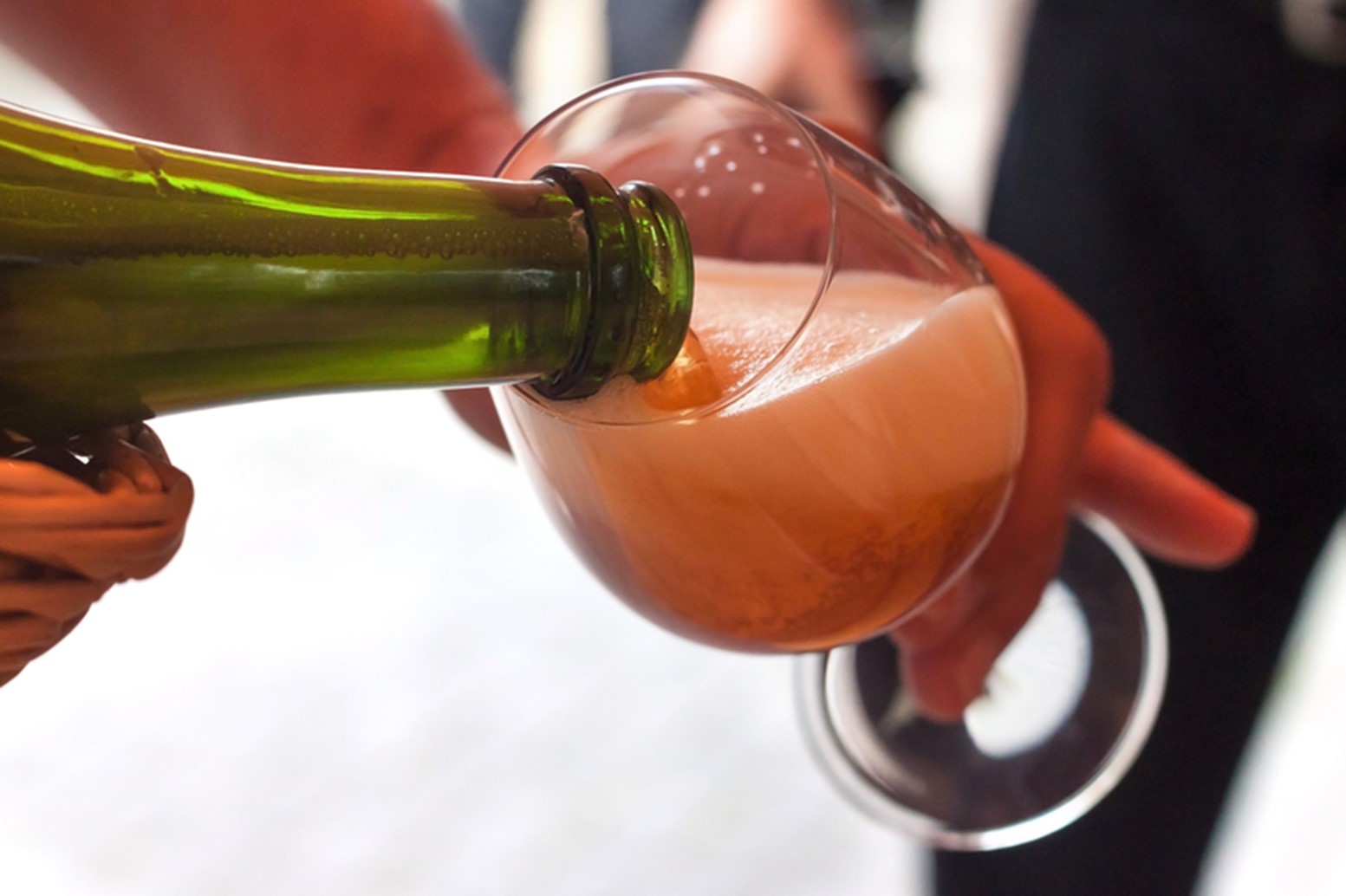
A traditional Belgian lambic is spontaneously fermented by microbes present in the air before being aged. A Gueuze, on the other hand, is a blend of lambics aged for one to three years. The hops therefore retain all their aromatic or bittering properties. The aim of these styles is to highlight the yeast and, potentially, the woody nuances imparted by aging.
Hops are not at the forefront in the wilds.
On the contrary, the brewer will take care to limit the creation of bitterness and must therefore carefully select and handle the hops.
Enter the aged hops , the aged or old-fashioned hops.
What is aged hop ?
Aged hops are hops that have oxidized due to prolonged or significant contact with oxygen. This aging process causes the oxidation of their acids and oils. Brewers generally try to prevent this by storing their hops in a vacuum-sealed bag (or even better, in a modified atmosphere) in the refrigerator or freezer to preserve freshness, alpha and beta acids, and all the oils present in the cones and pellets. This is the best way to produce aromatic and bitter brews.
For a sour beer , particularly one with spontaneous fermentation of the Lambic or Gueuze type, fresh hops would not be suitable and would constrain the acidification of the brew.
Oxygen is the most important factor in the “degradation” of hops, but ambient temperature and humidity also contribute to its aging. Alpha and beta acids oxidize, producing more astringent aromas; some even detect cheesy notes!
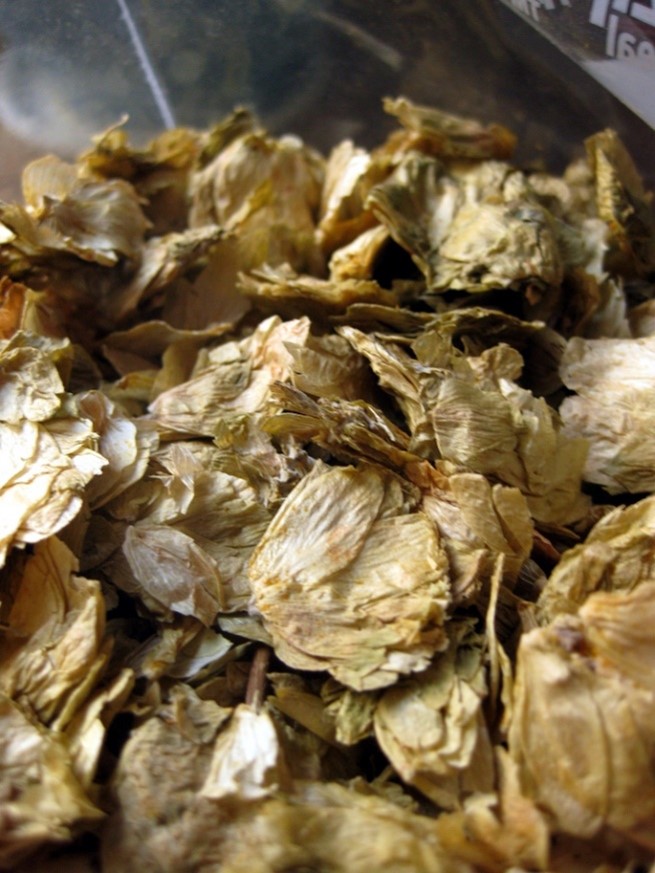
Dried and aged hop cones
Source: https://www.themadfermentationist.com/2011/05/american-lambic-spontaneous.html?m=0
Why favor aged hops in a wild ?
Since spontaneously fermented beer is often heavily exposed to ambient air, oxygen, and surrounding bacteria, it cannot retain the oils, acids, and aromatic properties of the hops. Therefore, adding fresh, aromatic hops to a brew intended for acidification or aging in large casks or barrels is pointless.
Don’t expect to find the green, floral, or fruity hop aromas in your glass of wild lambic (except perhaps in one that has been dry-hopped). These fresh aromas will be replaced by hints of mustiness, farmhouse character, or earthy notes that perfectly suit the traditional lambic style. The hop bitterness will be much lower because the alpha acids will have been broken down by the beer’s oxygenation. Ideal for a spontaneously fermented beer!
However, older hop varieties still retain their antimicrobial properties and can therefore help preserve beer. The cones or pellets still help regulate lactic acid bacteria and control acidity production in the brew, particularly in mixed or spontaneously fermented brews.
Finally, although the IBU level of hops will never be very high in these styles, a slight touch of bitterness can help create wild saisons or slightly sour ” farmhouse ales” for experimental styles.
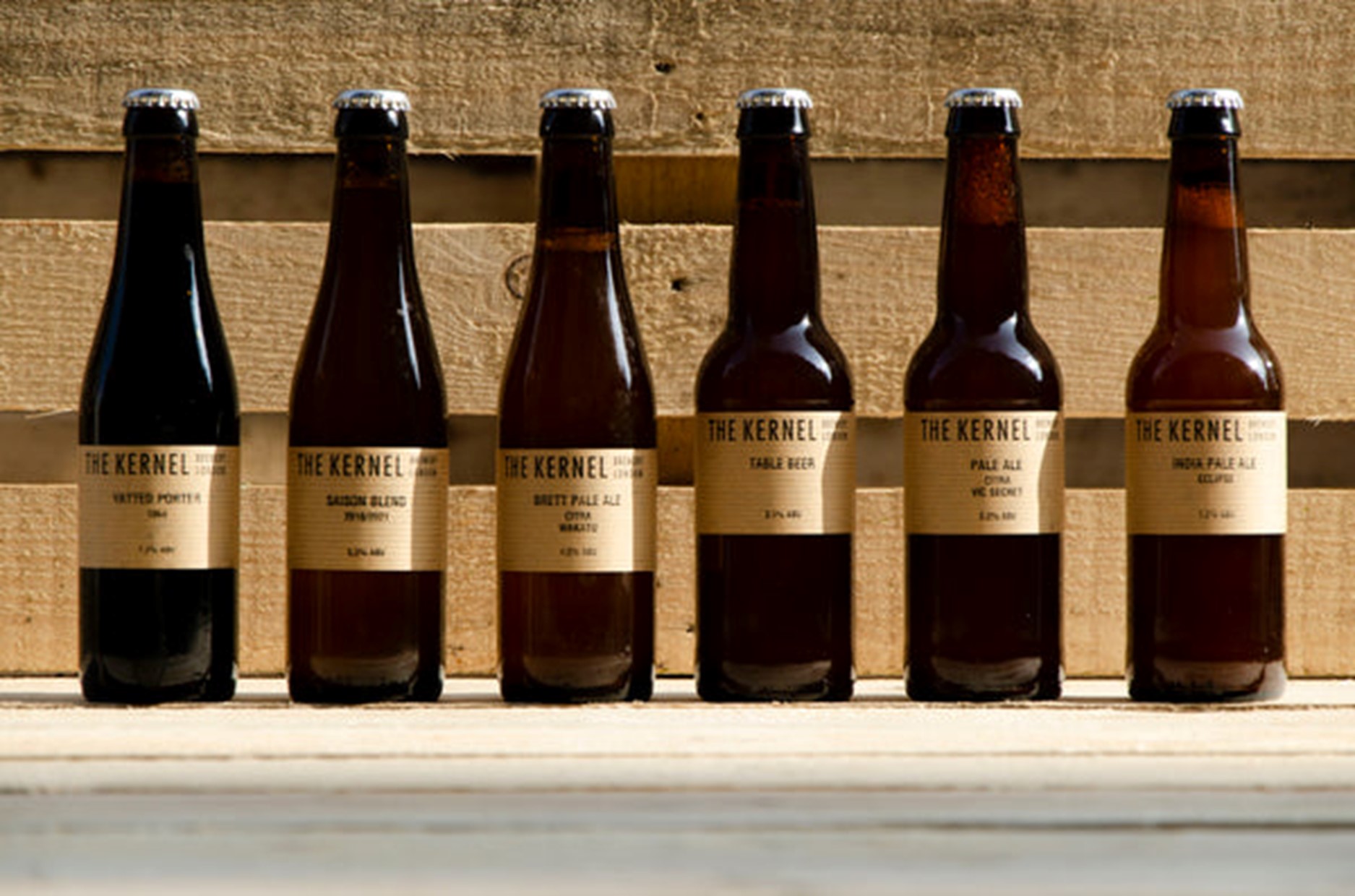
The Kernel brewery produces good examples of spontaneously fermented farmhouse beers, often with fruit, which still have a real bitterness on the palate! A textbook case for lovers of this style.
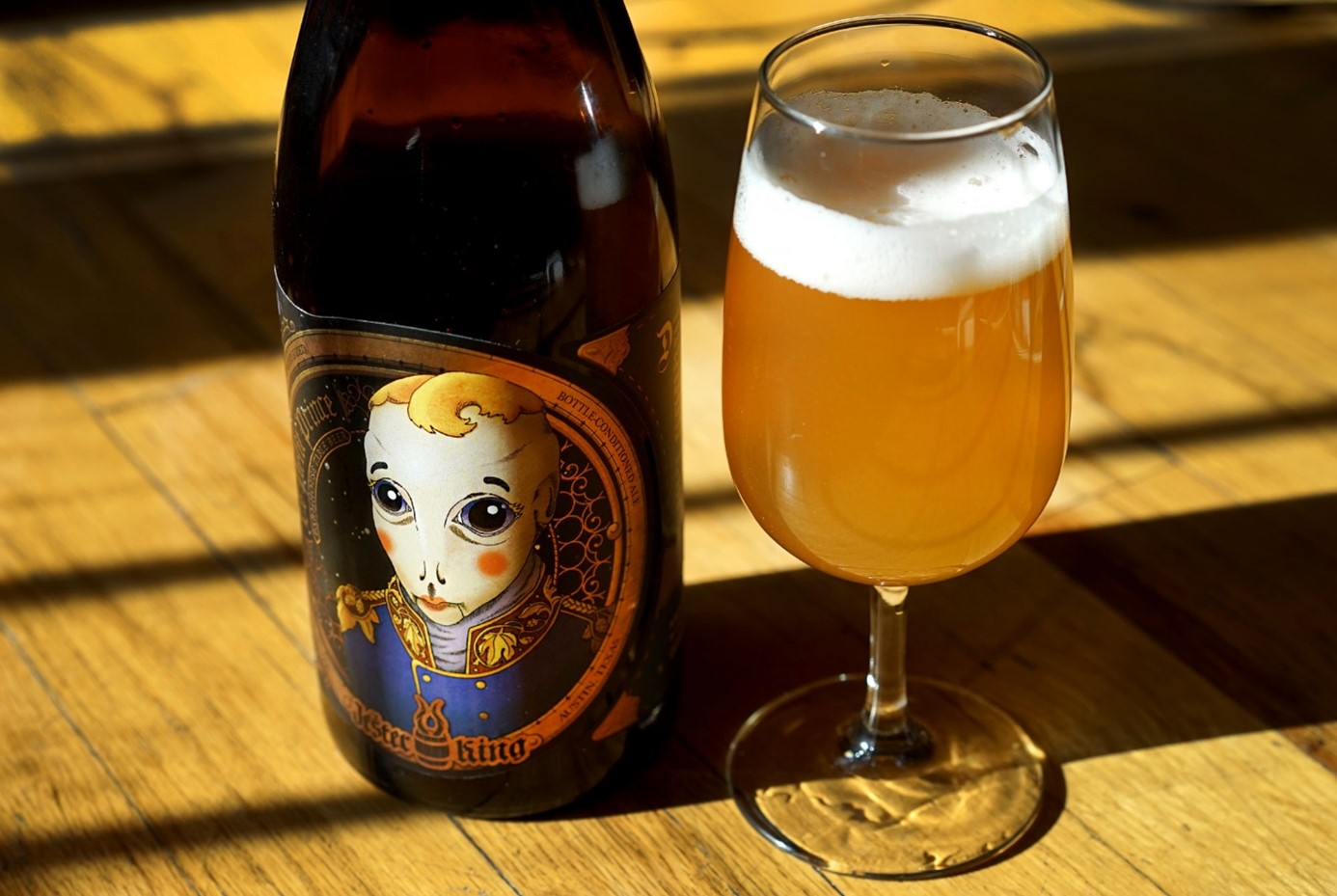
Jeff Stuffings, brewer at Jester King, also prefers aged hops for his rustic saisons. He explains his process here: https://beerandbrewing.com/video-tip-embracing-hops-for-farmhouse-ales-and-table-beers/
How to choose your hops?
Belgian brewers tend to favor European hops, often referred to as “noble” varieties, with their green, spicy, and earthy notes (such as Tettnang , Saaz , Target, or Hallertau). Most brewers prefer cone hops to pelletized hops. If you wish to use pellets, it is advisable to grind them to maximize oxidation. Some brewers age them for up to three years in a warm environment.
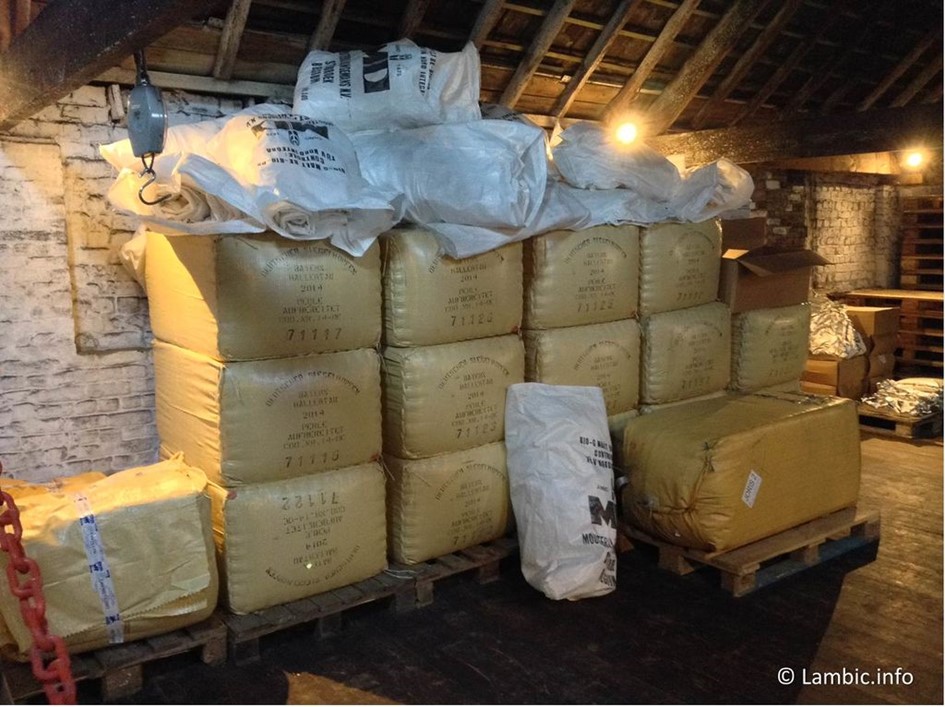
Hops Perle aging at Cantillon.
https://www.lambic.info/Brewing_Lambic
Unrefrigerated hops stored in contact with open air for six months can also be used by brewers with limited storage space. The key is exposure to oxygen to oxidize—precisely!—the cones or pellets.
Ask your hop supplier if they have any old harvests to sell you! Often cheaper than fresh hops, you might find some real gems for your brews.
For those who cannot or do not want to age their hops, it is necessary to opt for pellets or cones with the lowest possible alpha acid content.
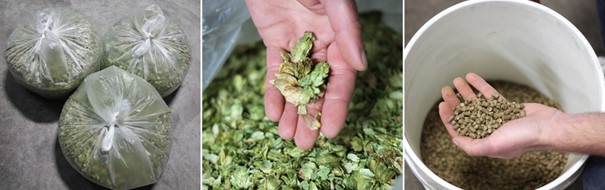
Hops can be aged in cones or pellets, as long as they have been thoroughly dried beforehand. Be careful not to age “fresh hops,” which are freshly harvested and haven’t been dried. They will simply mold!
How do I brew with these hops?
Some lambic brewers add their hops very early in the brewing process, either directly to the wort ( first wort hopping ) or as soon as the mash begins to boil, to impart bitterness, polyphenolic antioxidants, and bacterial resistance to the wort cells. The long heating process allows for the isomerization of alpha acids, thus creating bitterness without preserving the hop aromas. Therefore, a freshly brewed lambic can be surprisingly bitter. Bitterness calculations should be performed using the original alpha acid analysis of the product, not the most recent one.
Hops can be added to the brew in bulk, in mesh bags or via custom-designed dosing systems.
Due to the oxidized nature of aged hops, it is not recommended to add them in the whirlpool or after boiling. Adding them on the cold side ( dry hopping ) will be ineffective, again due to hop oxidation (no aromatic contribution).
The spontaneous fermentation that follows will create acidity and give the lambic its spicy, earthy or slightly woody notes.
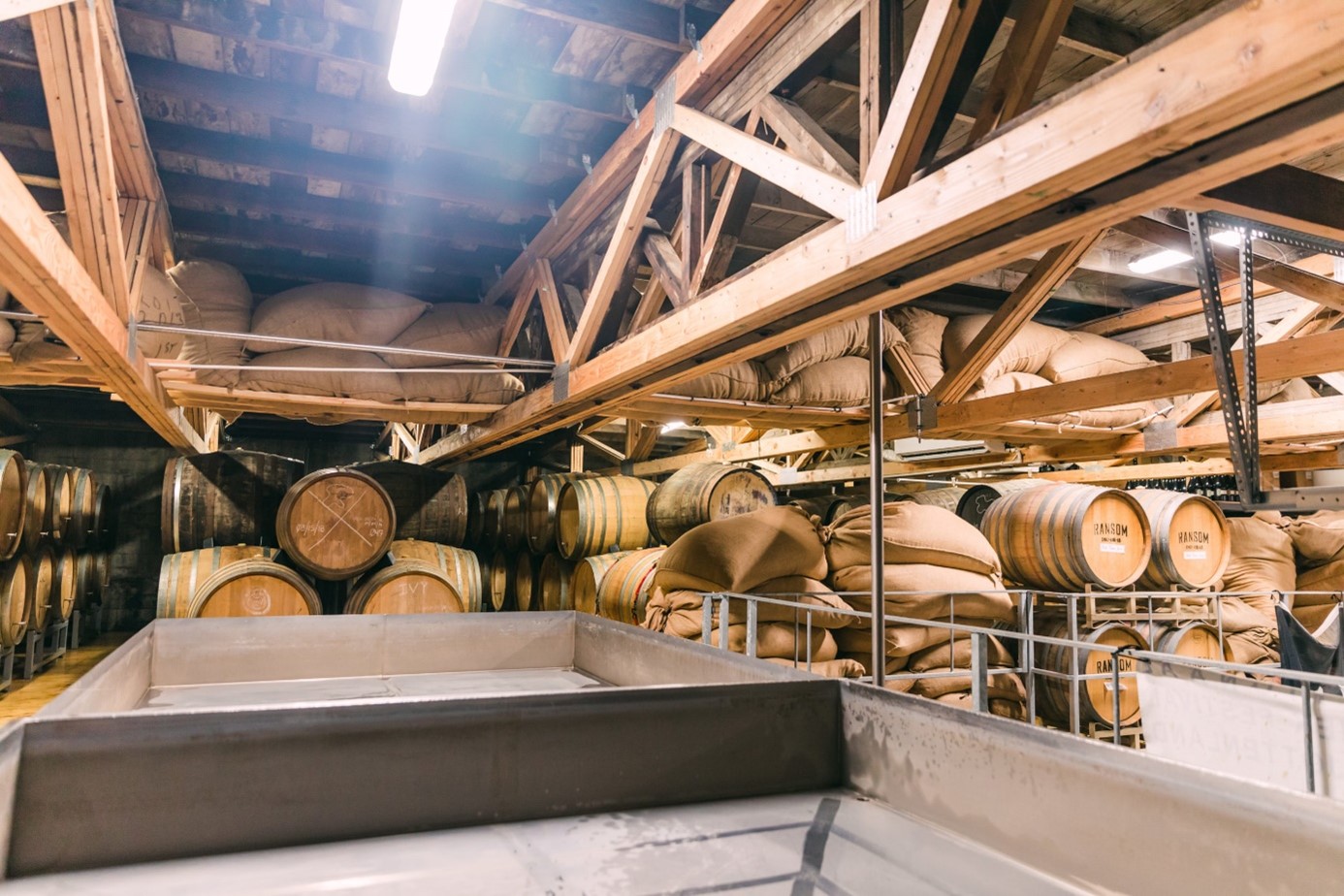
Cantillon uses hops that are approximately 3 years old. Fonteinen adds 10-year-old hops at about 48 minutes into the boil. The average hop dosage for a lambic is 450gm/hl of finished beer, added at approximately 43 minutes into the boil.
In short, it’s up to you to stir things up!
Sources:
https://www.mobcraftbeer.com/2017/05/26/aged-hops/
https://www.milkthefunk.com/wiki/Hops
https://www.mobcraftbeer.com/2017/05/26/aged-hops/
https://www.themadfermentationist.com/2011/05/american-lambic-spontaneous.html?m=0