

How to assess the quality of a hop pellet and its aromatic potential?

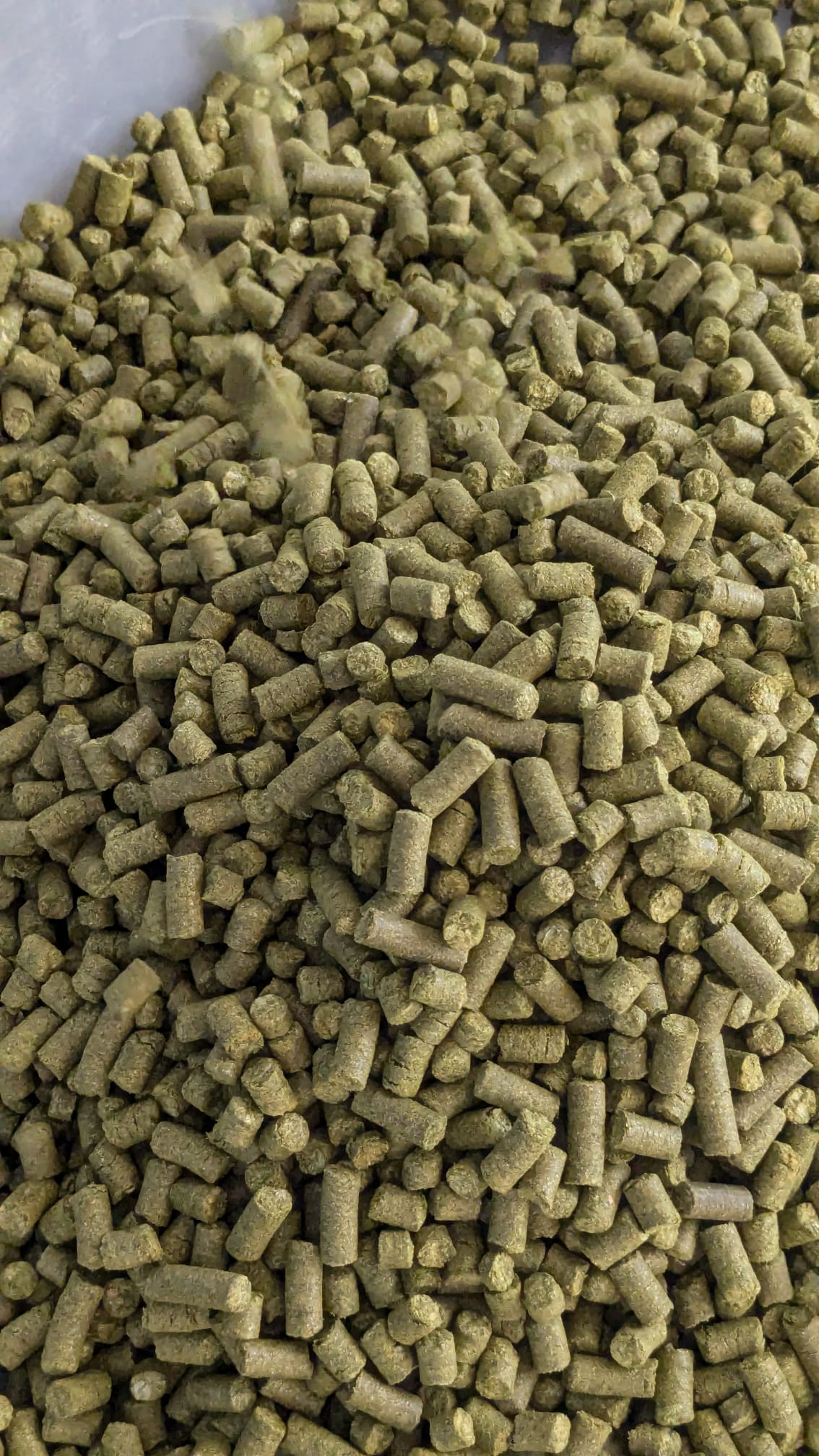
Empirical evaluation:
Open the sachet fully to let out as much fragrance as possible.
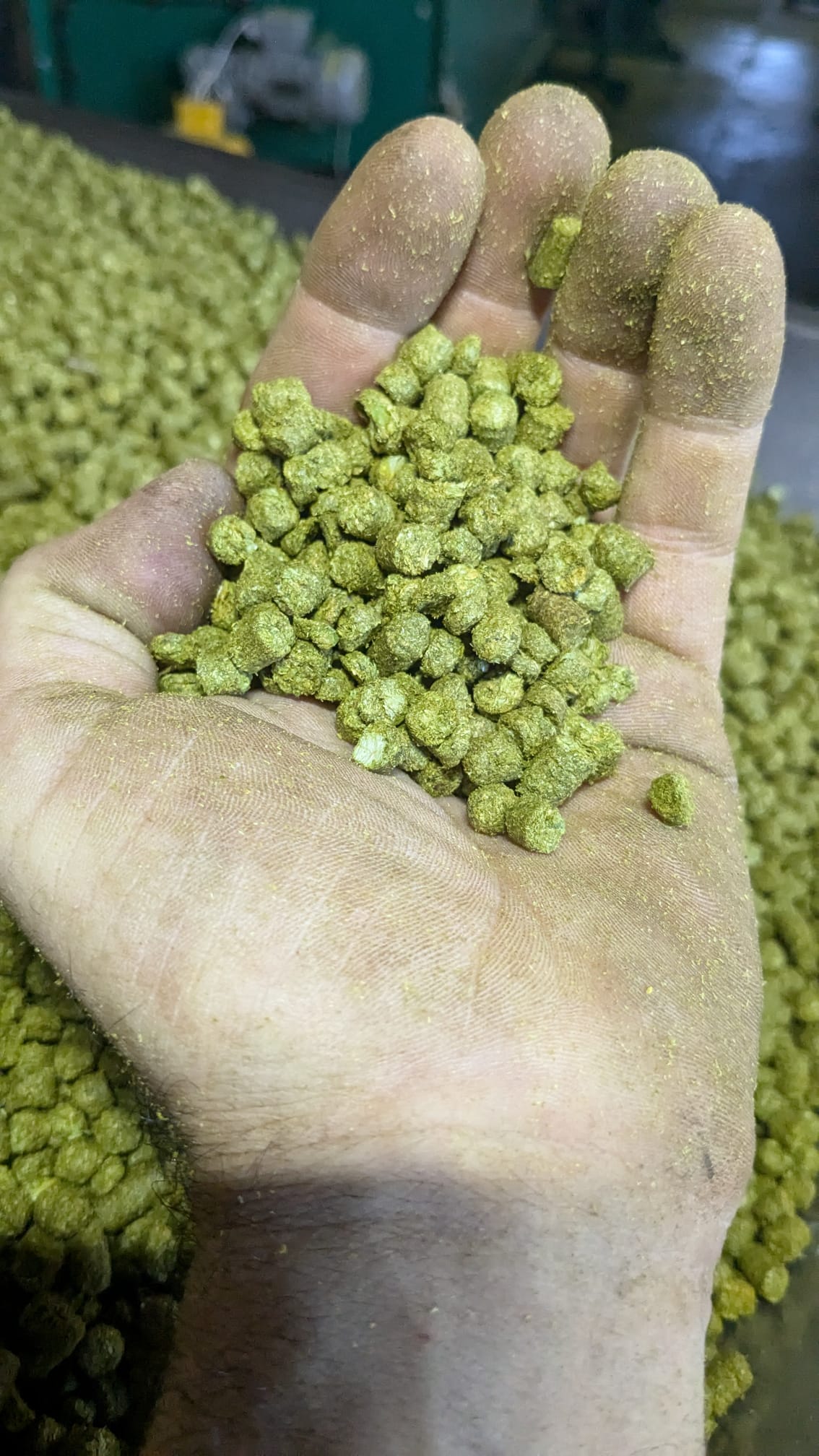
- The first test is olfactory. Put your nose into the open sachet and breathe gently. Gently shake the bag between breaths.
- The most powerful hops are very expressive and you will easily distinguish aromas/flavors of fruits (exotic, red, stone fruits, …).
- These aromas are the most volatile and can fade. These top notes are very interesting if you want to make a very fruity beer (IPA, NEIPA, WCIPA, DIPA, etc.).
- Take another look at the sachet to assess its underlying notes. These may include herbaceous, resinous, earthy, or woody scents.
To put it simply, the less hops remain in the beer, the more these volatile aromas will be present. The longer the hops are infused, the more the beer will extract other aromas and tannins.
Look at the color of the pellet:
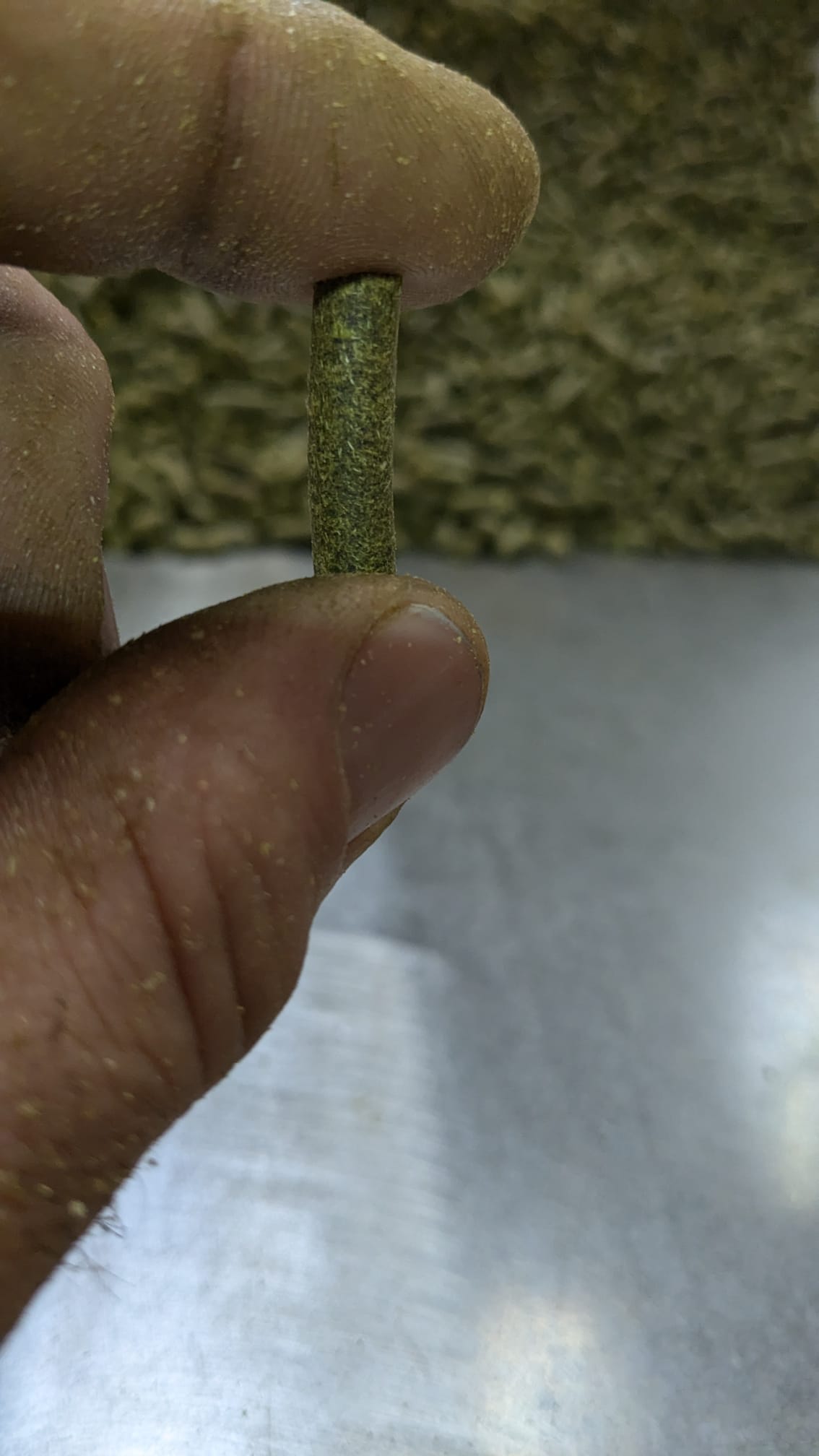
- If it is a vibrant green, the hops are healthy and have been harvested at maturity.
- If it is orange and green in color, it may be high in lupulin (yellow to orange in color) or have been “burned” (by the sun or disease).
- If it’s dark green to black with a glossy sheen, it was overheated during pelletizing. If it’s just one pellet, there’s no need to worry. If all the pellets in the bag are affected, that’s not a good sign.
Density: Pick up a pellet with your fingers and then crush it in the palm of your hand
- If the pellet is very hard to crush, it is low in oils and alpha. This is quite common in noble hops.
- If the pellet crumbles easily, it is high in oils. It could be a strong aromatic or a bittering oil.
The pellet temperature plays a role in this test. It is best to use a bag at room temperature.
Alcohol assessment:
Alcohol plays an important role in the extraction of aromas, their preservation and their evolution/transformation.
In the case of hops used to make beer, the only way to evaluate the final result is to test it in beer.
Aromatic hops can be tested in several ways:
- Using a brewing kit with a capacity of less than 20L (pico brewery). The sachet contains approximately 50g; you can test the hops at any time with a dosage of 2.5g/l or less.
- At the time of professional brewing (over 200L):
- At the end of the boil, just as the whirlpool is forming, you can take a small amount of hot wort from a saucepan and add 1 to 2% of its weight in pellets. The most pronounced aromas will be released by this hot barley juice.
- It seems complex to perform a DH test during the first fermentation with a sufficient quantity of hops.
- After the first fermentation, it’s possible to rack off (preferably “clear”) a small amount of the fermented wort. Several 2- or 5-liter buckets will allow you to test different hops and/or dosages. In a 5-liter bucket, you can add 25 grams of one variety to test it at 5 grams per liter. These buckets are then kept sealed in a cool place (5°C) for 8 to 15 days to allow for proper sedimentation of the hops and yeast. When bottling, the sugar is added directly to the bottle before pouring in the fermented and infused wort (to avoid having to mix the sugar in the bucket). After approximately 15 days of secondary fermentation, the beer is ready to be enjoyed.
- At the end of the conditioning period (for a flat fermentation), you can take a small amount of fermented beer, transfer it to a container with the pellets, and let it infuse for a few minutes while gently heating it to extract maximum flavor in minimum time. Then, add the sugar, mix, and bottle after filtering. Obviously, it’s important to filter as finely as possible to minimize the amount of pellets entering the bottle before fermentation. All utensils used in this process must be sterile to reduce the risk of infection.
- Apart from brewing:
- In a simple beer: add a few pellets and keep refrigerated for several days. Be aware that the beer may become runny and lose all its bubbles. You will then need to filter the liquid before tasting.
- In a spirit: the alcohol will cold-extract certain aromatic compounds from the hops. In a few days, you will obtain a tincture that will reveal the aromatic properties of the hops being tested.
Hydraulic evaluation :
Hops are a plant that can be used in infusions for their medicinal properties.
The chemical reactions involved are not the same as those in a classic brewing process, but they can be useful for a quick and simple initial assessment.
- Heat some water and add a few pellets to a cup of coffee. Do not heat it for too long, as this can cause isomerization of the alpha particles, significantly altering the taste and aroma. You can smell the mixture at several points: during brewing to detect the most volatile aromas, and again after it has cooled the following day, or the day after that.
- If you wish to try a pellet brewed in water, it is recommended to filter the liquid (with a coffee filter, for example) and sweeten the mixture to reduce the bitterness of the hops. It is also possible to add a drop of strong alcohol (the most neutral possible) at the beginning of the brewing process to enhance the aromatic extraction.

JS
Production and Logistics Manager
Production and Logistics Manager
The pellets smell of garlic/onion, is that normal?
It is generally accepted that a sulfurous odor emanating from hops is linked to a problem at harvest time. Either the hops were harvested too early (onion), or too late (garlic).
In some cases, this is normal. Seeing is a sign of quality.
Whaaaaaat? …… you might say.
This is related to the nature of the hop variety. Indeed, several varieties with exotic aromas tend to produce these smells.
Hops that exhibit notes of exotic fruits are loaded with -thiols.
Examples can be found in this article: https://www.sciencedirect.com/science/article/pii/S1021949818300437
These -thiols contain sulfide which is responsible for both tropical fruit AND garlic/onion aromas.
The best example to understand this “strange” aromatic proximity is surely the Durian , the most sulfurous of fruits .

Durio zibethinus, also called “the king of fruits”
Thioles represent less than 1% of hop oils. The remainder consists of myrcene, humulenes, etc., which do not contain sulfides and are associated with fruity, floral, herbaceous, citrus, and other aromas.
We actually wrote an article about oils in hops here .
If the garlic/onion smell doesn’t overpower the other hop aromas, it proves they’re definitely present.
If you’re not the adventurous type, a few standard precautions are necessary:
- If hops are used during brewing: there is no risk to the beer because the -thiols will be vaporized above 65°C .
- If hops are used during dry hopping, these onion/garlic aromas can affect the beer’s flavors for a while. Therefore, it is advisable to:
- to degas as much as possible during dry hopping
- to have a maturation period of at least 10 days in the fermenter, and 15 days in the bottle (after secondary fermentation)
- OR you can keep the bag for several months before use (in a cool place, of course) so that the smell dissipates naturally. (This can take quite a while in a waterproof bag.)
- If you are pressed for time, you can opt for a more radical solution:
- Leave the bag open in a well-ventilated room. The unpleasant odor is very volatile and will dissipate quickly. There is no risk of contamination of the bag if it is stored in a clean environment (especially since hops naturally limit bacterial growth; they are bacteriostatic). There is no risk of the pellets oxidizing in such a short time. At most, there may be a slight decrease in the hops’ aromatic intensity and/or a very slight change in their flavor. Since “exotic” hops are often quite aromatic, the difference in taste will be difficult to discern.
- Blow nitrogen (or other inert gas) directly into the bag until the odor disappears.
- Leave the bag open in a well-ventilated room. The unpleasant odor is very volatile and will dissipate quickly. There is no risk of contamination of the bag if it is stored in a clean environment (especially since hops naturally limit bacterial growth; they are bacteriostatic). There is no risk of the pellets oxidizing in such a short time. At most, there may be a slight decrease in the hops’ aromatic intensity and/or a very slight change in their flavor. Since “exotic” hops are often quite aromatic, the difference in taste will be difficult to discern.