Continuous hopping

Article written in collaboration with Alexandra Berry
What is this ?
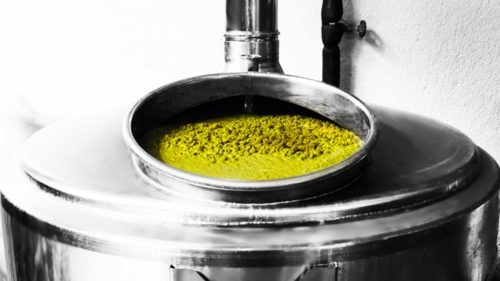
Continuous hopping involves adding small amounts of hops throughout the boil. This allows both the bittering and aromatic characteristics of the hops to develop. Generally applied in the last 40 minutes of the boil, it can be adapted to any type of hop, boil time, and quantity, depending on the brewer’s desired outcome.
The origins
This technique was championed by Sam Calagione, master brewer and founder of Dogfish Head Brewery. With a very different approach, he considers his beer creations to be true gastronomic recipes (he’s the mastermind behind an Apricot IPA, a Maple Syrup Ale with smoked malt, vanilla and juniper, and a Chicory Stout). While watching a cooking show, Sam was inspired by a soup recipe: it’s not enough to just throw in the ingredients at the last minute before serving, but rather to simmer them for a long time so that the flavors develop fully. If this applies to soup, why not try this technique with beer?
So, rather than adding most of the hops all at once at the beginning of the boil for bitterness and a small amount at the end for aroma, he tested his recipe by adding the hops little by little during a 90-minute boil. The result was a more powerful, bitter, and aromatic IPA: the 90 Minute IPA, which he called an Imperial IPA, the first of its kind.
Inspired by this recipe, and by its immediate success, he decided to create a lighter version. He therefore created a new brew, which he hopped during a 60-minute boil, which he called… the 60 Minute IPA.
*There’s a 120 Minute IPA… I don’t need to spell it out for you…
Sir Hops Alot
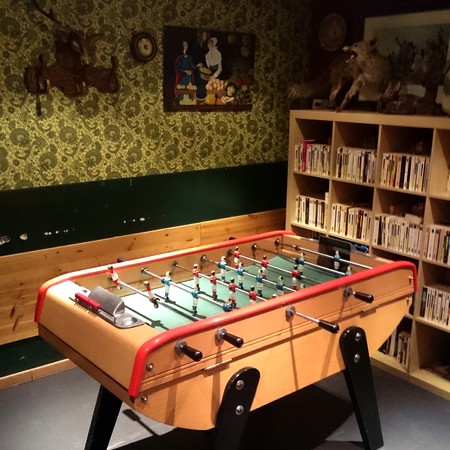
To control the pouring of hops, Sam Calagione turns to a rather strange instrument: a foosball table!
Purchased from a thrift store, this electric foosball table vibrated so much that if it was covered in hops rather than small players and placed at the right angle above the boil kettle, it regularly knocked the hops off. This gentle but consistent addition marked the beginning of continuous hopping.
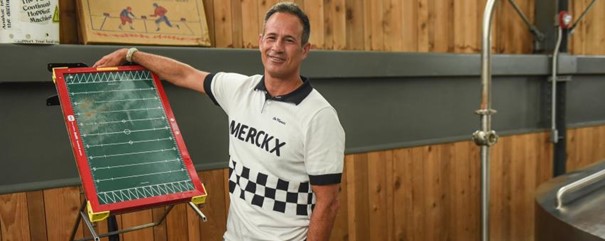
The technique has improved considerably over time, and with more suitable technologies! Sam had a custom-made machine built to add hops autonomously and mechanically for continuous hopping, a machine he nicknamed Sir Hops Alot.
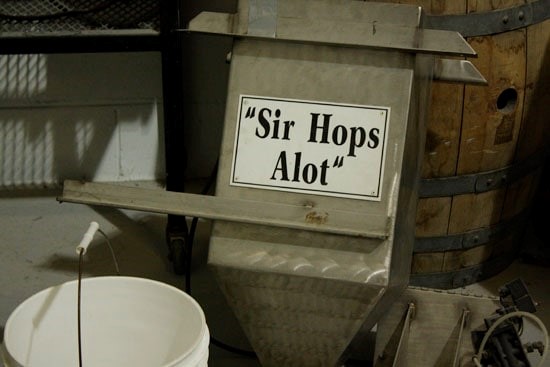
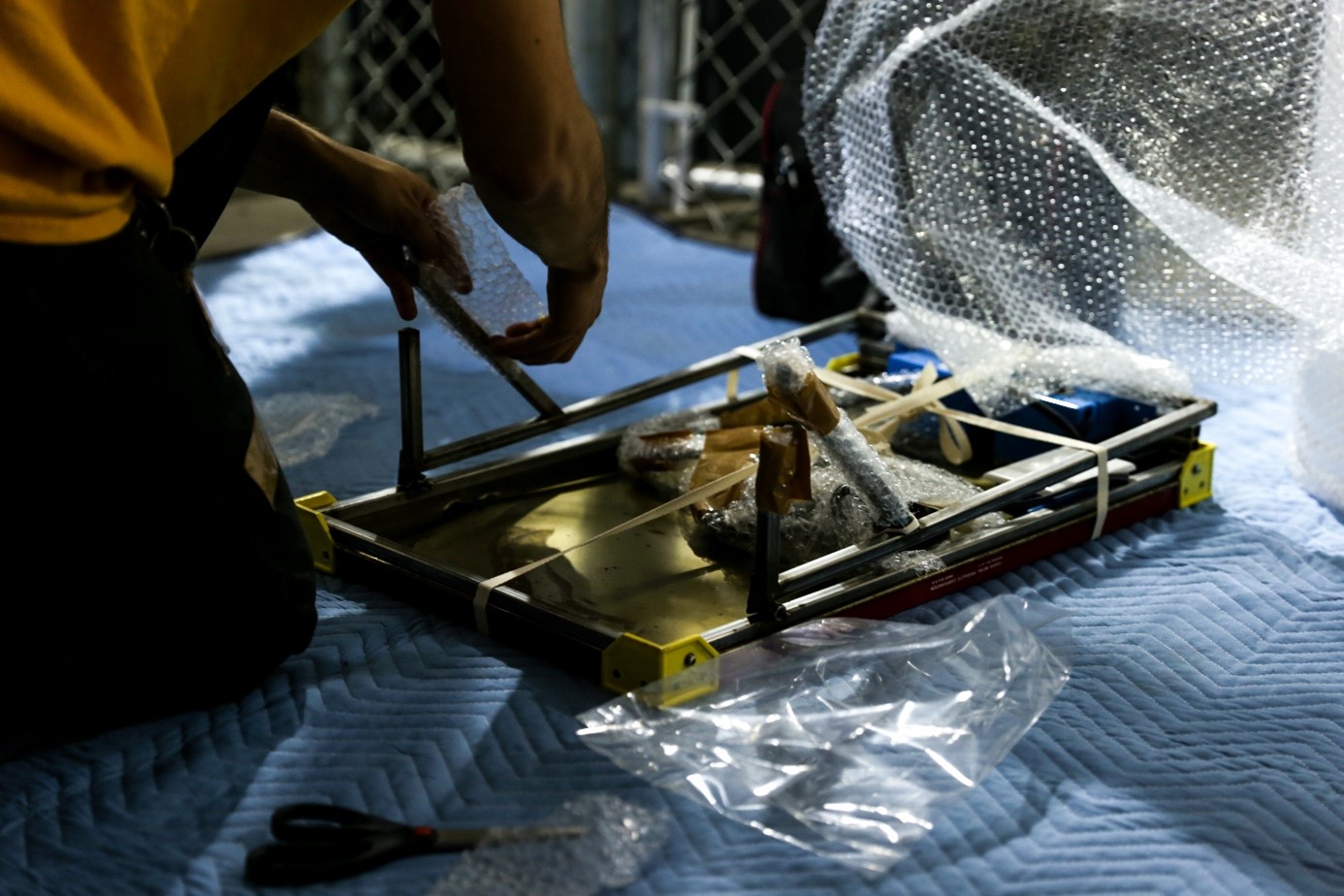
This technique revolutionized the world of brewing so much that in 2021, twenty years after its invention, the brewery donated the technique and the first Sir Hops Alot to the Smithsonian National Museum of American History.
How to improve your technique?
For continuous hopping, it is recommended to use dual purpose hops, hops with a dual function, bittering and aromatizing, such as Galaxy, El Dorado, Simcoe, Azacca, Mosaic or even the good old Citra!
To control and achieve the desired alpha acid and aroma levels with this technique, be sure to use a Continuous Hop Calculator. The formula for calculating the amount of hops to add during the boil is:
((liters of wort) * (IBU) * (0.001)) ÷ ((% utilization) * (% AA of hops)) = Grams of hops
If you don’t have a Sir Hops Alot to help you, you’ll have to manually add the hops regularly and in small quantities during the boil. Brewers typically add hop fractions every 1 to 5 minutes. You can alternate varieties to create a consistent hop blend where the aromas and bitterness will fully express themselves in the glass.
For those who wish to experiment for the first time, it is advisable to divide your hops into 20 small piles and add them every 3 minutes during a 60-minute boil.
Are there other beers brewed using the continuous hopping technique?
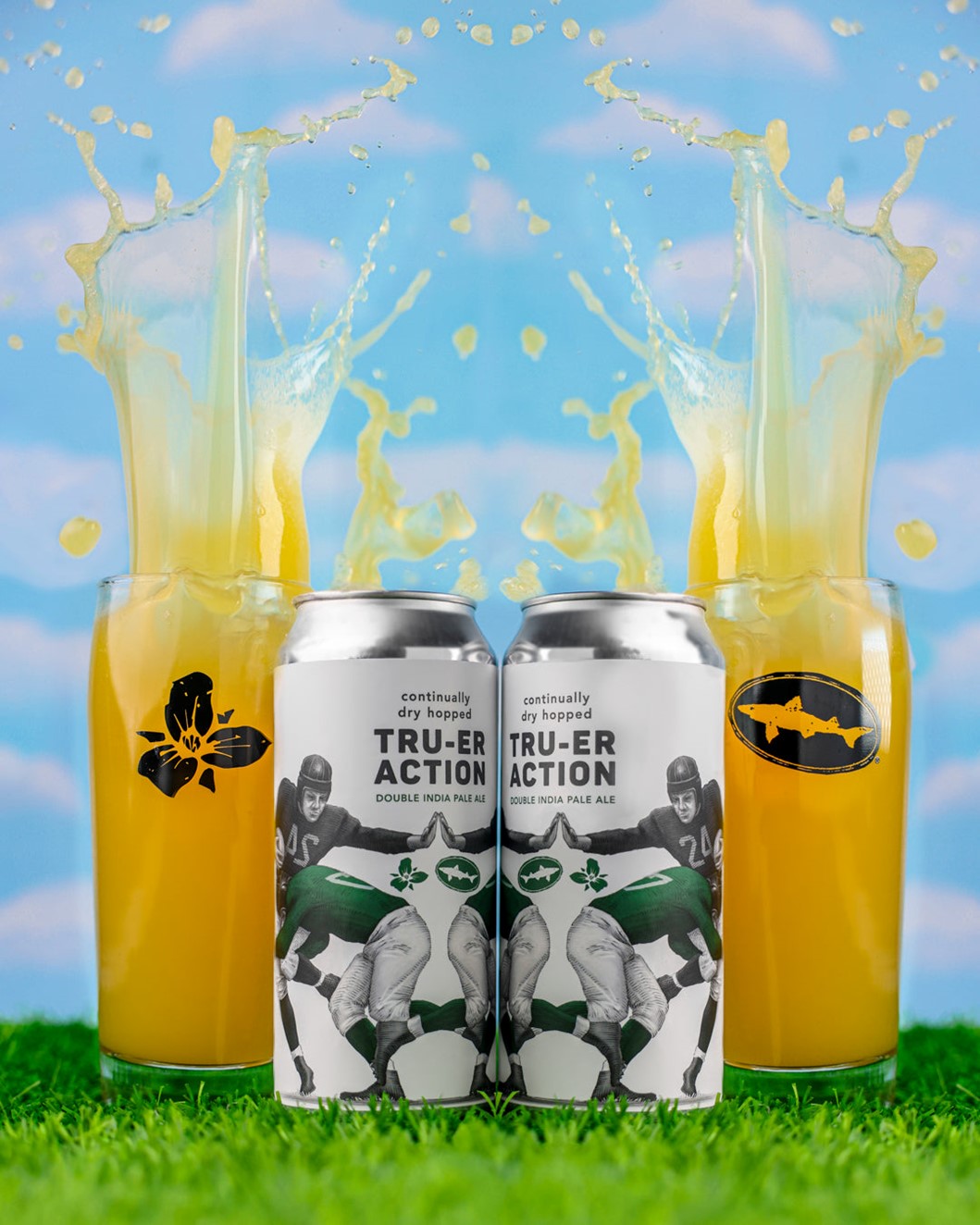
Trillium – Tru-Er Action.
Black Hops – #100 IPA
Sources:
Calagione, S., Brewing Up a Business: Adventures in Entrepreneurship from the Founder of Dogfish Head Craft Brewery, (2005), John Wiley & Sons.
https://www.dogfish.com/blog/
http://betatestbrewing.com/pages/continuous-hop.html
https://byo.com/mr-wizard/calculating-ibus-from-continual-hopping/
https://beerandbrewing.com/learning-lab-more-ways-to-get-hoppy/