IN SEPTEMBER, WE SUPPORTED SOS AFRICAN WOMEN IN DANGER

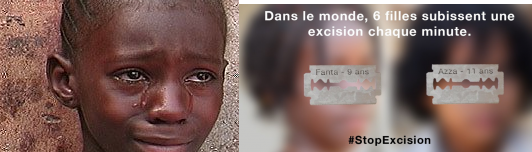
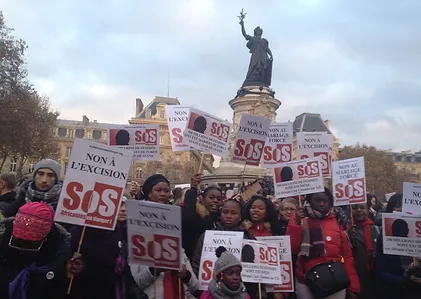
SOS African Women in Danger is a public health social program whose main mission is to combat the scourge of female genital mutilation in West Africa. By extension, it aims to contribute to improving the living conditions of populations in the most disadvantaged areas of West Africa, enabling them to achieve harmonious social and economic development.
The various actions carried out by the association thus contribute to the protection and promotion of human rights, women’s rights and of course children’s rights.
An overview of this intolerable practice based on UINCEF data on Female Genital Mutilation.
The report, Female Genital Mutilation/Cutting: A Global Problem, indicates that half of all girls and women who have undergone FGM live in three countries: Egypt, Ethiopia, and Indonesia. The report draws on smaller-scale studies and empirical data indicating that FGM is a global human rights issue affecting girls and women in all regions of the world.
Female genital mutilation (FGM) encompasses a variety of practices. Regardless of the form in which it is performed, FGM constitutes a violation of children’s rights. ” Female genital mutilation varies across regions and cultures. Some forms carry a risk of death. In all cases, FGM violates the rights of girls and women. We must all redouble our efforts – governments, health professionals, community leaders, parents, and families – to eliminate this practice ,” said Geeta Rao Gupta, UNICEF Deputy Executive Director.
According to the data, girls aged 14 and under account for 44 million of all women who have undergone female genital mutilation (FGM). The countries with the highest prevalence of FGM in this age group are The Gambia (56%), Mauritania (54%), and Indonesia, where approximately half of girls aged 11 and over have undergone the practice. The countries with the highest prevalence of FGM among girls and women aged 15 to 49 are Somalia (98%), Guinea (97%), and Djibouti (93%).
In most countries, the majority of girls have been circumcised before their fifth birthday.
Global data from the FGM Statistics Report indicate that nearly 70 million more girls and women have undergone FGM compared to 2014 estimates. This is due to population growth in some countries and nationally representative data collected by the Indonesian government. More and more data are becoming available on the extent of FGM, leading to an increase in the estimated total number of girls and women who have undergone this practice. As of 2016, 30 countries have nationally representative data on FGM.
This is a scourge that urgently needs to be eradicated.
SOS African Women in Danger and the resources put in place by the association:
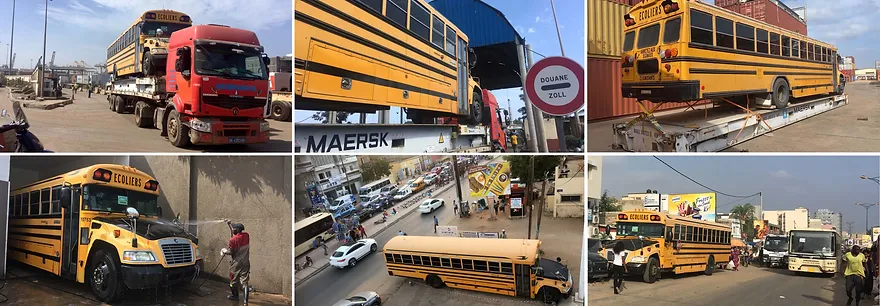
The project involves deploying unconventional logistical resources on the ground: 10 Canadian school buses meeting the latest anti-pollution and safety standards for transporting children will be purchased. After conversion, they will become connected mobile clinics capable of reaching the most remote rural areas.
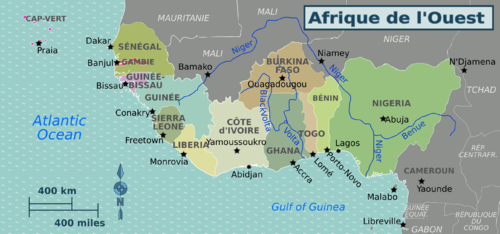
These mobile clinics will operate in the 10 West African countries identified by the project, in the villages most affected by female genital mutilation. These countries are Benin, Burkina Faso, Ivory Coast, Gambia, Guinea-Bissau, Guinea, Mali, Mauritania, Senegal, and Togo.
In the “clinic” section of the buses, licensed healthcare professionals will be available to listen to mothers and young girls. During regional tours organized by the association, they will provide support and care through free medical visits.
In the “entertainment” section at the rear of the buses, there will be integrated communication and entertainment tools. The 10 mobile clinics will operate as a network, communicating with each other as well as with the internet. National communications specialists, digital professionals, will use a satellite dish to facilitate controlled and participatory communication with the visited village communities and the power of the pan-African internet network.
This nuanced approach will create a climate of mutual trust, giving rise to dialogues with villagers, local authorities, and traditional leaders to improve the living conditions of their population.
Topics will then be addressed such as the evolution of customary practices leading to harmful, unknown and irreversible health consequences such as female genital mutilation and child marriage.
If you too would like to support the association, click here:
www.gofundme.com/daniellemerian