

Wet Hop beers, guaranteed freshness?

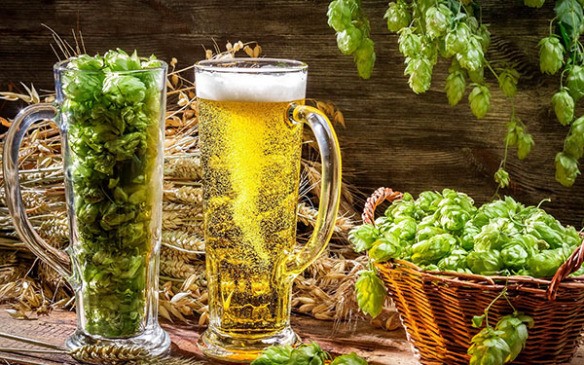
Article written in collaboration with Alexandra Berry.
What is a Wet Hop beer?
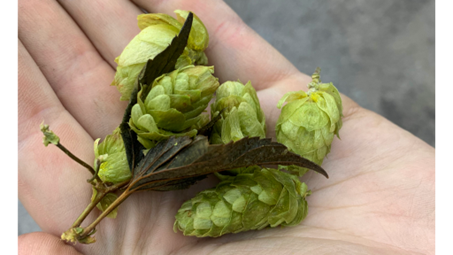
Also called a “Fresh Hop,” a Wet Hop Beer is not the opposite of a Dry Hop Beer! A Wet Hopped beer is brewed with freshly harvested hops, meaning they are untreated or undried. These fresh hops still contain 80% moisture, hence the name “Wet Hop” (wet = wet).
The advantage of this practice is that it allows you to fully utilize the lupulin contained in the hops. This resin is full of aromatic oils and alpha acids that contribute to the flavor and bitterness of the brew. The more hops are handled, the more they lose their organoleptic properties (hence the benefit of pelletizing them to concentrate and homogenize the oils).
How do you brew wet hop beer?
First, the brewer must analyze the moisture of the hops by rubbing them in his hands to release the lupulin (see the article on hop harvesting to find out how to determine if a hop is ready to be harvested).
The cone is indeed saturated with oil, but it also takes up a lot of space due to the amount of plant matter that will be filtered out later. Therefore, a significantly larger quantity of cones is needed to distinguish the aromas and obtain enough alpha matter to create bitterness in the brew.
Furthermore, fresh cones deteriorate and oxidize very quickly, so their shelf life—just a few hours after harvesting—is much shorter than that of dried cones or pellets. Dried cones contain only 8 to 10% water and weigh five times less than fresh cones; they can be stored for several years without spoiling if kept cool, away from light and oxygen. Some brewers still prefer to brew with cones but use dried ones for this purpose.
For a “Wet Hop Beer”, it is therefore necessary to brew with fresh cones within 24 hours of their harvest, hence the success of this style in the Northwest of the United States where all the largest hop farms in the world are located.
Since fresh hops (wet hops) weigh five times more than dried cones, those accustomed to using dry cones will need to multiply the quantities by five in their brews to achieve the same bitterness. Fresh cone hops, like pellets, can be added at any point in the brew, depending on your intended use. However, it is recommended to brew with dry cones or pellets during the hot stage to easily achieve the desired alpha acid content (it is less precise to calculate with wet hops), and to keep your cones fresh for dry hopping to retain all the volatile oils and therefore the aromas.
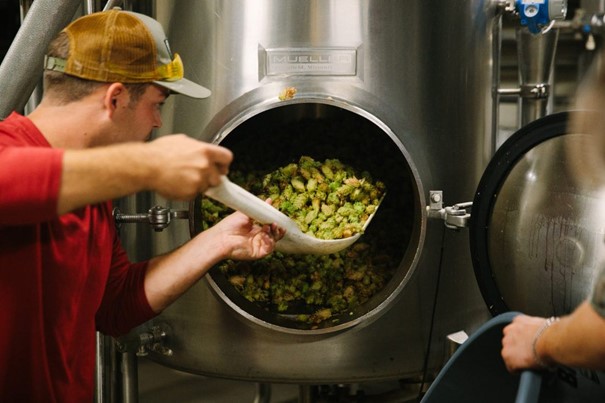
Wet Hopping at Sierra Nevada
Some tips for brewing with Wet Hop:
– However, consider bittering the brew with dried hops whose alpha acid content is known and precisely measured. Not only will you obtain a more predictable bitterness, but you will also keep all the hops moist for later additions of flavor.
Depending on where you live, the available hops will be limited, and each will have its own aromatic characteristics. In the Northwest of the United States and New Zealand, brewers have access to very fruity and aromatic hops. In France, you can obtain German hops, which are finer and more refined with a complex flavor profile, French hops such as Aramis or Barbe Rouge, with distinct flavor profiles, or a variety of other hops from your local hop farm.
Whatever hops you get, design your beer recipe around the hops.
– Use fresh cone hops sparingly. Extremely hoppy styles like New England IPA are probably not suitable for this type of brew (especially European varieties). You risk ending up with a beer that is far too vegetal and herbaceous, not matching the desired style.
Because you need to use a lot of fresh hops per brew, they will absorb a lot of wort. Therefore, it’s sometimes necessary to use a large mesh bag, such as a “brew-in-bag” polyester bag, when adding fresh hops. Remove the bag and gently press the wort at the end of the boil.
Dry hopping with fresh hops is perfectly possible, but there is a risk of contaminating your beer. Unlike dried hops, bacteria can survive on fresh hops because there may still be microbes or micro-insects inside the fresh hop flower. If this concerns you, add all your fresh hops at the whirlpool stage and let them steep for 45 minutes.
Why choose a wet hop beer?
Besides guaranteeing a brew made with the freshest ingredients, the aromas of wet-hopped beer will be greener than usual. This technique will bring out the herbaceous side of the plant and enhance its flavors without increasing its bitterness.
While traditional characteristics (citrus, exotic fruits, or spices) may still be present, fresh hops will be dominated by these more “green” flavors, such as cut grass, chlorophyll, or even fresh tobacco. It is these aromas that the brewer seeks to capture in their beer, attesting to its freshness.
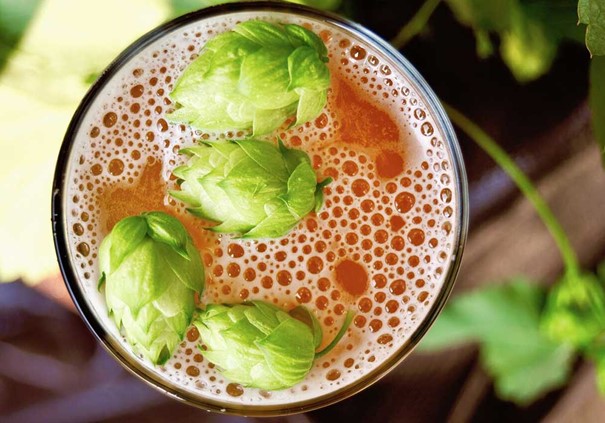
https://www.brewer-world.com/dry-hopped-vs-wet-hop-beers-whats-the-difference/
A few additional questions
What is the difference between the classic cone and the wet hop?
The term “cone” usually refers to the dried hop cone sold by hop growers and vendors. It will therefore have been dried, either directly or indirectly depending on the farm, and will contain less moisture and oils compared to fresh hops. However, being dried, the cone can be stored and used year-round.
Harvest beer, Fresh hop or Wet Hop?
Depending on the brewery, the name for this style varies. For some, like the Great Divide Brewing Association, a Fresh Hop beer is “brewed in the fall with wet, whole cone hops.” For Bale Breaker Brewing Company, a brewery located in the heart of the Yakima Valley hop fields, it’s a Wet Hopped Beer. Founders Brewing Company, on the other hand, uses the term Harvest Ale.
The important thing is that these beers are brewed with hops that have never been dried and are therefore full of oils, water, and flavors. Generally, they are produced during or just after the harvest period, so they are promoted in October or November.
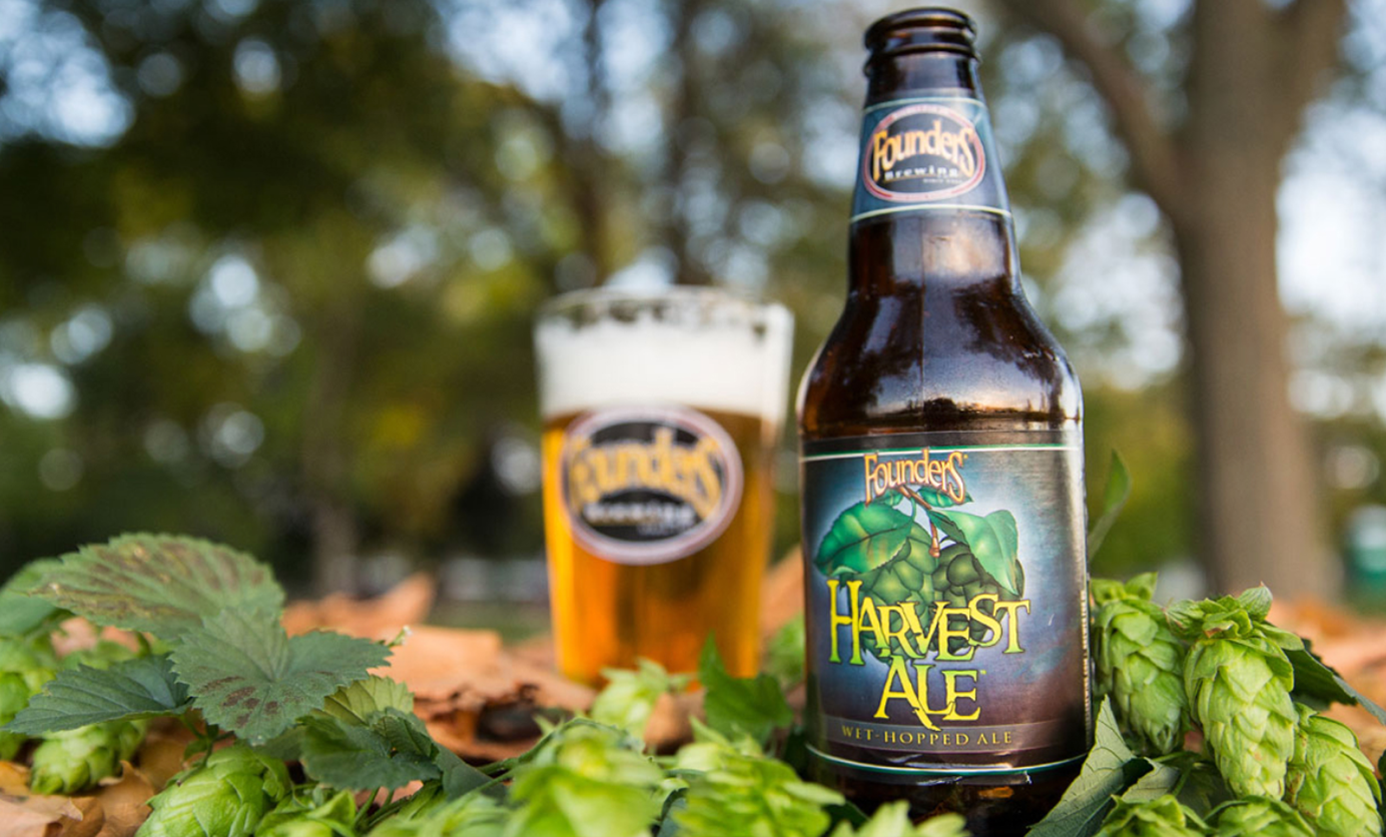
Founders’ Harvest Ale
Can you brew with wild hops?
For those who have already found wild hops near their homes, you can absolutely try them in your brews! That said, you’ll be brewing “blind” with hops that could have very different characteristics in terms of bitterness, flavor, and oil concentrations. It’s also worth noting that these wild hops are generally much less rich in oils and aromas. For these, it’s best to brew a fairly classic pale ale and let the hops express themselves at the end of the whirlpool or during a dry hopping.
Terrabière Botanique with wild hops
Brewing with fresh hops/wet hops takes place once a year and highlights the natural aromas of the hops. The resulting beers are often quite distinctive, with a dominant herbaceous character, sometimes with a hint of mint. It’s an excellent way to showcase or promote a particular hop variety and has become a tradition celebrated annually.
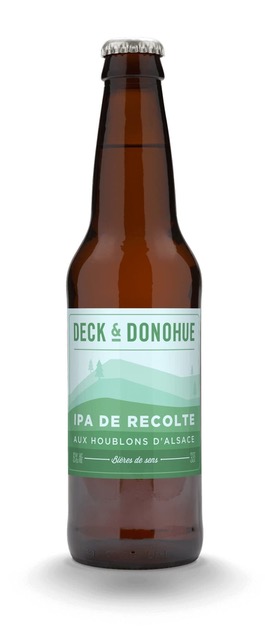
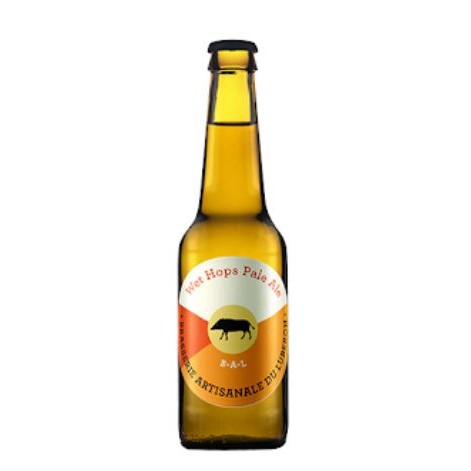
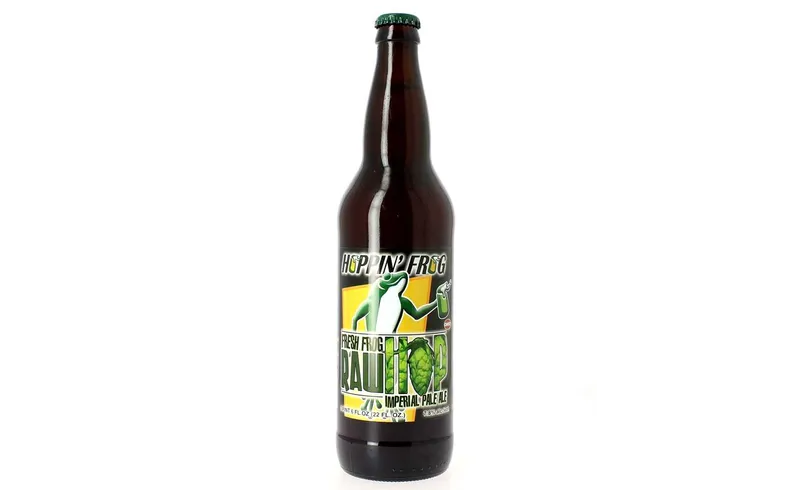
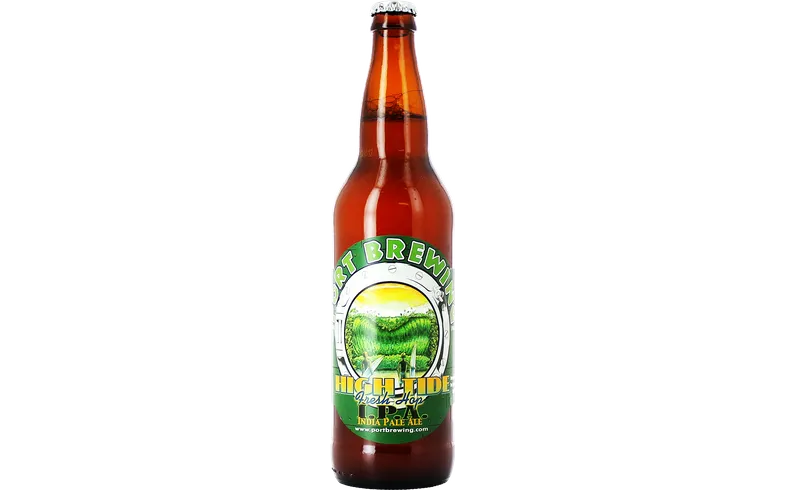
Some examples of Wet Hop Beers:
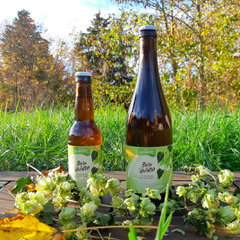



- …
Sources
https://www.allagash.com/blog/what-is-dry-hopping-vs-wet-hopping/
https://bisonbrew.com/how-to-brew-fresh-hops/
https://vinepair.com/articles/difference-wet-hop-fresh-hop-dry-hop-beers/
https://www.brewer-world.com/dry-hopped-vs-wet-hop-beers-whats-the-difference/