A complete supply chain
At the European level, HOPSTORE is one of the few companies that can boast of using a complete chain of processing and packaging of certified organic hops.
The hops are first loosened and then crushed before being put through a pellet press to form T-90 pellets.
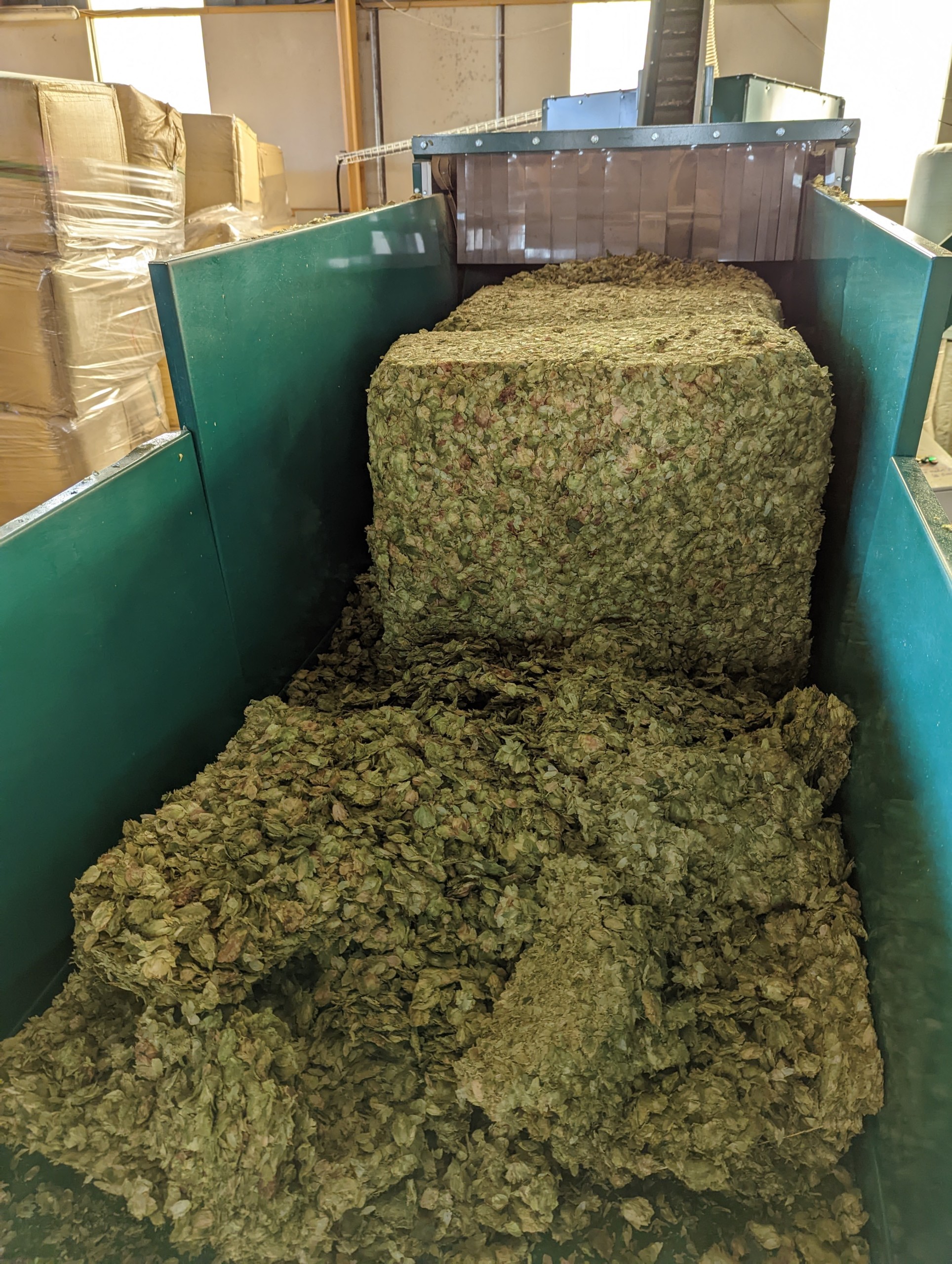
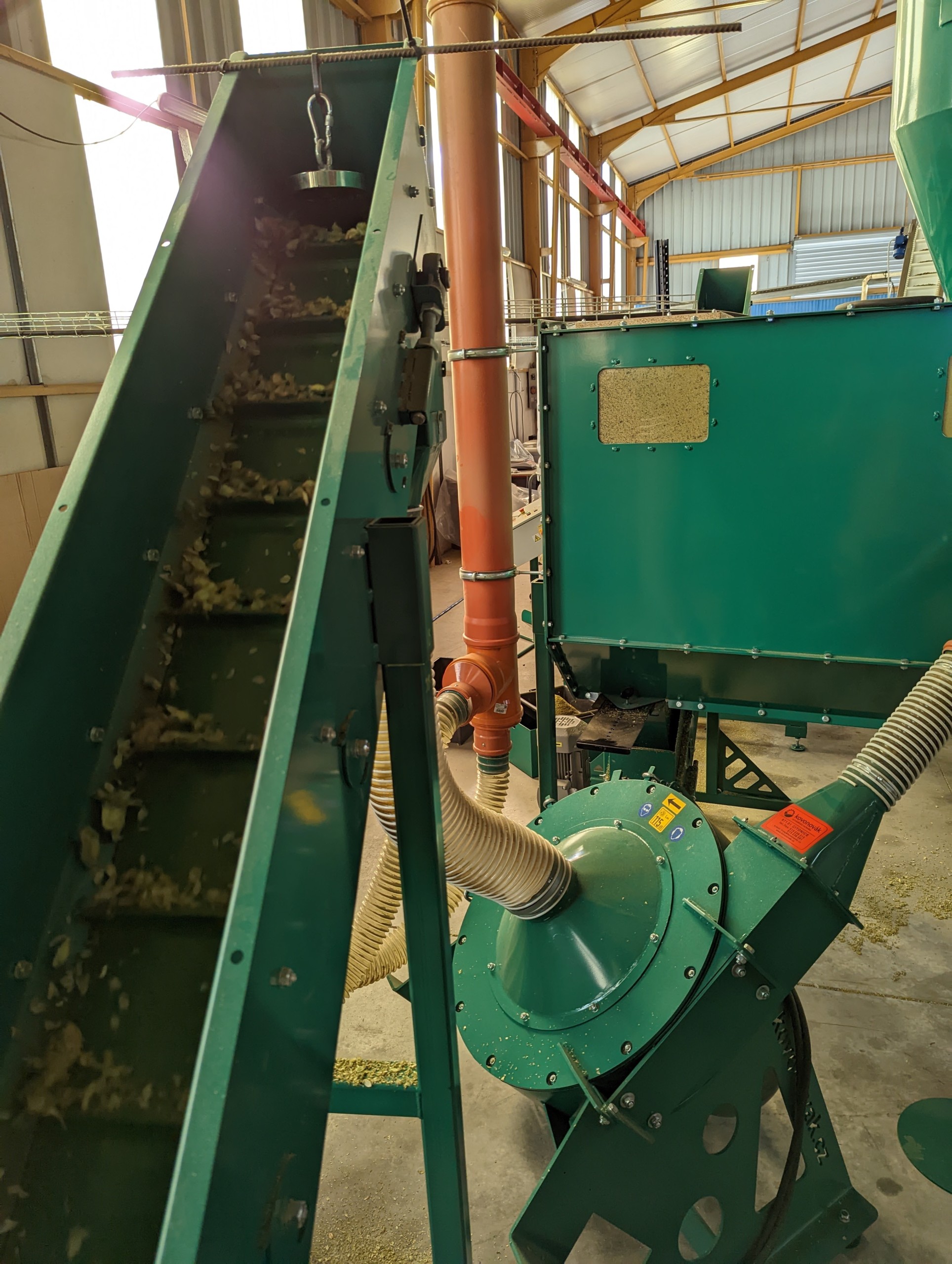
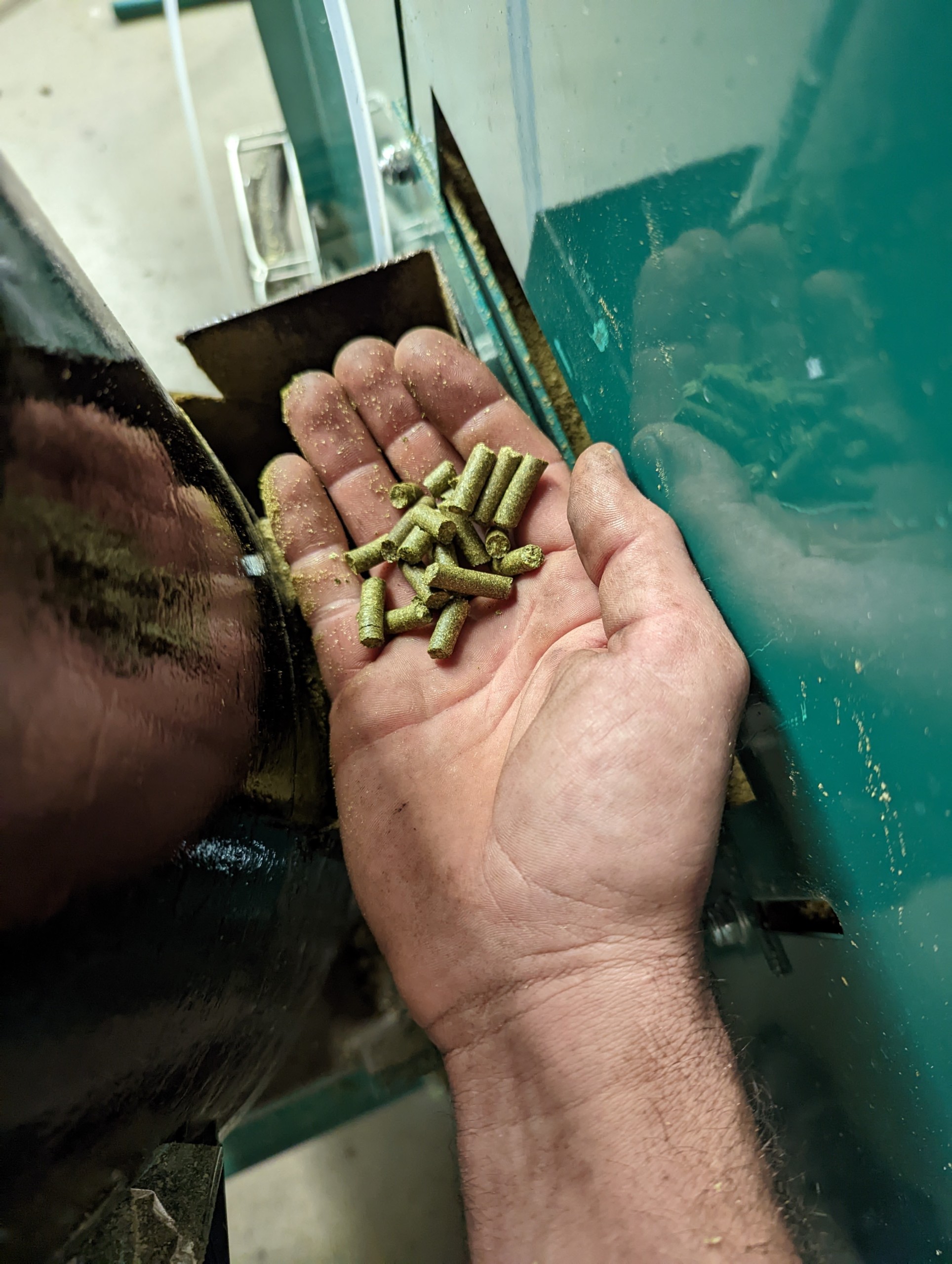
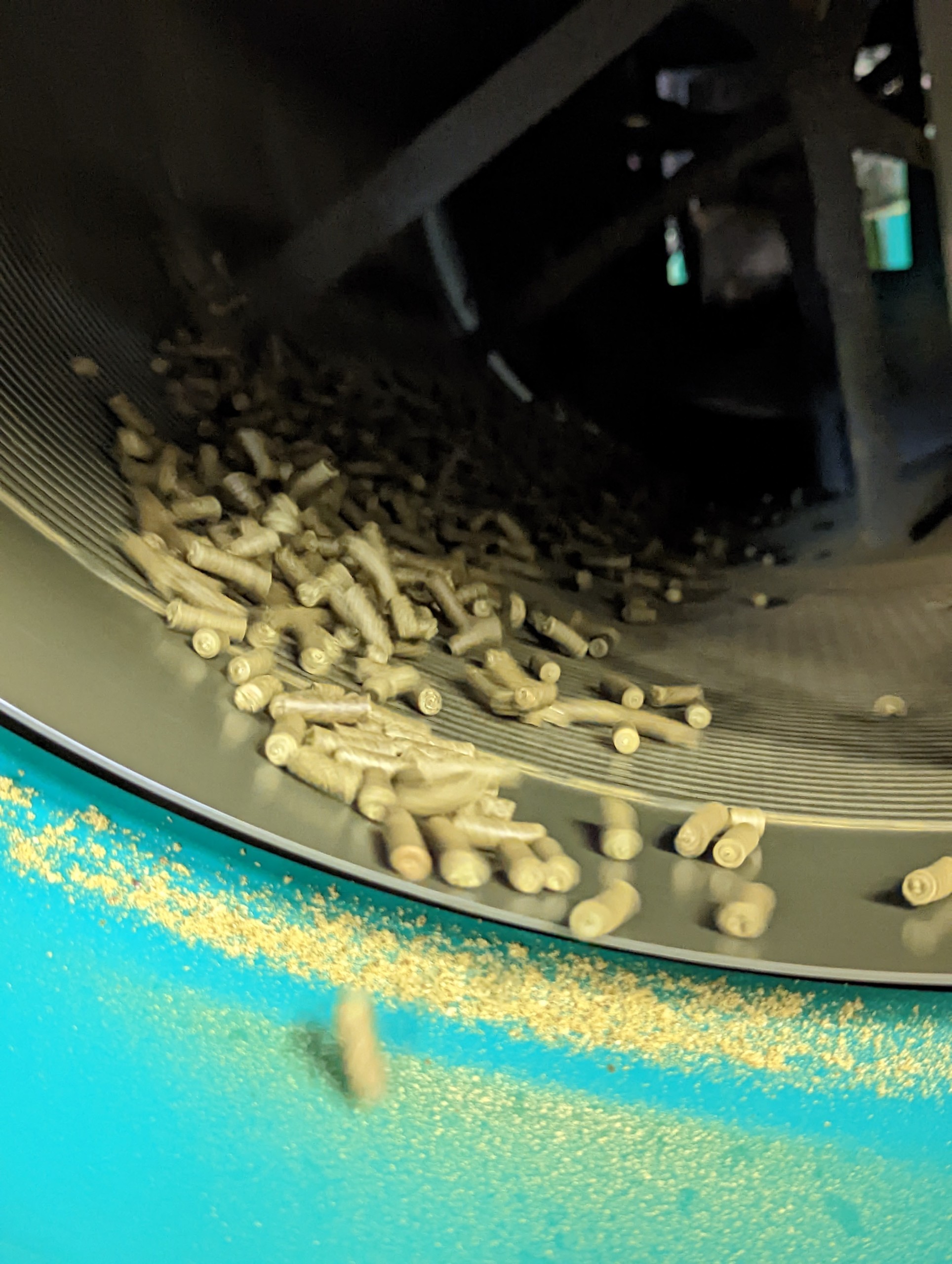
The pellets are then cooled before being packaged in 5kg bags.
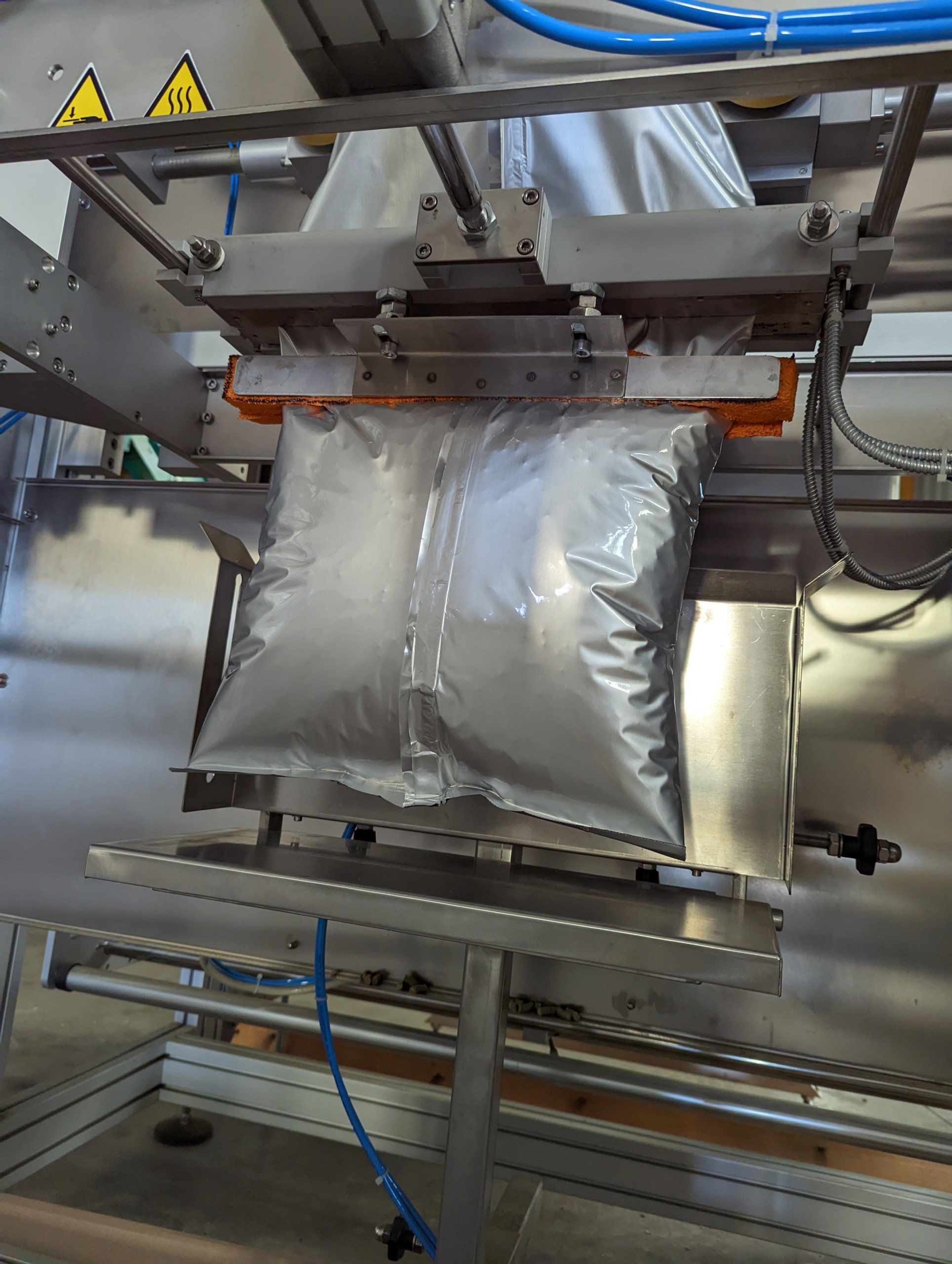
Opaque vacuum-sealed bags, printed, formed and cut. The bags are packed in 20kg cartons and then palletized before being stored in a cold room.
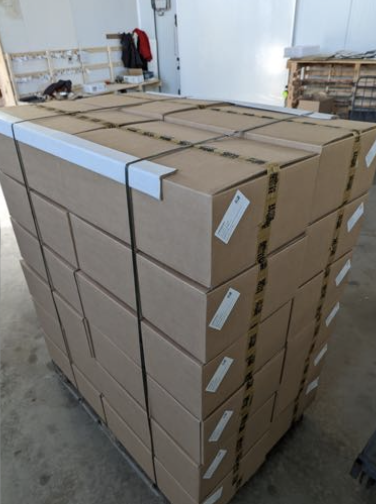
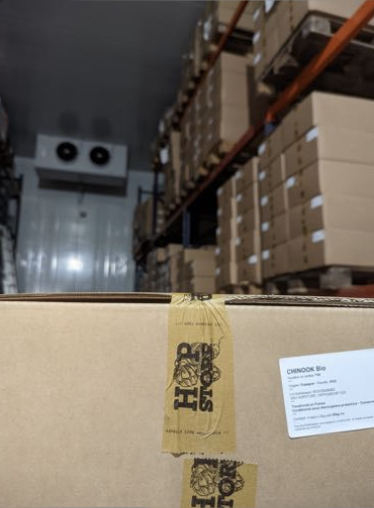
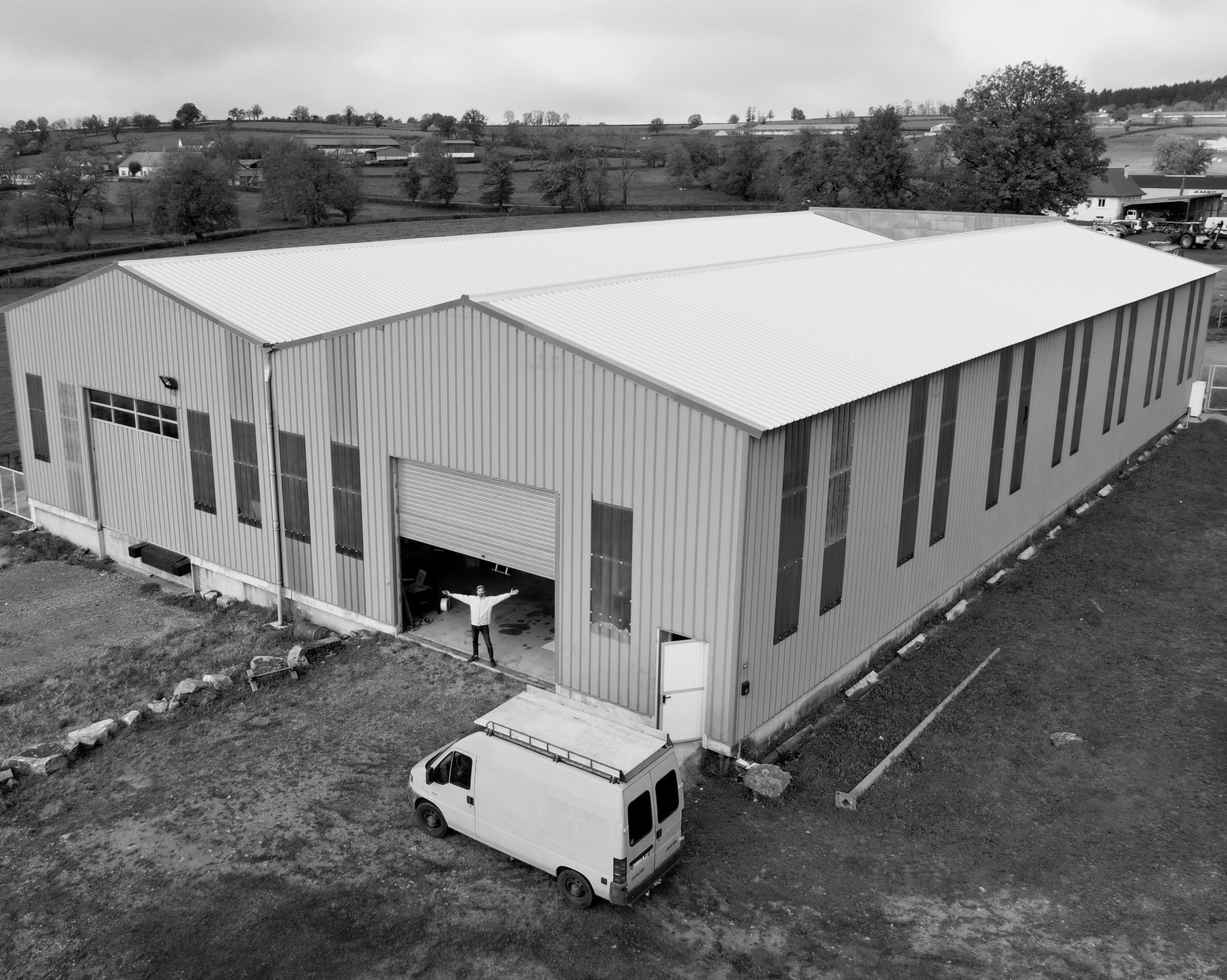
The large cold room allows for the storage at 5°C of all the pellets produced on site and the hops which arrive directly in pellet form.
Brewery contracts allow these hops to be stored for a year.
Part of the stock is offered for direct sale or ” SPOT ” via the online store.
The packages are prepared on site and shipped daily.
Great care is taken at each of these stages and we regularly improve our processes to offer top-quality service and hops.
Sourcing
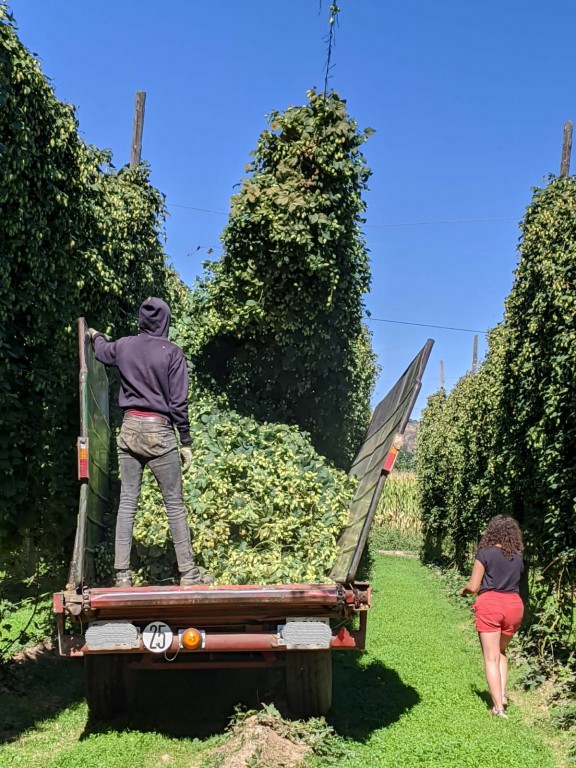 A significant part of our work involves identifying partner producers. No shop without hops. No hops without producers.
And not just any hops! Hops that are at least certified organic. The mere presence of this label considerably complicates the choice of partner.
It is not just about knowing how to produce without synthetic plant protection products – understand “as much as possible in balance” with ecosystems – you have to have started the conversion or creation process in the rules, have obtained the valuable certificate and provide the information necessary for its long-term preservation.
Organic certification implies a commitment of resources for the producer. In other words, they must prove that their practices are compatible with the specifications of the organic farming label, particularly regarding inputs.
Another certification is a mandatory prerequisite: the “hops” certification. It is based on organic criteria such as seed content, leaf proportion, moisture, etc.
The producers we work with must therefore fully comply with this certification process in order to sell us their products. Otherwise, traceability cannot be guaranteed. In some cases, the transport of hops will not be possible if these documents are missing or incorrect.
In addition to these preliminary steps, we systematically request analyses from our partner producers after harvest – although the regulations do not require it – to ensure that the hops comply with the AB label.
For two main reasons:
- Preventing potential cross-contamination that could occur during the pelletizing of hops;
- Protecting brewers from potential downgrading of their products.
Striving for zero waste
 In practice, experience has shown us that it is impossible to guarantee the cleanliness of a batch 100% over time. In the absence of mandatory analytical methods, lists of tested substances, and detection thresholds, the conclusions of health investigations conducted by certification bodies can lead to contradictory results, left to their sole discretion.
In practice:
- Different analytical protocols lead to different results.
- The detectable products in a laboratory are not the same in all analytical laboratories.
- The interpretation of any detected products will vary from one certification body to another, and from one country to another.
- The chemical composition of hops changes over time.
Added to this are analytical tools that continue to progress (lower detection thresholds, longer lists of detectable products, etc.) in an increasingly polluted environment, it must be said.
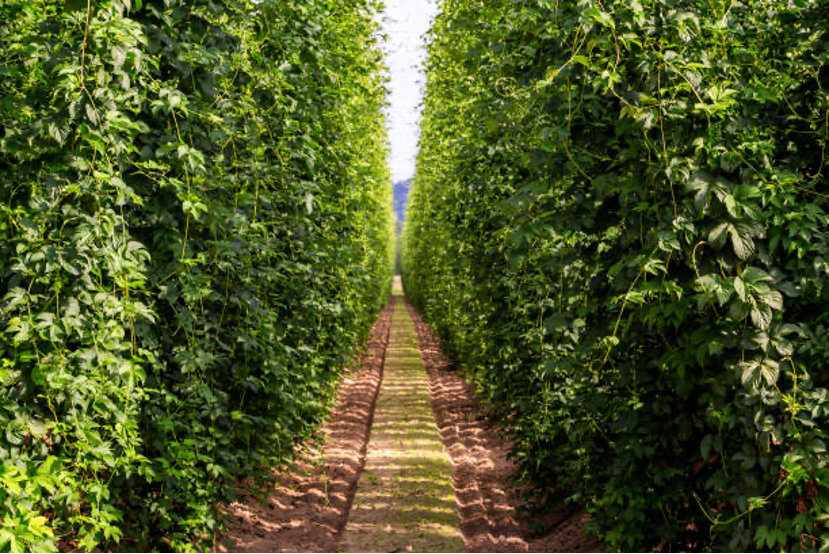 Not forgetting that a hop field is vast and that the results of the same batch can vary greatly from one end of the field to the other…!
All of this makes our task considerably more difficult. We strive for perfection, but it’s impossible to guarantee it. Strange profession, strange times.
Personally, we cannot endorse any form of agriculture other than organic. Professionally, it would undoubtedly be much simpler. This leads (among other things) the major players in the sector to turn away from the label, even though the demand for healthier products exists.
Sometimes you have to wonder if all this isn’t designed to discourage us (all the players in the industry) from supporting this sustainable model, which is more respectful of the soil and of living things.