

You can also place your orders by phone or email.


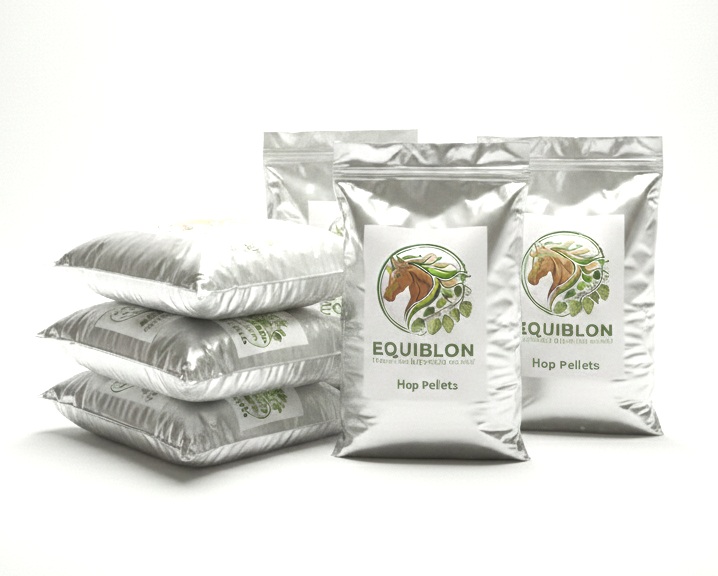

Price range: 15,00€ through 49,00€ HT
 “We are the only ones to offer ‘fresh’ hops that have retained 100% of their organoleptic properties. Indeed, the hops are pelletized immediately after harvesting and packaged in opaque bags under a protective atmosphere and kept refrigerated. Upon opening the bag, you will enjoy the hop flavors; which proves that the oils are indeed present.”
Here is the recommended daily dose for ingestion:
In case of a severe crisis, you can increase the dose to up to 50g/day.
If your horse is picky… You can also put the pellets directly in the stall, mixed into the bedding or in a dedicated container.
In this case, several kilos will be needed to ensure that the concentration of essential oils in the box is high enough to provide a health benefit.
Hops are a recognized medicinal plant.
It has always been used to calm the nervous system . This traditional use is recognized by several health authorities, including the European Medicines Agency (EMA), the World Health Organization (WHO), Commission E of the German Federal Ministry of Health, and the European Scientific Cooperative on Phytotherapy (ESCOP). There is evidence supporting the effectiveness of hops in treating nervousness, tension, stress, restlessness, and anxiety. It can therefore greatly help to soothe sensitive or easily distracted horses, helping them to focus on training or to acclimate more smoothly, for example.
In addition to its primary use as a sedative (excellent in synergy with valerian!), hops—rich in tannins with antiviral properties—are traditionally used in India and China to treat ailments such as headaches, indigestion, and intestinal cramps. The Cherokee people also used them as an anti-rheumatic, analgesic, and to treat inflammation of the kidneys and urinary tract. But hops are also rich in vitamins and minerals such as vitamin C, vitamin B6, and iron. These nutrients are essential for maintaining good health and play an important role in the body’s normal functioning. Hops thus seem ideal for promoting overall well-being .
Research from the University of Kentucky and the U.S. Department of Agriculture* suggests that the antibacterial properties of hops slow the growth of harmful bacteria and help maintain a proper intestinal pH . Hops thus become a valuable aid in controlling microbiological problems and reducing the risk of laminitis .
In addition to its recognized antispasmodic effect on intestinal and gastric problems, it is also used in cases of general weakness, particularly when the animal has lost its appetite and is emaciated. The bitter principle of hops helps to stimulate the digestive system and trigger the appetite .
*“Inhibition of fructan-fermenting equine faecal bacteria and Streptococcus bovis by hops (Humulus lupulus L.) beta acid,” Journal of Applied Microbiology, April 2014
On the AFLD (French Anti-Doping Association) website , “HUMULUS LUPULUS” or “HOPS”, hops are not considered a doping product:
Status : Authorized drug // Authorization procedure : No specific steps // Additional information: Specific specifications : None
Here’s some good news: your horses will certainly appreciate the stress-relieving benefits of hops during various competitions, meetings, gatherings, group outings, shows, exhibitions, and more! Hops are also not on the International Equestrian Federation’s list of prohibited substances: https://prohibitedsubstancesdatabase.feicleansport.org/
We have created a varietal blend capable of providing the best support for your animal(s).
Here is the recommended daily dose for ingestion:
In case of a severe crisis, you can increase the dose to 50g/day. While hops do have therapeutic effects, it’s not always easy to get horses to ingest them. Hop pellets are high in vegetable oils and therefore very pungent. Horses often refuse them when presented in their raw form. Here are several ways to prepare hops:
If he still refuses to swallow it, you can try throwing the pellets directly into the stall. The oils will diffuse into the air and be inhaled. In this case, you’ll need to use larger quantities to achieve a therapeutic effect. Approximately 5 kg spread over the bedding, which should be renewed every two weeks. Since our sense of smell is 1000 times less developed than a horse’s, you can assume that if you can barely smell it… he smells it very, very strongly.
It’s up to you to find the method that works best for you and your horse. Although hops are an ancient plant, their therapeutic uses are still relatively unknown (or perhaps they’ve been forgotten over the centuries, like much other plant-related knowledge). Experimentation will therefore be necessary. We’re here to support you in ensuring your horse’s well-being.
To best preserve the properties of the hop pellets, we recommend carefully resealing the bag after opening, minimizing air and light exposure (as this oxidizes/degrades the product). Ideally, store in a cool place.
WARNING: The information mentioned above is not a substitute for the advice of a qualified veterinarian.
| Weight | N/A |
|---|---|
| Equiblon | Horse – 3-week treatment, Pony – 3-week treatment, Special “Potpourri”, Special litter |
Offer subject to price and stock availability at the time of request.
By buying organic hops you promote biodiversity* and
limit global warming**
Hops are susceptible to the same diseases as grapevines. Therefore, non-organic cultivation can involve multiple treatments (including synthetic products) that harm biodiversity in the soil and around hop fields. Organic farming preserves soil life, insects, birds, and other biodiversity.
Organic hop cultivation prioritizes the use of compost and other natural fertilizers. This results in a high concentration of carbon in the soil. Less CO2 in the air means less global warming.
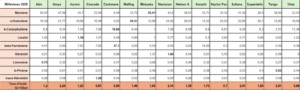 Vous trouverez également sur la boutique, pour chaque variété testée, un graphique en étoile.
Par exemple pour l'Abis :
Vous trouverez également sur la boutique, pour chaque variété testée, un graphique en étoile.
Par exemple pour l'Abis : Et un nouvel onglet dédié dans la fiche du produit :
 Dans lequel vous pourrez consulter le détail des analyses.
Par exemple pour l'Akoya :
Dans lequel vous pourrez consulter le détail des analyses.
Par exemple pour l'Akoya :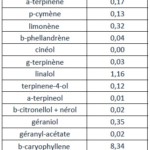
No account yet?
Create an Account


