Hopping instead of fermenting: the future of non-alcoholic drinks through hops?

Article written in collaboration with Alexandra Berry
During the heatwave we experienced this summer, who didn’t feel like drinking the lightest beer possible?
How to choose a beer with little or no alcohol and that doesn’t have the watery taste or residual sugar that can be found in these styles?
Fermentation is the process of converting sugars into alcohol. A lack of fermentation therefore means that unfermented sugars remain in the beer. This explains the lack of smoothness and the sweet aftertaste.
Hops seem to be the ideal solution to remedy this occasional lack of flavor or complexity. Indeed, dry hopping beer allows it to develop aromas (fruity, exotic, bitter) without affecting its alcohol content.
Aroma in all its simplicity
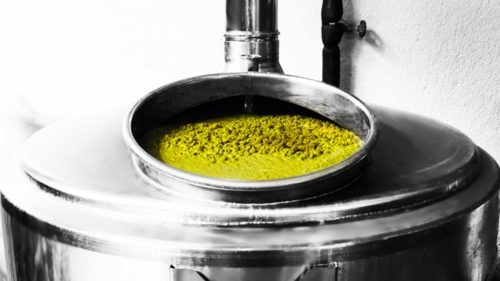
In all its forms, hops have the immense advantage of being usable both hot (to extract their bitterness) and cold (to enjoy their aromas). This is where dry-hopping comes in: cold-brewing your beverage with fresh hops to extract all their oils without altering the acids.
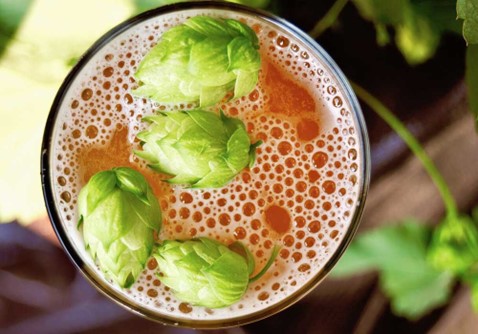
Source: https://www.brewer-world.com/dry-hopped-vs-wet-hop-beers-whats-the-difference/
Brewing expert Scott Janish has also proven that a very short cold-hopped infusion is preferred to extract the aromas.
Why a short infusion?
Through extensive testing on various beers with different hops, Janish has proven that a longer infusion doesn’t necessarily produce more aromas and that a 24-hour dry hopping is sufficient for aromatic extraction. Indeed, some terpenes, such as linalool and myrcene, are only soluble for a few hours. While this extraction potential can be increased by agitating the solution, this also risks increasing the astringency and bitterness of the brew.
A long infusion can therefore develop this risk of astringency and a perceived bitterness, especially if infused with pellets, even with hops with a very low alpha acid content.
During cold brewing, the goal is often to develop thiols (4MMP or 3MHA), which are precursors to the aromas of passion fruit, guava, grapefruit, blackcurrant, and other fruits. These thiols are extremely fragile and very easily extracted during dry hopping. Experiments show that these thiols are much more pronounced after 24 hours of brewing than after two to eight days.
A quick reminder of thiol-rich varieties to favor for dry-hopping: Citra, Simcoe, Chinook , Mosaic, Ekuanot, Hallertau Blanc , Summit, Nelson Sauvin .
Why a cold infusion?
A cold infusion also helps to avoid the ” ” Hop bite ,” which translates to a rather aggressive vegetal bitterness and is due to the development of polyphenols in the final beer. These are greatly limited by low temperatures and a shorter infusion time.
Ideally: a short, cold infusion of the hops
Cold dry hopping also helps to limit the chances of hop creep , particularly in a non-alcoholic drink that may still contain unfermented sugars.
* Hop creep occurs when the addition of hops produces fermentable sugars, particularly dextrins, which can referment in the wort. This refermentation can create diacetyl (a buttery taste) but also over-carbonation of the beer, which can even cause bottles to explode.
Finally, Scott Janish also managed to prove that a long infusion of hops could decrease the beer’s foam retention capacity… We always prefer a fresh beer with a good head of foam!
Non-alcoholic beers
After Dry January, and now Sober October, the trend for alcohol-free beers is on the rise, encouraging breweries to be even more creative in producing beers that are both tasty and healthy!
To make alcohol-free beer, brewers generally remove the alcohol from the beer or limit its formation during fermentation. It is indeed possible to prevent alcohol formation during fermentation by using special yeasts (such as NAY or LoNa) or by stopping the fermentation process altogether.
Some examples of non-alcoholic beers
Athletic Brewing: This American brewery was created by an athlete tired of having to choose between his workout and his happy hour. He therefore decided to dedicate his brewery solely to non-alcoholic beers. You can already find his Golden Ale, IPA, and Stout on the French market. The IPA is generously hopped and maintains a beautiful complexity on the palate despite its 0% ABV!
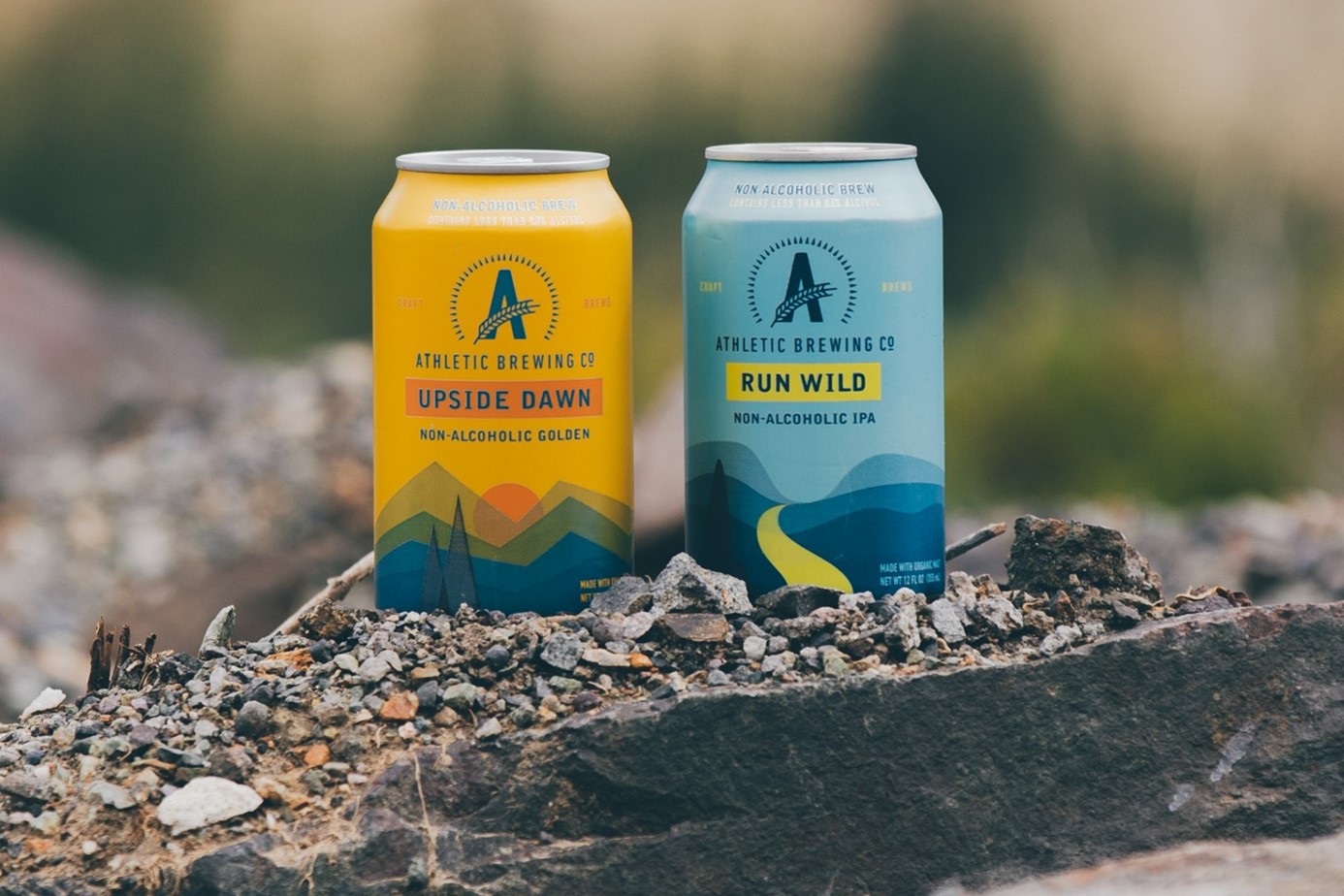
Source: https://athleticbrewing.com/
Craig Allan: Agent Moderator, a beer with strong hops but 0% alcohol.
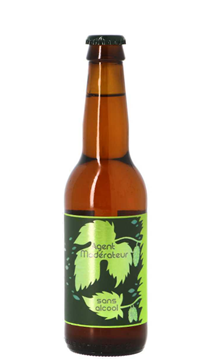
Source: https://www.gueuledejoie.com/produit/craig-allan-agent-moderateur/
Gallia IPA: Brewed in Paris, this IPA is loaded with Sorachi Ace and Sabro hops for an explosion of bitterness with coconut and tropical fruits.
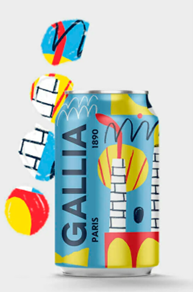
Source: https://galliparis.com/collections/toutes-nos-bieres
Alongside non-alcoholic beers, we can find other fermented hop-based drinks that can be enjoyed first thing in the morning:
Kombucha… with hops!
This sparkling, slightly vinegary beverage is fermented using a sweet tea-based solution. The tea is fermented in an airtight environment containing a culture of yeast and bacteria resembling a rubbery membrane, commonly known as a “kombucha mother” or SCOBY*. This culture feeds on the sugar in the tea preparation, fermenting it. The sugar ferments into alcohol, which then transforms into carbon dioxide – hence the final effervescence.
* Symbiotic Culture of Bacteria and Yeast
In addition to being light, alcohol-free and refreshing, kombucha has the advantage of being probiotic and therefore highly beneficial for the intestinal flora.
Add some hops for a kick of bitterness, and kombucha becomes a thirst-quenching, tasty, and very healthy drink!
Example of Kombucha with hops:
Hoppy Loven – this drink is made up of 99.4% kombucha with a little green tea, black tea, then cold-hopped with hops from northern France.

Source: https://lovenkombucha.com/
Kombeercha – this drink is a green tea kombucha brewed with cold-brewed bittering and aromatic hops. The bouquet of a light IPA with the goodness of artisanal kombucha! 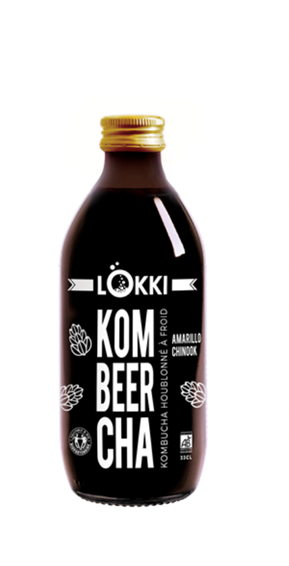 Source: https://www.lokki-kombucha.fr/recettes/
The “hoppy waters”
Finally, what could be more natural than simply lightly hopped water? If you enjoy iced tea, simply replace the tea with fresh, fruity hops. A few bubbles and some ice cubes, and you have the perfect drink for hot weather. Zero alcohol, zero calories, and only healthy ingredients.
Some then enjoy mixing the flavors by adding fresh fruit or floral extracts such as rose, hibiscus, fig leaf…
Some examples from Hoppy Waters:
90BPM: Calvin and Hops, thirst-quenching, sugar-free, a small detox sparkling water with lime and hops.
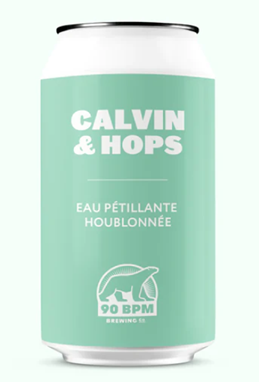
Source: https://www.90bpm.beer/products/calvin-hops-eau-petillante-houblonnee
Northern Monk Holy: A sparkling water infused with Citra to which mango puree is added.
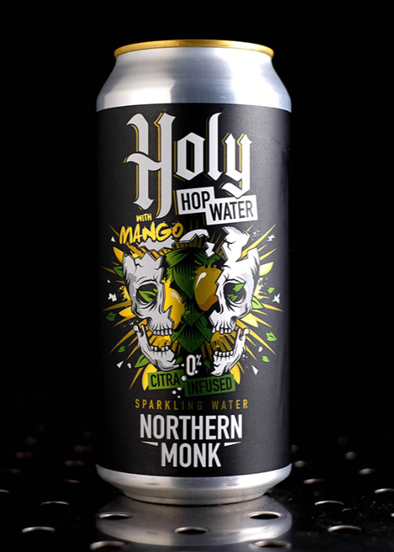
Source: https://www.northernmonk.com/products/holy-hop-water-mango-citra-infused-sparkling-hop-water
Lagunitas Hoppy Refresher : This sparkling beverage is packed with Citra, Equinox and Centennial hops, for a big splash of surprisingly fruity flavor.
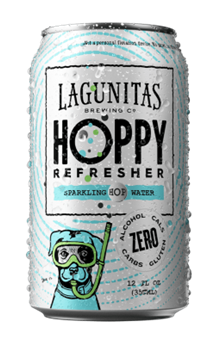
Source: https://lagunitas.com/beer/hoppy-refresher/
Source :
http://scottjanish.com/a-case-for-short-and-cool-dry-hopping/
https://beermaverick.com/what-is-hop-water-recipe-notes/
https://www.liveeatlearn.com/the-simple-guide-to-kickass-kombucha/
https://beermaverick.com/the-story-behind-craft-non-alcoholic-brews/