
Lager: an overview of the origins and evolution of a legendary style

Article written in collaboration with Alexandra Berry.
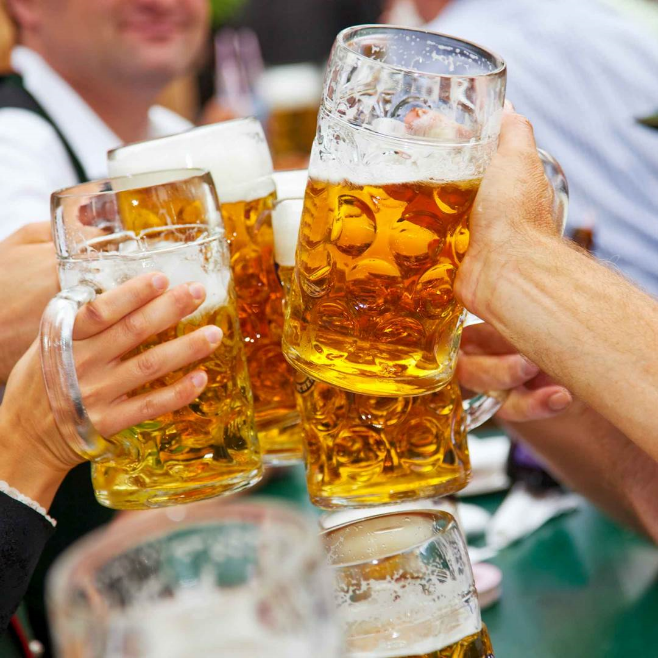
In the midst of OKtoberfest, it’s the perfect time to revisit the history of Lager and give an overview of the beautiful family of variations that has been created over the years around this most convivial drink!
What is lager?
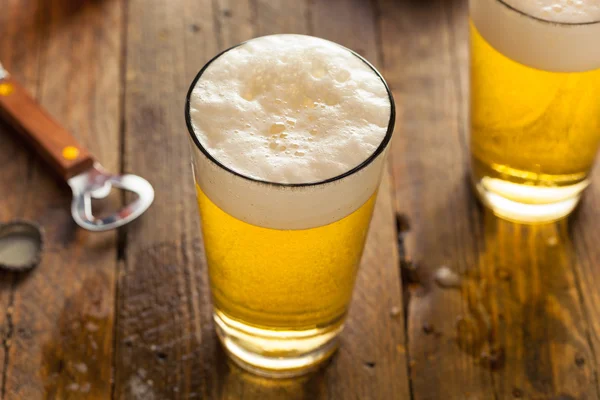
Lager is perhaps the most well-known, appreciated, and widely sold beer style in the world. With a color ranging from clear blonde to coppery amber, light carbonation, and a white head, lager offers a refreshing balance between a slightly biscuity, malty roundness and a herbaceous bitterness. With an alcohol content between 3 and 5 percent, lager encompasses several distinct sub-styles developed over the years, influenced by different terroirs and technological advancements. Lager is ideal for producing thirst-quenching beers, festive beers, and ceremonial beers.
Top fermentation VS bottom fermentation
Although beer has its origins dating back almost 7000 years, Lagers only appeared in the brewing world around the 16th century in Germany.
Derived from the verb lagerein , meaning “to store,” this style of beer originated from a brewing tradition that involved fermenting the beer at a low temperature and storing it at a temperature between 5 and 12 degrees Celsius. This technique followed several German edicts aimed at improving beer quality.
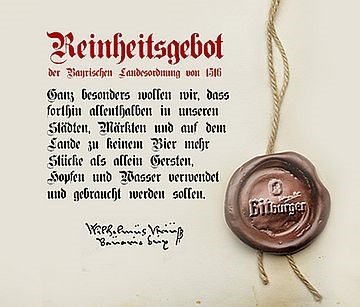
In 1516, Duke Wilhelm IV of Bavaria imposed the Reinheitsgebot, a purity law limiting beer production to four ingredients: water, malt, hops, and yeast (although yeast was not known at the time).
This purity law profoundly influenced German brewing culture. Wilhelm’s successor, his son Albert V, continued to shape this legacy. Despite strict ingredient selection, beer quality was often mediocre, and brewers realized that heat increased the risk of infection. Bavaria’s weather, with its relatively hot summers and rather cold winters, prompted Duke Albert to issue a new edict in 1553 that only permitted brewing beer between September 29th and April 23rd. This allowed for brewing under optimal conditions and temperatures. This edict not only altered the brewers’ calendar but also shaped a new brewing method.
The birth of the Lager
Indeed, despite Bavaria’s temperature variations, the region’s limestone cellars offer fairly consistent conditions year-round. Furthermore, the low temperatures and humidity have encouraged the proliferation of yeasts that thrive at the bottom of the barrel rather than on top, thus giving rise to the well-known Lager style. This bottom fermentation requires at least five weeks, which explains the name of the process , lagerein , meaning “to store” in German. This is also due to the available yeast strains, particularly Saccharomyces pastorianus .
Unlike Saccharomyces Cerevisiae found in Ales, this strain prefers cold temperatures and ferments happily at around 4° Celsius rather than 21°. Producing fewer esters, acidic and phenolic components, and therefore fewer aromas than S. Cerevisia , Pastorianus promotes the transformation of all residual sugars, resulting in relatively dry beers with good carbonation.
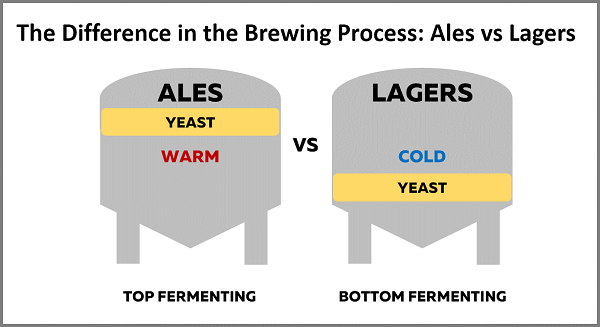
Once this yeast had spread throughout the Bavarian brewing process, two main beer styles emerged: top-fermented beer (Ale) and bottom-fermented beer, Lager. Lagering became a brewing process deeply rooted in brewing traditions.
*Moreover, barely 50 years later, Cologne banned the Lager process in 1603 and to this day Cologne and Dusseldorf are both known for their production of top-fermented styles: Kolsch and Altbier.
The Evolution of the Lager
The Dunkel Lager
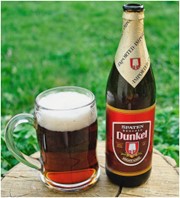
The dominant sub-style of the Lager family in Germany until the 18th century was Dunkel, meaning “dark” in German. Indeed, during the Renaissance and up until the Age of Enlightenment, the only malt available was heated directly over a wood fire, producing a rather dark and smoky malt. The beers thus reflected this rich and complex character. The aromas of these Dunkel Lagers, which can still be found today, are therefore quite indulgent, with toasty notes and hints of caramel.
Bock Bier
Other styles emerged alongside Dunkels, such as Bock and Doppel Bock. Bock originated in the town of Einbeck and dates back to the 12th century. These beers were similar to ales, brewed with a high proportion of malt, making them sweeter and often higher in alcohol. This high alcohol content facilitated preservation and thus the beer’s distribution throughout the country while maintaining the brew’s quality.
Traditionally, Bocks were served seasonally from May 1st , and mainly at breakfast!
Their origin is where their name comes from: when beer lovers ordered an Einbeck beer, “ein-Beck” mutated to become “ein Bock,” which also means “goat.” You’ll therefore regularly find images of goats on German Bock bottles 😉🐐
DoppelBock
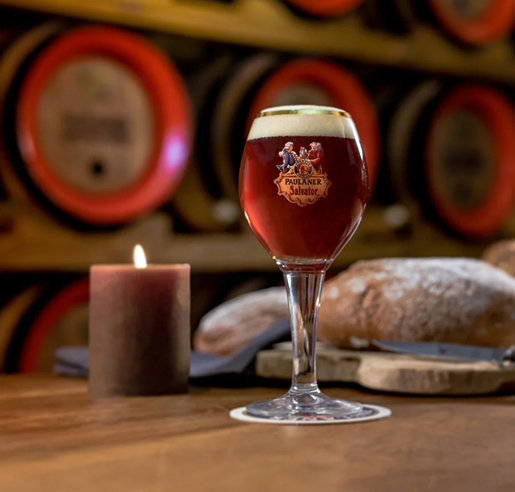
Doppelbocks appeared around Munich in 1635, specifically created by Benedictine monks of the Pauline order. Also a seasonal beer served from the beginning of April, this beer was even stronger than its counterpart (Doppel means Double in German) and designed to help the monks get through the Lenten period and their fasting.
*Created to help monks during their difficult period of fasting, it was nicknamed Salvator. You will also see many Doppelbocks with the suffix -ator: Ayinger’s Celebrator, or Augustiner’s Maximator.
These beers are much rounder than bocks, sweeter with a hint of hoppy bitterness and were considered luxury beers.
When the Lager pales
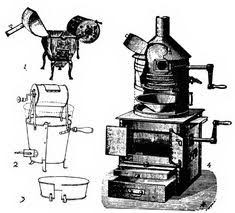
Lagers were therefore generally amber-colored and caramelized beers. In 1818, a British inventor revolutionized this popular beverage. Daniel Wheeler, drawing on the principles of coffee roasters, invented a process for drying and roasting malt using indirect heat, rather than wood smoke. This resulted in a pale malt, without the strong smoky notes previously found in lagers. In addition to its pale color, this technique ensured consistency in the roasting of the malt from one batch to the next.
This innovation emerged at a time when glass and crystal were replacing stoneware or clay containers. A beer with an opaque and inconsistent color doesn’t appeal to the masses… On the other hand, a golden beer with a beautiful white head is much more enticing in a beautiful glass engraved with grains and hops!
The Lager then transforms into an elegant straw-colored or golden beverage, with much more delicate and subtle biscuit aromas; the hoppy bitterness comes through here with more freshness.
Marzen & Vienna Lager
In 1833, two highly influential master brewers also made their mark on the history of beer in Germany. Gabriel Sedlmayr of the Spaten brewery in Munich and Anton Dreher of the Dreher brewery in Vienna traveled to England and adopted Wheeler’s invention upon their return to Germany.
Producing their own pale lagers, Sedlmayr returned to Spaten and in 1841 launched Märzen during Oktoberfest. Although paler than the beers produced until then, Märzen retained rich, caramelized malt notes.
Dreher is innovating with its new Vienna Lager, using pale malt from Vienna, now known as Vienna Malt. It will also reveal rather toasty aromas and biscuit notes on the palate.
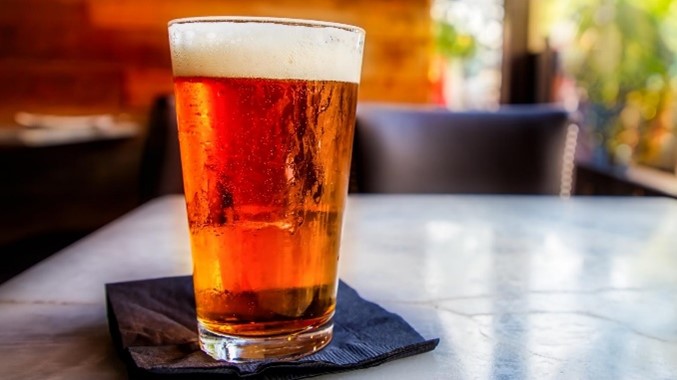
Although lighter than Bocks or Dunkel, Märzen and Vienna Lager are still quite coppery. Their clear color also has amber highlights and is usually topped with a beige head.
The creation of Pilsner
The biggest revolution in the Lager family did not take place in Germany but rather in a neighboring country, in Bohemia, in the Saaz region (now in the Czech Republic), with the invention of Pilsner.
At the beginning of the 19th century, the inhabitants of Plzeň (Pilsen) were fed up with their local beer and in 1839, the city asked two Bavarians, the architect Martin Stelzer and the brewer Josef Groll, to create a high-quality and innovative brewery, inspired by Bavarian styles.
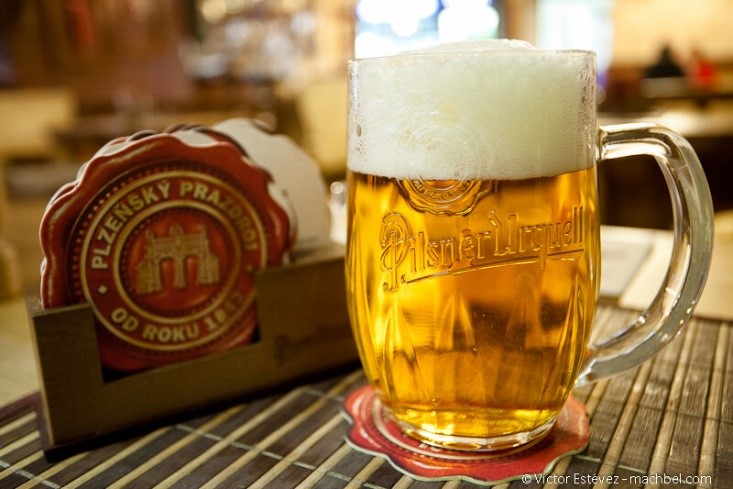
On November 11, 1842, their first brew was presented for St. Martin’s Day and was an immediate success! Indeed, its clear, golden color, its malty and biscuity roundness, its hoppy aromas, its lively and dry finish… everything was in place to seduce beer lovers! This beer was named Pilsner Urquell, Urquell meaning ” original source ” in German.
Josef Groll wanted to recreate a beer steeped in Bohemian tradition and terroir in his “Pilsner,” and water is the first and perhaps most important ingredient. The water from the Radbuza River was very soft, ideal for this new style of pale ale. He added local Moravian barley to his brew, malted using the famous technique borrowed from the English. He took the process a step further with an even lighter, paler malt that would later be known as Pilsner Malt, ideal for producing golden, clear, bottom-fermented beers.
He then selected hops that he found in Žatec, the Saaz , a noble hop that offers herbaceous and spicy aromas with floral touches.
To top it all off, he chose to ferment with a Lager yeast to produce a bottom-fermented beer that is dry and crisp, with little residual sugar and a beautiful, fine carbonation.
Not only will this beer appeal to international enthusiasts, but Groll is introducing a new sub-style of Lager, slightly more bitter and specific to the Bohemian terroir: the Pilsner.
An international export
The invention of refrigerated systems greatly aided the growth and export of lager styles worldwide. Invented by Carl Von Linde in 1873, this innovation allowed for year-round lager brewing and enabled brewers to control fermentation temperatures.
Technological advances in modes of transport will also greatly impact the brewing landscape.
In 1847, Jacob Christian Jacobsen founded the Carlsberg brewery in Copenhagen. In 1855, Frederick Miller opened the world’s largest lager brewing facility at the Miller Brewing Company (USA), and in 1864, Gerard Adriaan Heineken established his eponymous brewery in Amsterdam. Adolf Coors followed suit, also opening the famous Coors Brewing Company in the USA in 1873.

Lager has found its place as queen in the brewing industry and, through mass production, has become a so-called “industrial” beer. With brewing giants increasingly focused on profit, many shortcuts are taken, resulting in lagers being made from corn or syrups. To such an extent that, until about ten years ago, lager had become synonymous with “industrial,” mass-produced and lacking respect for taste or brewing tradition.
The craft lager renaissance
It would take the end of Prohibition, the two world wars and the revival of craft beer in the United States for Lager to regain its prestige!
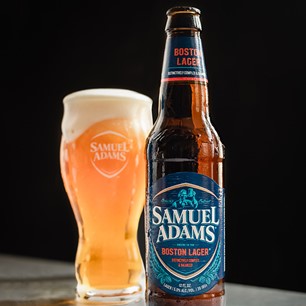
One of the pioneers in revitalizing beer’s image was Jim Koch, founder and brewer of the Boston Beer Company in 1983. In 1985, he introduced the beer that would become the flagship of his brewery: the Samuel Adams Boston Lager. Created from a recipe passed down from his great-great-grandfather, who brewed in St. Louis (the future site of AB InBev’s brewery), he emphasized that this beer was brewed in accordance with the German Reinheitsgebot (German brewing law), using natural and carefully selected ingredients. His Sam Adams Lager would become one of the best-selling craft beers in the United States.
California Common
One last descendant of the Lager is the California Common, also known as Steam Beer. This hybrid is a fusion of the two main fermentation families: a Lager yeast that ferments at temperatures around 20 degrees Celsius!
This creation originated with Anchor Brewing Company, a brewery founded in San Francisco in 1896 that broke with the Reinheitsgebot (German brewing law) by adopting a classic lager recipe using a blend of pale and caramel malts, a little hops, and yeast fermented in open tanks at room temperature (around 20 degrees Celsius). The steam escaping from the tanks gave the beer its name: Anchorsteam Beer.
Taken over in 1965 by Fritz Maytag, he wanted to recreate this flagship beer and revolutionized the craft beer market with his Anchorsteam beer!
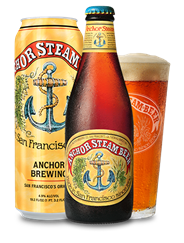
Now classified as a California Common, this style of Lager/Ale should have a clear color and good carbonation. On the palate, malty notes should underscore a bitterness typical of American hops, with citrus and spice undertones.
California Common, or Steam Beer, is a beautiful example of the reinterpretation of a brewing tradition. As it traveled the world, the style transformed to represent a new terroir. A fine example of how respect for and the transmission of tradition can also inspire new techniques and creations!
And if you’re feeling adventurous, here are a few HOPSTORE hop suggestions for creating your own Lager: Strisselspalt , Spalter , Aurora , Saphir , Callista 😉
Sources
https://www.anchorbrewing.com/blog/a-history-of-lager/
https://aeronautbrewing.wordpress.com/2020/05/14/history-of-lagers/