EU-MERCOSUR Trade Agreement

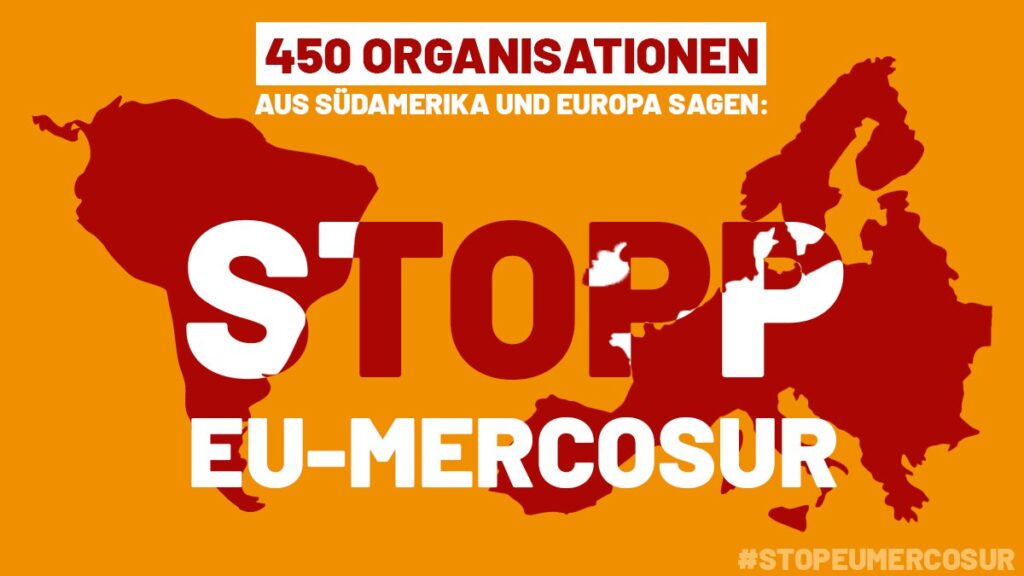
You can't miss this news, we'll tell you all about it!
What are we talking about?
The Mercosur economic alliance, created by the Treaty of Ascension on March 26, 1991, consists of Argentina, Brazil, Uruguay, Paraguay, and, since 2023, Bolivia (not included in the agreement).
Since 1999, the European Union and Mercosur have been negotiating an association agreement with two objectives:the development of trade relationsandthe promotion of cooperation and political dialogue between the two parties. An initial agreement was concluded on June 28, 2019.
The free trade component will eventually eliminate 91% of the tariffs imposed by Mercosur countries on European products and 92% of the tariffs applied by the European Union on South American products entering the Union.
After 26 years of negotiations and with the approval of a majority of member states, the European Commission gave the green light on January 9, 2025, for the agreement to be signed.
Money, money, money
And that is what this is all about: CUSTOMS DUTIES, i.e., taxes applied to the import (and sometimes export) of goods. So here we have the taxes levied by the EU on imports of MERCOSUR products and, conversely, the taxes levied by MERCOSUR countries when European goods enter their territory.
This is particularly true given that the relationship is strategic for the EU, which sources minerals such as lithium and copper from these countries and sees this agreement as a factor in its "economic security." The agreement should help limit dependence on China on the one hand and on the United States on the other, which is increasingly putting up protectionist barriers.
According to the European Commission website, exports from France to MERCOSUR are worth €5.56 billion.
To get an idea of the scale involved, it should be noted that in 2024 (figures for 2025 are not yet available), French exports to all countries combined amounted to €598.3 billion.
For the agreement with Mercosur, the elimination of customs tariffs on French exports concerns:
- The electrical machinery and equipment sector (telephone equipment, computer equipment, etc.), with French exports to Mercosur representing €1.2 billion in 2018 and 234,000 jobs in France;
- The transport equipment sector (aeronautics, automobiles, etc.), with Frenchexportsto Mercosur representing €1.76 billion in 2018 and 372,000 jobs in France;
- Chemicals and pharmaceuticals, withFrench exports to Mercosur representing €1.37 billion in 2018;
- Plastic and rubber products, withFrenchexportsto Mercosur representing €264 million in 2018;
- Optical, medical-surgical, measuring, and photographic instruments, with French exports to Mercosur representing €189 million in 2018.
The agreement also provides for the protection of products and beverages with French geographical designations: certaincheeses(Comté, Gruyère, etc.), certainwines and spirits(Chablis, Champagne, Guadeloupe rum,Cognac, etc.),Camargue rice, certainmeats and pork (Charolles beef, Bayonne ham, etc.),certain butters(Charentes butter, etc.),Marennes d'Oléron oysters,Agen prunes, andessential oil and lavender essence from Haute Provence.
Cheese producers will also benefit from the recognition of 344 "geographical indications" protecting them from imitations.
A great opportunity for France!
So at this stage of the discussion, we say to ourselves: "Great, with this free trade agreement, French products will be cheaper in these countries, which could open up new markets and opportunities for French companies."
Especially since quotas have been put in place to limit imports of agricultural products and avoid (too much) competition with European farmers. These quotas limit the volume of imported goods to between 1.6% and 2% of European consumption. This applies to beef, poultry, sugar, ethanol for the chemical industry, and rice. These quotas are also accompanied by a safeguard mechanism that can suspend trade benefits if there is significant damage.
In addition to this, and due to the widespread discontent that has been expressed on the issue, the following have been added:
Stronger and easier-to-implement safeguard measures :On October 8, 2025, the Commission presented aproposal for a regulationimplementing the bilateral safeguard clause provided for in the agreement with Mercosur. In order to ensure its effectiveness, the proposal specifies the conditions for applying the procedure. On December 17, the European Parliament and the Council reached a preliminary provisional agreement aimed at strengthening the protection of farmers in the EU. This agreement provides for alist of sensitive productssubject to enhanced monitoring (prices, import volumes) with the Commission drawing up a biannual monitoring report. With regard to the opening of an investigation, the provisional agreement reached to date provides that this will be triggeredwhen imports of a sensitive product increase by at least 8% or the price of the imported product falls by at least 8% and, in either case, the price of the imported product is 8% cheaper than the equivalent European product.The investigation must be opened within four months and, in urgent cases, provisional measures may be introduced within a maximum of 21 days.
Stronger controls on agricultural products imported into the EU : on December 9, the Commission presentedseveral measuresaimed at strengthening controls at EU borders and in third countries. These measures are part of the Vision for Agriculture and Food and are not specific to Mercosur; they will apply to all controls relating to agri-food imports. These measures include an increase in the number of audits carried out in third countries and at European border control posts. Finally, a task force will be set up to make import controls more effective, particularly with regard to pesticide residues.
Food safety measures aimed at ensuring fair competition : on December 19, the Commission presented a package ofmeasureson food and feed safety, allowing in particular for the adjustment of production standards for imports with regardto pesticide residues,based on the results of the ongoing impact assessment, in order to ensure fair competition.
So what's the problem?
First, the benefits are not obvious because exports to Mercosur countries are limited and the elimination of customs duties will be gradual, spreading over up to thirty years for vehicles.
But above all, the problem is the software of thought.
The problem is: WHERE IS THE COMMON SENSE? Why is it necessary to import beef and poultry into Europe when we already produce it? It was probably necessary to concede on this point in order to send cars and spare parts, machinery, chemicals, and pharmaceuticals there, which are key sectors for the European Union. But come on!
The problem is that customs duties are still attractive because they generate revenue for public authorities and increase the prices of imported products , thereby giving domestically manufactured products a price advantage. This is all the more relevant when the products in question are already produced (under very different constraints) in the EU...!
The problem isthat we don't see the problem with selling chemicals that are not authorized in the EU in countries that do authorize them, to produce goods that will then enter the EU (!!). Of course, these products will have to comply with MRLs, but given the control measures envisaged (see below), that's a joke, isn't it?
The problem is that, once again, economic interests take precedence over environmental concerns. The "sustainable" aspect of this agreement is extremely weak, particularly with regard to the means of monitoring practices and products. We welcome the investments in sustainable initiatives (although we would need to take a closer look), but the first two paragraphs dealing with this subject are extremely vague! What is the monitoring role of civil society?
It's so delicious that I can't resist sharing what the European Commission website has to say about it:
The agreement incorporates environmental issues into its section on sustainable development. It includes commitments on fishing and sustainable forest management. It reaffirms the implementation of the Paris Agreement and promotes environmentally friendly supply chains, such as for Brazil nuts sourced from natural forests.
Under the agreement,the dispute settlement mechanismmaybe invokedwhen a party fails to comply with a commitment under the chapter on trade and sustainable development. This mechanism provides for external review by a panel of independent experts, a role for civil society at all stages of the procedure, and the possible use of expertise from international organizations.
Also, as part of the Global Gateway investment program in third countries, a €1.8 billion enhanced cooperation fund will support investments in the development of new sustainable value chains for forests, for example in the Amazon.
Finally, on May 31, 2023,the "zero deforestation" regulationwas adopted; it covers supply chains and guarantees that a range of goods placed on the European Union market will no longer contribute to deforestation and forest degradation. This regulation appliesin particular to soy and beef placed on the European market. Ithas entered into force and is scheduled to be implemented by the end of2025, although this could be postponed until the end of 2026.
That is all that is said about the environmental dimension of this agreement. The assessment report commissioned by the French Prime Minister in 2020 is worrying in terms of the increase in deforestation and greenhouse gas emissions linked to this agreement.
In short, with the free trade agreement with MERCOSUR, it's business as usual, pushing disgusting practices at the expense of common sense, men, women, biodiversity... life itself.
That's the problem.
***
You know that we support Soulèvements de la Terre (Earth Uprisings), here is an initiative carried out at the end of last year that may be of interest to some of you:
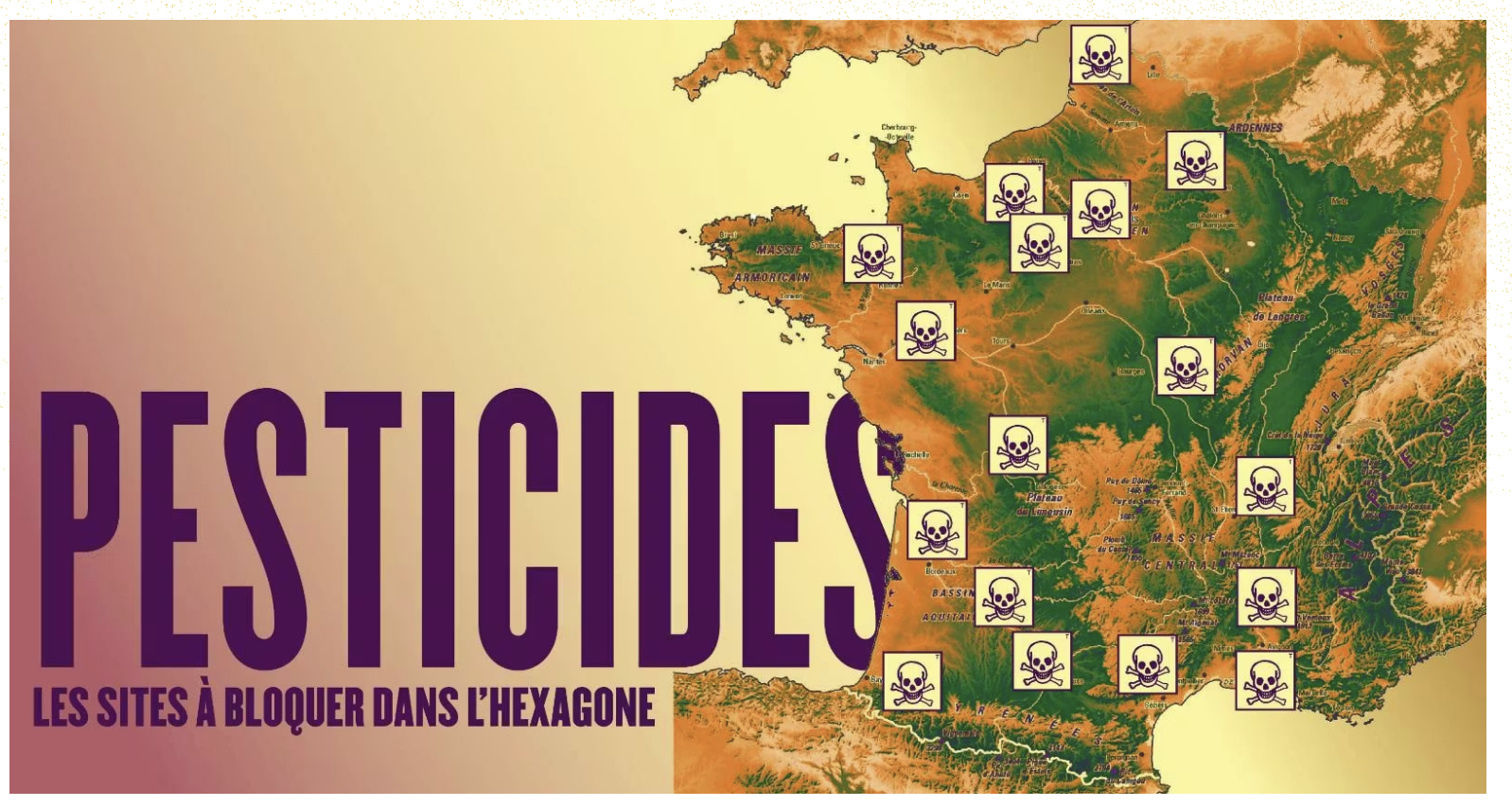
For reference purposes, below is a map showing the locations of eco-destructive chemical companies.
and the link to Riposte Paysanne's Telegram channel.
Sources:
- European Commission website explaining the Mercosur agreement
- Consilium Europa website for customs duties
- French Treasury website for French exports.
- Le Monde website on the subject