
How to choose your hop blending? Part #1

Article written in collaboration with Alexandra Berry.
Understanding the transformation of hops during brewing
Some hop combinations and pairings come to mind more easily than others; the Citra, Mosaic, and Simcoe blend, for example, is often found on beer cans and bottles. Similarly, the famous “Four Cs” ( Cascade , Chinook , Centennial , and Columbus) are considered good bases for highlighting an aromatic hop. Why is that?
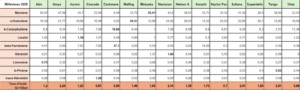
Source: https://beerandbrewing.com/hops-blending-and-pairing/
How do you choose which hops to use in your brews?
Obviously, the selection process begins with a bittering agent added at the start of the boil to obtain the beer’s bitterness. For this, the aromatic profile will be less important since the oils will evaporate during the boil (and even then, we will see that this does not apply to all varieties).
To choose aromatic hops, it’s important to understand their composition and isomerization capacity to predict the aromas present in the finished beer. Knowing the main characteristics of the components of different varieties will allow you to better control the aromatic potential of your brews, and perhaps even experiment with interesting and original pairings to discover particular aromatic nuances.
The chemical components of hops
The molecules present in hop oils will react differently during the brewing process – particularly during boiling and fermentation. For some, heat will develop alpha acids and reduce aromatic potential; for others, isomerization will release particular nuances or lead to biotransformations and synergies with other varieties, allowing them to be used in new ways.
We had written an article dedicated to hop oils which you can find here .
Terpenes and hydrocarbons
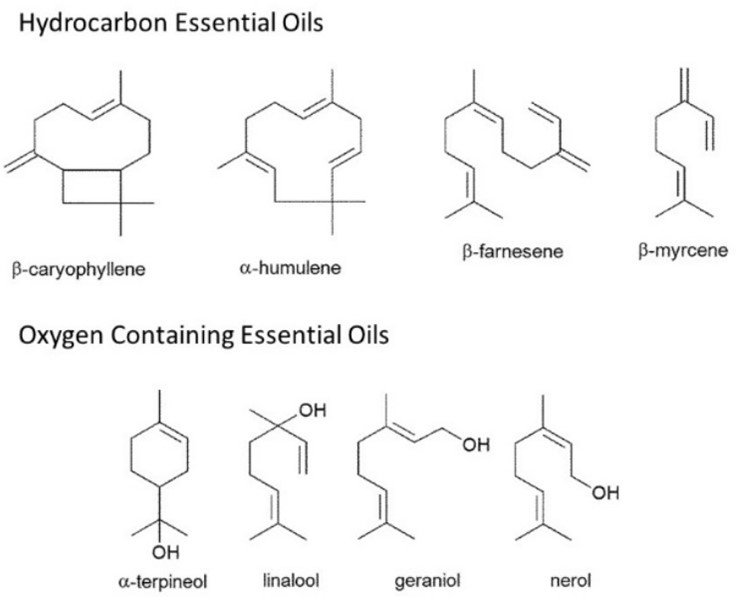
Terpenes are hydrocarbons that are transformed during the hop-boiling process. The best known are myrcene, farnesene, α-humulene, β-pinene, and β-caryophyllene. These terpenes have woody and herbaceous aromas and are most often found in premium hop varieties. These varieties are subtle, often with significant bitterness potential. The bitterness can be achieved by boiling the hops hot for isomerization and increased IBU, or cold to preserve the terpenes. Myrcene, in particular, is quite volatile and poorly soluble: it reduces by 50% after 10 minutes of boiling and disappears completely after an hour.
Thus, hops with a high hydrocarbon content are preferred for cold hopping, particularly post-fermentation.
“If it ends in ‘ene’, it doesn’t make the scene”: if it ends in -ene, they won’t be at the forefront of the scene
Some recommended hop varieties: TettnangAdmiral, Fuggle, Willamette, East Kent Golding, Saaz, Pearl…
Monoterpene Alcohols
Monoterpene alcohols are oxygenated compounds. For brewers seeking fruity aromas in their beer, monoterpene compounds are vital. Although present in minute quantities, they are very resistant to brewing processes.
Having very high solubility, they contribute greatly to the aromas found in beer. However, it is important to note that they retain a certain volatility and are therefore recommended for use in a whirlpool or at the end of the boil to fully develop these aromas.
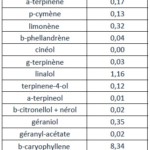
The best-known are linalool and geraniol. Geraniol produces very floral aromas with hints of citrus. Moreover, although geraniol can survive the entire fermentation process, it has been shown to convert to β-citronellol during fermentation, which accentuates its lime notes.
Linalool is one of the first oils discovered in hops. It contributes notes of exotic fruits and pineapple.
Hops containing a lot of monoterpene alcohols: Bravo! HerkulesBrewers Gold, CentennialColumbus, Chinook, Ekuanot, PearlMosaic & Simcoe.
 Source: https://patspints.com/2021/11/09/understanding-wet-hop-ales-part-1-essential-oils/
Hop-derived esters
Hop-derived esters are also good flavoring agents that survive the brewing process. Isobutyric esters are the most common and are often found in beers that are heavily dry-hopped. These esters contribute to the final flavor of the beer.
The 3 main esters are Isobutyl Isobutyrate, Isoamyl Isobutyrate, and 2-methylbutyl Isobutyrate (2MIB).
2-Methylbutyl Isobutyrate generally survives the brewing process well and offers aromas of yellow fruits, particularly apricot. Isoamyl Isobutyrate and Isobutyl Isobutyrate will have notes of tropical fruits and pineapple.
The hops containing the most esters after dry hopping are Southern Cross, CascadePacific Jade Mandarina BavariaVic Secret, Nelson Sauvin, the Yellow,…
Fatty Acids
Fatty acids derived from hops are produced during the aging and oxygenation of the hops. It has also been noted that hops with a high alpha acid content will have a greater number of fatty acids. These can be biotransformed into esters (ethyl isobutyrate, ethyl isovalerate, and ethyl 2-methylbutyrate) and can be noticeable in the flavor of the finished beer. They also contribute to the perception and aromatic intensity of monoterpene alcohols.
The following hops produce more fatty acids: Apollo, Bravo, Hull Melon , Ekuanot and Polaris.
It would therefore be beneficial to combine them with hops containing a high level of monoterpene alcohols to further express the fruity and tropical notes of a beer. Some even recommend using Apollo or Bravo hops that have been lightly oxidized in the whirlpool to promote the transformation of these fatty acids.
The Multifunctional Thiols
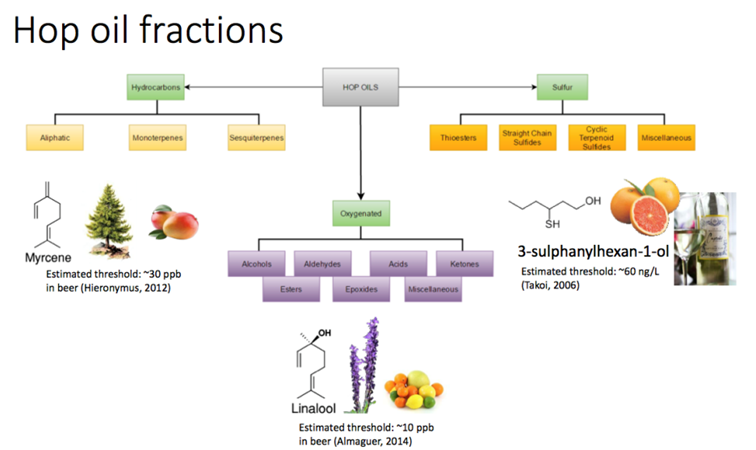
Polyfunctional Thiols are the sulfur compounds desired in brewing for their fruity aromatic potential. The best known in beer (and wine for that matter) are 3-mercaptohexanol ( 3MH ) with nuances of grapefruit and rhubarb, 4-mercapto-4-methylpentan-2-one ( 4MMP ) with notes of blackcurrant and ammonia in high quantities, and 3-mercaptohexyl acetate ( 3MHA ), which converts to 3MH which produces aromas of passion fruit.
While 4MMP reduces sharply during boiling, 3MH increases during a 100°C boil, thus highlighting the aromas when used early in the brewing process!
It is also interesting to look at the synergy of thiols with other chemical compounds: 4MMP has an additive impact on monoterpene alcohols, and notably highlights the tropical aromas of Linalool, Geraniol and β-citronellol.
The preferred varieties for achieving a high concentration of thiols are Citra, Centennial, CascadeMosaic, Nelson Sauvin, Motueka and Sorachi Ace.
Source: https://www.californiacraftbeer.com/wp-content/uploads/2019/09/Hop-and-Yeast-Interactions.pdf
A recap of what we’ve learned…
- Hops with a high level of monoterpene alcohols (Linalool, Geraniol) can enhance aromas when added in a whirlpool. They exhibit very fruity and tropical notes.
- Hop esters impact the taste of the finished beer when used in hot brewing. Note that the yeast strains used have a significant influence on the aromas.
- Fatty acids derived from hops, often found on slightly aged and oxygenated hops, are interesting from a synergistic point of view: they can highlight and amplify the aromatic perceptions of monoterpenes.
- Thiols can be used hot or cold depending on the levels found and can also increase the tropical aromatic potential of certain monoterpenes.
This allows you to find the details of the chemical composition of the varieties used in order to predict the aroma of your beers.

Source: https://tools.yakimachief.com/docs/Survivable-Compounds-Poster.pdf
These tools will also allow you to know when to prioritize adding your hops to your brews depending on the reaction you wish to produce.
The transformation of hops during brewing
Oils that resist boiling are called “survivables.” When choosing hops for your brew and setting up your recipe, it’s important to consider the “survivable” content of the chosen varieties to determine when to add them to the brew. Hops with a high concentration of “survivables” can be added during the hot brewing process because their composition allows them to survive, transform, or even be enhanced by the brewing process.
- Centennial is an excellent hop variety for whirlpool brewing because it has higher concentrations of soluble compounds. These compounds can survive the heat and fermentation activity.
Conversely, hops with low concentrations of “survivables” are likely to find greater success and a more positive impact in beer when used later in the process, such as post-fermentation dry hopping.
- Amarillo will likely have a greater impact on the finished beer if used later in the brewing process.
How to combine hops
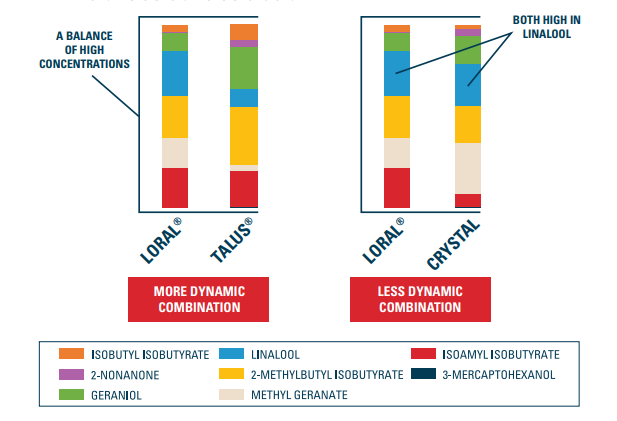
Focus on balancing high concentrations of “survivables” when creating mixtures.
For example, since Loral® is rich in linalool and Talus™ is rich in geraniol, these two products are likely to create a beautiful harmony. Loral® and Crystal are both rich in linalool and therefore risk creating a less dynamic and more one-dimensional blend.
Source:
Try concentrating the wort with “survivables” early in the brewing process.
Indeed, high concentrations of “survivable” hops in the whirlpool and dry hopping during active fermentation can create the conditions necessary for beneficial biotransformation. This allows for the release of certain thiols and promotes aromatics. For example, Saaz , Perle , Motueka , and Hallertauer Mittelfrüh contain precursor thiols (also known as “bound” thiols) that are released during enzymatic transformation.
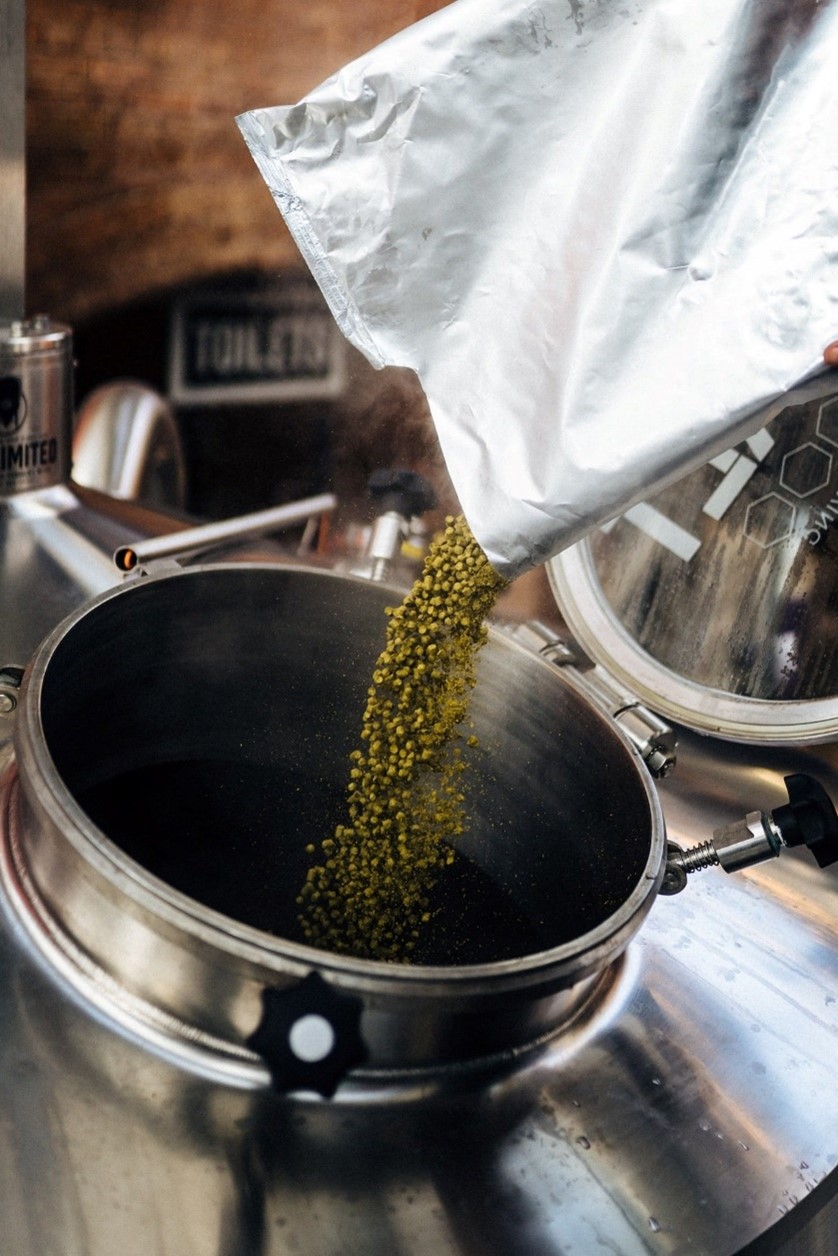
- Adding Cascade to the mashing followed by dry hopping during active fermentation with Sabro® and Simcoe® is likely to have a huge impact on flavor, as it loads the wort with a diverse set of “raw materials” needed to promote biotransformation.
Source: https://www.badweathertour.com/blog-resources/thiolsmashhopping
So don’t hesitate to experiment with these hops, combining them to highlight the aromas you want in your beers. In the second part, we’ll detail the recommended hop combinations for achieving specific flavors in your brews.
Sources :
http://scottjanish.com/survivables-unpacking-hot-side-hop-flavor/
https://patspints.com/2022/06/29/hop-combinations-that-emulate-fruit-flavors/
https://brewhq.com.au/blogs/beer-resources/hop-flavour-guide
https://beerandbrewing.com/hops-blending-and-pairing/
https://www.hopculture.com/top-hops-for-thiols/
https://www.badweathertour.com/blog-resources/thiolsmashhopping
https://patspints.com/2021/11/09/understanding-wet-hop-ales-part-1-essential-oils/
https://brauwelt.com/en/topics/raw-materials/628253-on-the-fate-of-hop-derived-branched-chain-esters