
Cones, pellets, oils… which is the best choice for my beer?

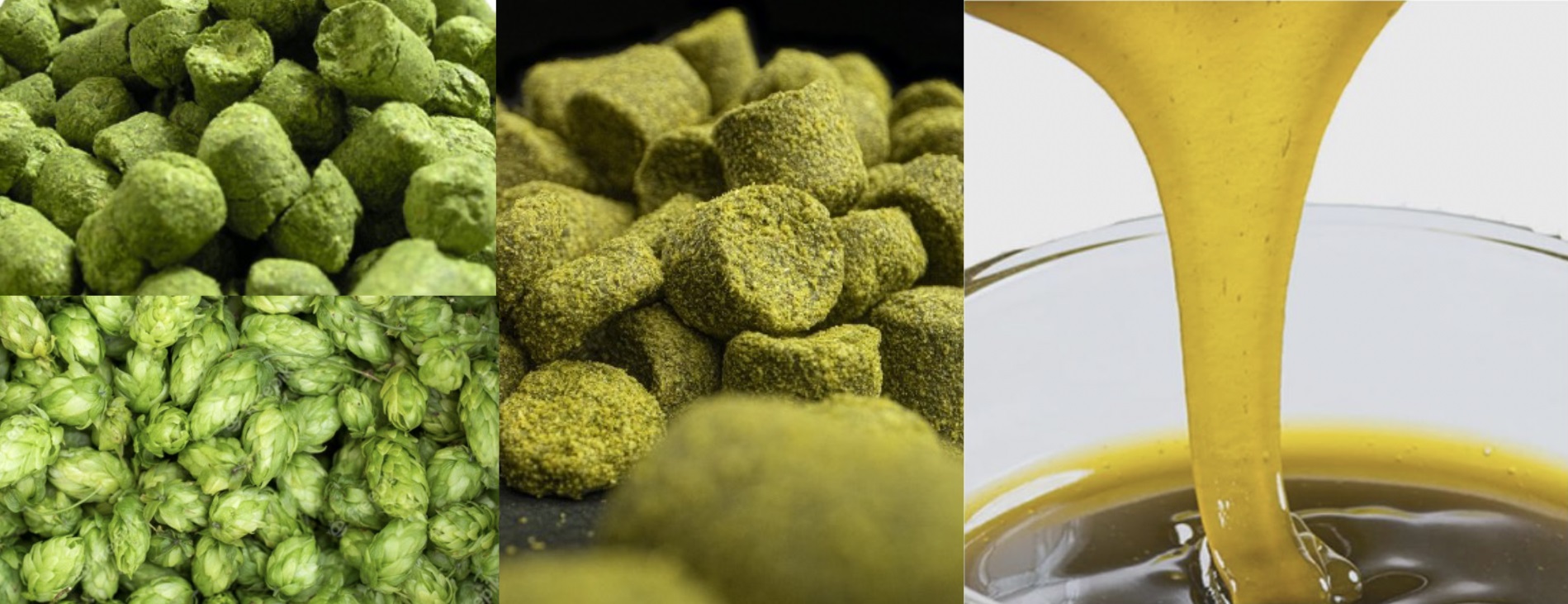
There are now many forms of hops for brewing, including cones, various pellets, and increasingly liquid forms… So how do you choose the right hops for your brewing?
Article written in collaboration with Alexandra Berry
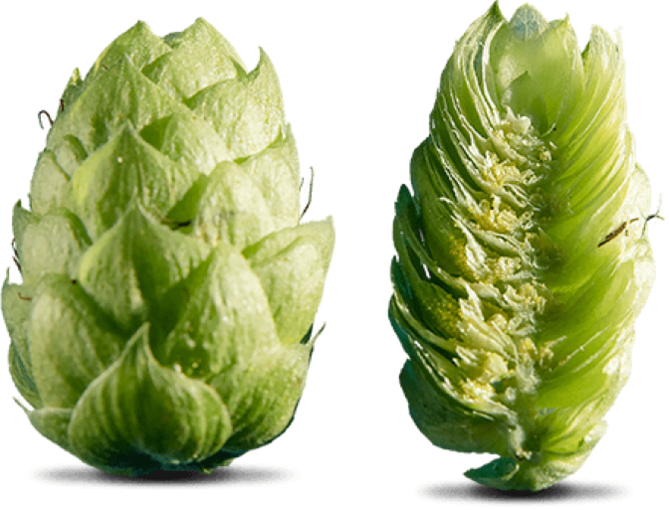
The Cone
The cone is still preferred by some brewers who wish to keep a 100% natural product and who criticize the pellet for denaturing the initial product and its oils.
Fresh hops
As a reminder, once harvested, the cone can be dried or used directly, as is the case for harvest beers, for example, which are brewed directly with the season’s hops. In this case, we can talk about ” fresh hopping ” or ” wet hopping .” This “simply” implies significant and precise logistics. The hops must be used only a few hours after harvesting to lose as few essential oils as possible and ensure optimal extraction of flavors and aromas.
Dried hops
More generally, brewing with cone – provided again that it has been harvested and dried properly – allows you to preserve as much of the essential oils of the hops as possible, which will infuse the beer like a tea bag would.
However, this small plant will also absorb a lot of liquid, like a sponge, and leads to significant losses in the final beer volumes.
Furthermore, although more “natural,” each hop cone will not contain the same levels of essential oils and alpha acids, and therefore will not uniformly flavor and bitter the brews. Hops will be a direct reflection of their terroir—but also of its climate, harvest, and storage. It will thus be more difficult for the brewer to predict the final result of their brew.
Finally, because the cone is larger and more protected than the pellet, the contact between the liquid and the essential oils of the flower is reduced. This results in a longer extraction and isomerization of alpha acids. However, since its oils are better preserved, the cone can be preferred for dry hopping ( see our article on Dry Hopping ), allowing for the capture of its volatile essences without creating bitterness or astringency.
Nino Bacelle, head brewer at Brasserie De Ranke, swears by the brewing cone. He designed his own boil kettle to keep the cones at the bottom of the tank for natural filtration, minimizing beer loss in the process.
Innovation
Frozen Fresh Hops
In 2021, Yakima Chief introduced a new product to brewers worldwide: frozen hop cones at harvest time. This packaging was designed to preserve all the aromas of fresh hops, maintained at sub-zero temperatures, resulting in a fresh and as “natural” a brew as possible. Furthermore, French brewers were able to brew with freshly harvested American hops such as Citra, Amarillo, and others.
Besides the major ecological problem posed by this format (transporting frozen hops from one continent to another, hum), brewers have also faced the disadvantages of the cone, with filtration problems and significant fragility of the flowers.
Source: https://www.prnewswire.com/news-releases/
The Pellet
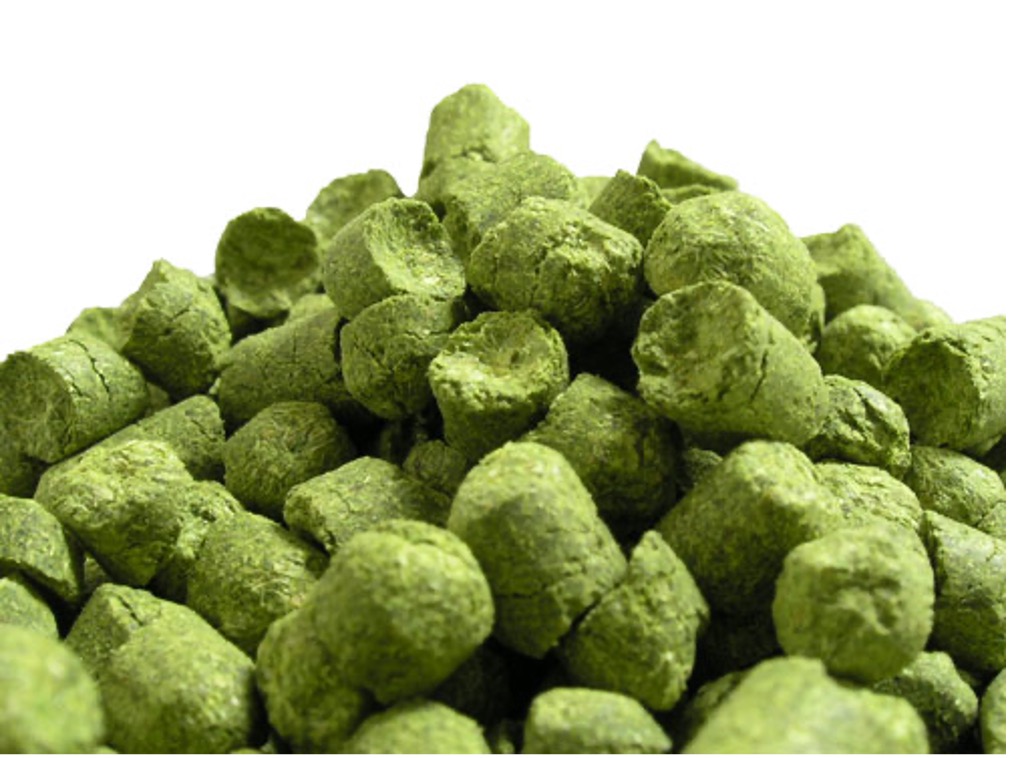
Pellets, although still criticized by a minority of brewers, offer undeniable advantages.
beloved Pellet
In addition to being more compact and easier to store, it allows for greater accuracy in achieving the desired brewing results. Since the hops are dried and ground together before being pelletized, this allows for much more precise measurement of IBU levels and essential oil yields in brewing. As each hop cone contains different oils and plant concentrations, grinding and blending them ensures a more homogenized yield. Grinding also opens the lupulin glands to release these oils. However, as you know, this means that a pellet left exposed to air oxidizes more quickly than a dried cone (so be sure to reseal your opened bag of pellets tightly!).
However, in the 1980s, Sierra Nevada wanted to test the impact of pellets on the brewing process and, in particular, see if consumers would notice the difference. They brewed half of their Celebration Ale with whole cones and the other half with pellets. Even in a blind taste test, everyone preferred the version with whole cones, which they found fresher and more floral. Sierra Nevada was also the first brewery to market a beer made exclusively with American hops: in 1981, Grossman and Camusi brewed the Sierra Nevada Pale Ale. The United States thus established itself on the world brewing map with innovations and a rediscovery of its terroir.
Different types of pellets
There are several types of pellets: T-90 and T-45. Identical in their manufacturing and packaging, T-45 is more concentrated in lupulin. Indeed, after being ground, the hops are sieved at -35°C, which removes their plant matter and leaves only a concentrate of essential oils. This increases alpha acids while reducing the amount of material used. This means less raw material and less waste during brew filtration for the same aromatic result. It should be noted that the generally more expensive T-45 format is not available for all hop varieties. In fact, we have never encountered it in organic hops to date.
Innovation
LUPOMAX™
LUPOMAX™ is an innovation by John I. Haas: a pellet with more concentrated hop essences and lupulin, without the undesirable astringent flavors that can result from an overload of hops (a sensation known as hop burn ). Created to contain the same concentration of lupulin and myrcene oil in each pellet, they help to give brews consistency, with improved yield. Again, fewer pellets mean less waste, whether it’s filtered material or beer absorbed.
Ideally these hops are added during the boil in the whirlpool, but they can also be used for a dry-hop, or even during the fermentation phase.
Cryo Hops
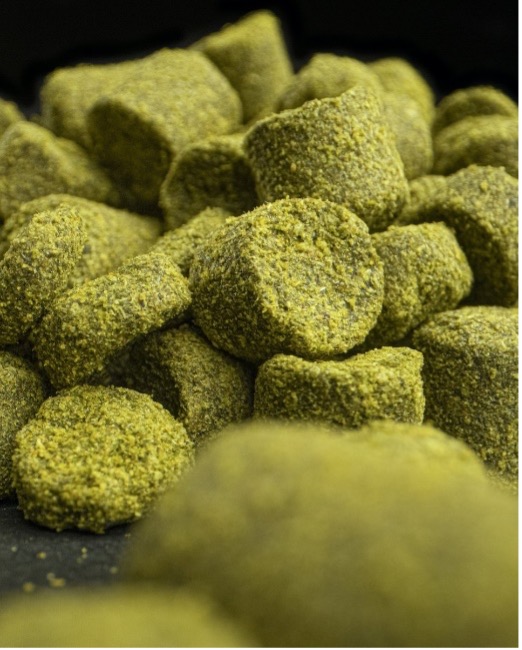
Derived from the Greek word “Kryos,” meaning gel, Cryo Hop, also known as LupuLN2®, is a pellet with twice the aroma concentration of T-90. Sometimes also available in powder form, it is produced by extracting the essential oils from the cone, which is then immersed in liquid nitrogen (cryogenically frozen) to preserve all the aromatics without the risk of oxidation. Offering 50% more yield than a traditional pellet, it allows brewers to use even less raw material (and therefore reduce waste) while enhancing the aromatics without the astringent or vegetal flavors sometimes found in traditional hopping.
Produced by Yakima Chief – Hopunion, this new process has taken the French brewing scene by storm in recent years. Indeed, the enhancement of aromas and the reduction of losses are key selling points for brewers, especially with the strong trends towards IPAs, Dry Hopped, and Double Dry Hopped beers!
Excerpts
In 1870, the New York Hop Extract Company innovated by offering hop extract. Also called CO2 Hop Extract, it is a liquid resin produced by CO2 extraction of hops.
This extraction process uses a supercritical gas (liquid gas under very high pressure, between 150 and 300 bar) before removing the solvent. The aromatic and bittering components of the hop cone are separated from the plant material to obtain a concentrate of all the essential and alpha oils of the flower without the bulky plant matter. JR Whiting patented this process and built his factory in Waterville, New York, to distribute the product to breweries. For breweries, working with hop extract further reduces hop absorption losses, in addition to lowering storage and packaging costs. While more expensive to purchase, the extract is so intense and easy to work with that it becomes more cost-effective. Furthermore, the extract offers much greater stability and control over aromas and IBU levels. Finally, this packaging allows for significantly longer and higher-quality product preservation.
Initially criticized by some brewers, Cilurzo was the first craft brewer to defend the interests of extract and even replaces pellets with extract in its Pliny the Elder recipe.
There are several types of extracts available to brewers.
CO2 extract
This is the most common extract, generally used for bittering. It is made from hops with high alpha acid levels such as Columbus or CTZs, often blended with other aromatic hops such as Mosaic and Cascade.
The pre-isomerized extract
CO2 extract must be boiled for the alpha acids to isomerize and create bitterness. However, new techniques have been developed to offer pre-isomerized extracts – eliminating the need to heat the wort to achieve bitterness. This now gives brewers a ready-made solution for hopping and bittering their wort after boiling. For some, this allows them to rebalance worts deemed too mild or sweet.
Innovation
An Incognito® hop
Incognito® was created by John I. Haas to maximize the aromatic potential of beer while minimizing losses and production costs. It is a concentrated liquid hop essence (a hop extract) that preserves myrcene and lupulin and is designed to be added to the whirlpool to impart the essential hop oils to the beer.
Like cryo-fermentation, this technique allows for the same level of bitterness and aroma with less material, thus reducing costs. It also reduces beer losses typically absorbed by pellets by 25%, requires no special production equipment, takes up less storage space, and reduces food waste for a more environmentally friendly beer. It can be blended with other hops, in cone or pellet form.
Initially used by a few American brewers (Stone Brewing, New Belgium, Two Beers Brewing…), this process is becoming more widespread to allow the production of juicy IPAs.
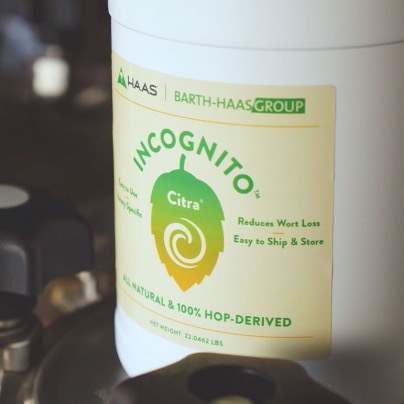
Available in several varieties (Citra®, Mosaic®, Ekuanot®, Sabro™), it is becoming popular with brewers and has gradually been exported around the world.
Phillip Chou, director of brewing solutions at John I. Haas, explains:
The production of INCOGNITO is a key milestone for the craft brewing industry, literally opening the floodgates to creating some of the world’s most exciting and flavorful beers. (…) By solving what seemed an intractable problem, John I. Haas and the Barth-Haas Group have once again underscored their relentless focus on improving the processes and tastes of both brewers and beer consumers.
Special Dry Hopping with the HopBurst®
These extracts are specifically designed for dry hopping beer. They are carefully selected and processed to ensure they retain no alpha acids that could bitter the beer. As such, these extracts are concentrated aromas, particularly well-suited to New Zealand hops. When used for dry hopping, they enhance and accentuate the beer’s aromas without altering the IBU, leaving no residue, and reducing costs and waste.
Source: https://nzhopoils.com/
In summary
| SHAPES | BENEFITS | DISADVANTAGES |
| Cone | Natural flavors. Can be used as a must filter. Preferred for dry hopping because its oils remain intact. | Many losses Less direct contact with the liquid, and therefore longer extraction and isomerization Plenty of storage space More fragile and susceptible to oxidation. Low yield. Less control over the final aroma (although this aspect is precisely what appeals to some brewers seeking natural aromas in their brews) |
| Pellet | It melts and dissolves, which optimizes its use. Since the lupin glands have already been crushed, the yield and isomerization are accelerated. Easier to measure and control for consistent brewing results Less liquid loss during filtration | Their dissolution can create a blockage at the bottom of the boiling or fermentation tank. If dry hopped too early, some dead yeast cells may cover the powder, limiting contact with the wort. Pulverizing the cones can affect the aromatic quality of the lupulin gland as well as the protection of oils like humulene against oxidation. |
| Extract | Composed of 30 to 50% alpha acids, therefore a much higher yield (3 to 10% for a traditional pellet) Easy to store and preserve (can be kept for up to 8 years) Precise measurement and control of flavoring and bittering – with the brewers noting a milder bitterness. Option for pre-isomerized extract for use without heating No oxidation | Limited choice of hop varieties still available in this form Very high prices industrial process Difficult to use when cold because it doesn’t dissolve as quickly. |
Sources and further information…:
Acitelli, T., (2013), The Audacity of Hops , Chicago Review Press Inc., Chicago.
Bostwick, W., (2014), The Brewer’s Tale , WW Norton & Norton, New York.
Brown, P., (2017), Miracle Brew , Chelsea Green Publishing.
Brown, P., (2009), Hops and Glory , Macmillan, London.
Garrett , O., (2003), The Brewmaster’s Table, Ecco; Reprint edition, HarperCollins Publishers, New York.
Hieronymus, S., (2012), For the Love of Hops, The Practical Guide to Aroma, Bitterness and the Culture of Hops, Brewers Publication,
Hindy, S., (2014), The Craft Beer Revolution , Macmillan, New York.
Lavoisier, (1789), Elementary Treatise on Chemistry, Maxtor France .
Mosher, R. (2004), Radical Brewing: recipes, tales and world-altering meditations in a glass, Brewers Publications, Division of the Brewers Association, United States of America.
Payen, A., (1825) Mémoire sur le Houblon, Hachette Livre. Payton, J., (2013), Beer O’Clock, An Insider’s Guide to History , Craft & Culture, SkyHorse Publishing, New York.
Poltinari, F., (1989) Slow Food Manifesto, Paris.
Steele, M., (2012), IPA Brewing Techniques, Recipes and the Evolution of Indian Pale Ale , Brewers Publications, Boulder, Colorado.
www.homebrewersassociation.org
https://www.hops-comptoir.com/
https://www.prnewswire.com/news-releases/