
Hoppy Christmas beers

Article written in collaboration with Alexandra Berry
When we think of Christmas beers, it’s hard not to think of big industrial brands like Leffe Christmas, Mother Christmas from the Delirium brand… Beers marked by their sweetness and indulgence, with a touch of winter spices.
And yet, if we trace the origins of Christmas Ales, (or should we say “Jul” or “Yule” beers), they go back to the 10th century, when the Vikings paid homage to the gods during the winter solstice which took place on December 21.
This tradition continued when Christianity was introduced to Norway. King Haakon I (who reigned from 934 to 961 AD) is said to have mandated the brewing of a Yultide Ale every year in an attempt to encourage conversion to Christianity. The Gulathing Laws subsequently mandated the celebration of Yultide annually with a special beer and a festival.
It was these Scandinavians who are said to have brought the tradition of “Yultide” when the Vikings invaded England. The tradition of Julöl (Yule ale) continued and evolved into ‘Wassail’: a hot ale. The origin of the word Wassail can be traced back to the Old Norse ‘Ves Heil’ or the Anglo-Saxon ‘Waes Hael’, meaning “of good health” or “of good omen.” The term could also be applied to hot wine or cider.
An example of a medieval Christmas ale is “Lambswool,” which was brewed with roasted apples, cloves, ginger, and honey. The name was inspired by the thick white foam that floated on the liquid during fermentation.
This tradition spread across the continent, also allowing for the use of any unused barley, hops, and spices after the summer season. Starting in September and October, brewers would blend all the leftovers and ferment them at ambient temperatures throughout the autumn to produce a beer ready for winter.
Scandinavian migrants then brought their dark, malty Christmas beers to the United States during the 18th century.
Official recognition of the style:
The first Christmas beers were officially recognized and promoted in the 1980s with some early appearances in CAMRA’s ( Campaign for Real Ale ) Good Beer Guide published in 1986. Around ten seasonal Christmas beers were listed there, including Greene King’s Christmas Ale, first brewed in 1984.
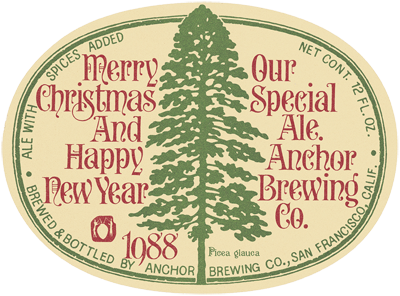
On the US side, Anchor Brewing first produced Special Ale in 1975 and continues to brew it with a different recipe each year.
These early drafts paved the way for the creation and popularization of a seasonal and festive style. The BJCP (Beer Judge Certification Program) officially recognized the style, which should be “a spiced, stronger, and darker beer, often with a rich body and a warming finish, a good accompaniment for the cold winter season.”
The alcohol content or additives are therefore not specified in Christmas beers and some can reach up to 14°! (Christmas Bombs from Prairie brewery in the US are good examples).
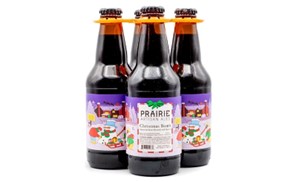
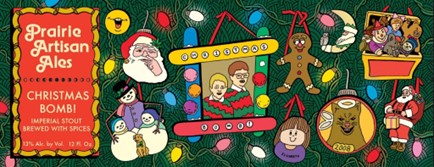
These are traditionally top-fermented beers, quite high in alcohol and rich in sugars and spices. With a color ranging from amber to copper or even almost brown depending on the recipe, Christmas beer is intended to be rich and indulgent.
Commercially, the first brewery to sell a “Christmas Beer” was Stella Artois. With its small red star logo, the beer was created in 1926, a fusion between a Lager and a Scotch Ale.
In 1975, the famous San Francisco brewery, Anchor Brewing, promoted its “Our Special Ale for Christmas” beer, a dark and spicy ale that offered a different recipe variation each year for the Christmas holidays.
Hops: another Christmas spice?
Almost anything goes in a Christmas beer! Cinnamon, star anise, nutmeg, coriander… You’ll also find fruits like sour cherries, orange peel, or even honey and Timut pepper… Anything that can contribute to flavoring the beer is welcome in these festive brews!
Let’s not forget that hops were originally used as a spice in beer, so they certainly have their place in the Christmas beer aisle! Christmas beers are usually rich and sweet, but just like a good dry champagne, why not create a delicate, dry, and aromatic beer to accompany festive meals?
Not only will hops help preserve beer longer, but depending on the variety chosen, they can bring a lot of aroma and richness to the beer.
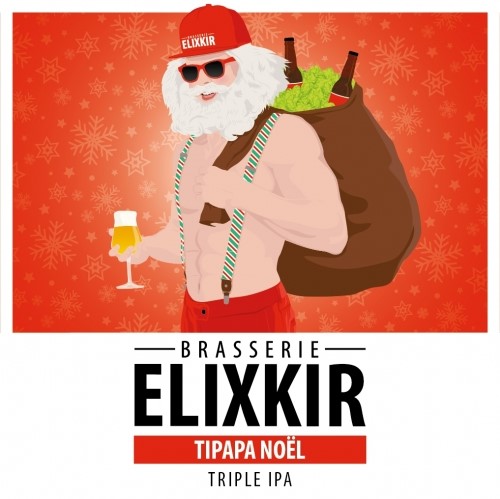
The famous Bons Vœux from Brasserie Dupont is an excellent example of a rich and fruity beer, its fullness enhanced by delicate dry hopping! Brasserie Elixkir has created a Triple IPA to celebrate Christmas with its TIPAPA, hopped with Mosaic, Ekuanot, Sabro, and Talus for a juicy beer with hints of coconut.
Goose Island has produced a Christmas IPA whose choice of hops perfectly spices and flavors this Christmas beer, resulting in a smooth, caramelized malt character whose richness is enhanced by citrus and pine notes thanks to dry hopping with Chinook. This smoothness is further enhanced by a touch of Cashmere.
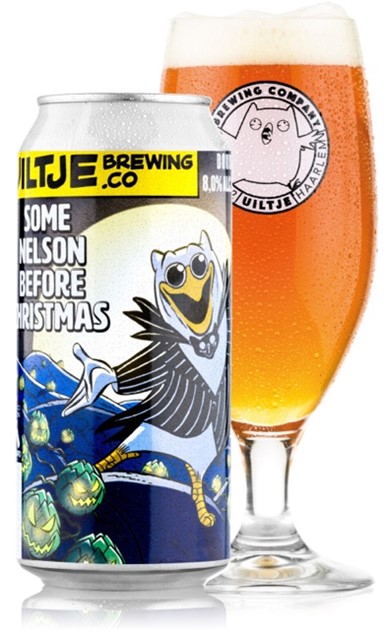
Uiltje Brewery wanted to highlight the flavors of Nelson Sauvin hops in their Christmas beer: Some Nelson Before Christmas. This hop makes it a very flavorful and festive beer, somewhat reminiscent of a small glass of champagne!
 Why not also experiment with flavor pairings within the brew itself? For example, try resonant pairings that can enhance a spice with a fragrant bitterness… 😊
Pairing ideas between hops and spices:
 Star anise with Brewers Gold
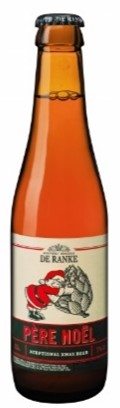
De Ranke’s Père Noël is brewed with licorice and Brewers Gold for its spicy and dark fruit notes.
- Dark fruits with Challenger in a Porter or Stout
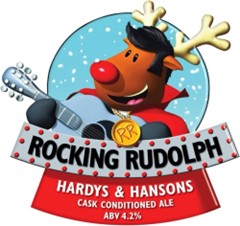
Greene King’s Rocking Rudolph offers a deliciously malty and coppery roundness. The Challenger & Target hops provide both red fruit and spice notes that blend perfectly with the beer’s caramel flavors.
- Vanilla with Hallertau
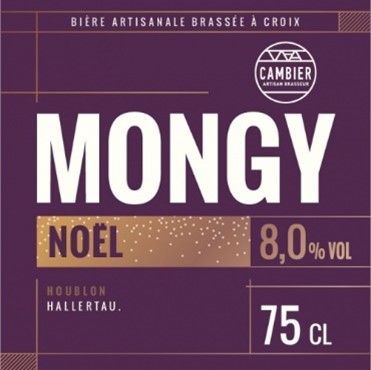
Mongy Noël de Cambier: Madagascar vanilla, a beautiful roundness accentuated by the floral touches of Hallertau for more sweetness and delicacy.
- Star anise or cloves with Simcoe
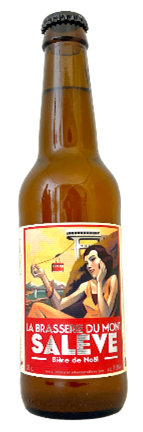
Example: Mont-Salève’s 2022 Christmas Beer, a Double IPA at 7.2° hopped with Simcoe to highlight citrus aromas, with a resinous beer finish.
- Honey with a touch of very bitter Golding-type hops
Example: New Belgium Honey Orange Triple, a honey and Seville orange Triple hopped with Styrian Gold and Nugget.
- Oak chips or aging with Magnum

Example: Elixkir Our Best Wishes: oak chips highlighted by the bitterness of the Magnum for a resinous roundness.
- Biscuit with Mandarina Bavaria or Saphir for an Ale with a warm, spicy marmalade character.
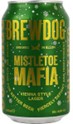
Brewdog’s Mistletoe Mafia, a biscuity Vienna Lager highlighted by hopping with Mandarina Bavaria, Saphir and Tettnang.
The possible combinations of spices and hops are endless, and brewers (thankfully!) have free rein to give free rein to their imagination and taste buds in order to create festive, original… and hoppy Christmas beers!
Sources:
https://www.praguebeergarden.com/news/post/christmas-beer-the-history
https://boakandbailey.com/2014/12/where-did-christmas-ales-come-from/
https://www.hopculture.com/christmas-beer-best-winter-warmers/
https://lostbeers.com/a-short-history-of-belgian-christmas-beer/