
IPA: Origins and Evolution


Article written in collaboration with Alexandra Berry .
Everyone knows IPA by now. Known for its bitterness, this style has developed and diversified in recent years to satisfy different palates, from resinous English-style IPAs, American hopbombs , dry Kveik IPAs, or juicy and fruity NEIPAs, there’s something for everyone!
This is obviously not the first time that IPA has captivated the world, but the very first wave of IPA fashion came not from the United States but from England; setting sail to seduce distant continents through the British colonies.
A look back
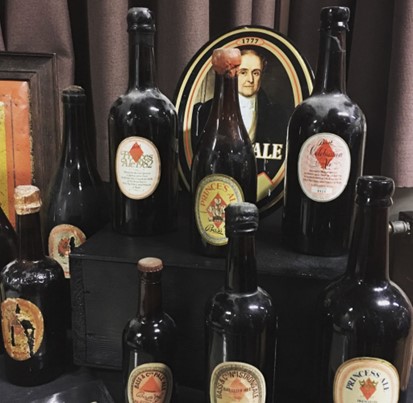
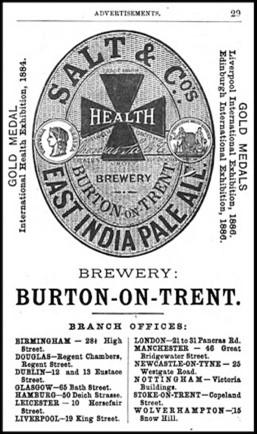
At the beginning of the 19th century, England was fascinated by Pale Ale from the town of Burton. With the rise of glass containers, the golden color and white head of Pale Ale experienced phenomenal growth, particularly in the town of Burton Upon Trent, whose sulfated water enhanced the local hops in the brews*.
*The glasses for Ales were also engraved with barley and hops and this beer became very popular in the 1830s.
This particularly hard water brings out the aroma of the hops and contributes to the dryness perceived at the finish. Furthermore, these minerals allow it to better preserve itself during its journeys, also contributing to the rise of Burton beers in the Baltic trade from the 19th century onwards, beginning with significant exports to Russia.
The chemical composition so appealed to brewers that some wanted to reproduce it, adding calcium sulfate to their water to reproduce what is known as the “Burton Snatch”.
In addition to the quality of its water, Burton Upon Trent had the great advantage of being crisscrossed by canals, linking it to major port cities. The local breweries quickly won over enthusiasts across the country, and then in Europe in particular thanks to the ” Trent Navigation Act ” of 1669, which opened the river to numerous navigation systems, notably linking the ports of Hull and Gainsborough, major export points for the Baltic market of the time.
Potential hopping
When Napoleon blockaded the Baltic ports to prevent British imports, the impact on Burton’s brewers was enormous, and many breweries closed their doors. The survivors had no choice but to look to the British Empire to continue their growth, and luckily, the colonists were eager for their homeland beer!
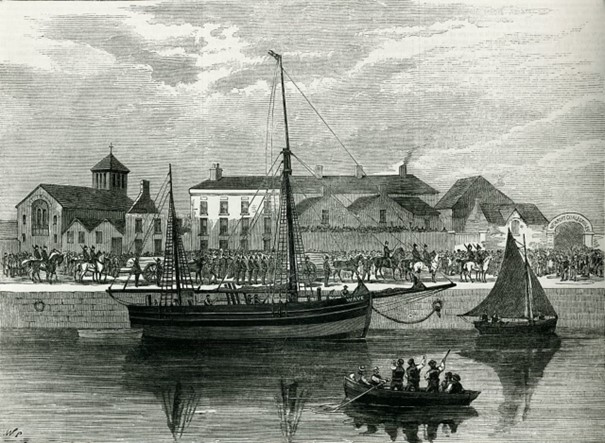
George Hodgson, who founded the Bow Brewery in 1752 on the docks of the East India Company, managed to meet this demand. He initially sent barrels of his Porter and October Ale to the “Raj” and governors in India, before offering a paler, lighter, and more digestible beer, better suited to the Indian climate. A phenomenon was born.
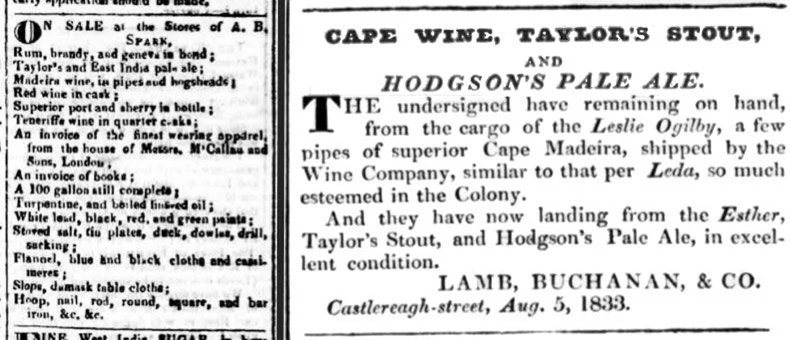
In 1809, there was already an advertisement for this beer in the Calcutta Gazette: “ Hodgson’s very best Pale Ale, Brewed for this Climate and warranted of a Superior Quality”.
Originally simply Hodgson’s Pale Ale, already discovered in Calcutta in 1801, was a slightly hoppier version of October Ale, created to satisfy the tastes of English colonists in India. Indeed, given the climate they endured, they wanted a beer that would be refreshing and easy to drink. How do you make beer last for months on a ship in an extreme climate? You add hops… Lots of hops. This not only preserves the beer but also masks any defects or infections upon its arrival!
Moreover, this long journey at sometimes very high temperatures sometimes had the effect of pasteurization, heating the beer to temperatures approaching 60° to stop fermentation.
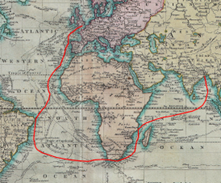
In 1827, following the sinking of a Hodgson Company ship, numerous casks were salvaged and auctioned off under the name ” Indian Beer ” because they were destined for the Indian colonies. This is how this particularly hoppy style of beer came to be known as India Pale Ale. The name was also chosen to evoke the power of the British Empire and its colonies in India, nicknamed “The Jewel of Great Britain.”
To learn more about the journey of the IPA barrels, I highly recommend reading Pete Brown’s book, Hops & Glory , in which he takes on the enormous challenge of brewing an IPA in Burton Upon Trent and shipping one of the barrels all the way to India. He retraces the exact route a barrel would have taken in the 19th century!
However, although it reigned supreme in England and its colonies during the 19th century, the IPA faded from popularity at the beginning of the 20th century, ceding its throne to German Lagers. These golden, crisp, and thirst-quenching beers conquered the market, to the detriment of IPA breweries, none of which survived into the following century.
Cascade, hero of the IPA’s return to the American brewing scene
Largely sidelined in the early 20th century in favor of lighter, more refreshing, and aesthetically pleasing lagers, beer returned to the spotlight in the 1970s thanks to the craft beer revolution in the United States. With a melting pot of brewing influences stemming from the cultural diversity of its population, American brewers had a blank canvas to explore new styles. Thus, many brewers reinvented themselves, drawing inspiration from foreign styles as well as from their own terroir, rich in hops.
A local variety of hops quickly stood out and put hoppy styles on the American map: Cascade.
In 1971, Cascade hops were certified by Dr. Stanley Nelson Brooks and Jack Horner at Oregon State University. Developed starting in the 1960s, Cascade (originally simply 56013) is a cross between the English Fuggle hop, the Russian Serebrianker hop, and a male variety. It was bred to resist mold and is named after the Cascade Mountains that run through the states of Washington, Oregon, California, and the Canadian province of British Columbia.
It quickly gained popularity thanks to its powerful citrus and grapefruit aromas, which are perfectly suited to the Pale Ale style. The first beer marketed with this hop was the American Pale Ale from Anchor Brewing Company in 1975, a lovely amber beer, still produced today.

Cascade will also be the origin of a new IPA style, the Cascadian Dark Ale, better known as Black IPA, which we will explore in a future article.
Later, Ken Grossman and Paul Camusi, founders of Sierra Nevada Brewing in 1979, brewed a Pale Ale in 1981 using Cascade. Inspired by the British style, they aimed to showcase American terroir through this local hop variety. The result was a bitterness accompanied by an explosion of fruit and citrus notes, a highly appreciated innovation that spread across North America… and then throughout the world.
Many brewers are exploring this “new” style of IPA, playing with the aromas of different hop varieties to produce powerful and highly aromatic beers. This has led to a multitude of IPA interpretations and the creation of new styles, which we will explore in a future article.
Originally an English style, IPA survived its setbacks thanks to American beers and is now interpreted in very different ways depending on the terroir and local culture, increasingly appealing to hop lovers!
Sources:
Berry, A., 2020, From Earth to Beer, the Expression of Terroir in Glass, Baudelaire editions.
Brown, P., (2009), Hops and Glory, Macmillan, London.
Cornell, M., (2003), The Story of the Pint, Headline Book Publishing, London.
Grossman, K., (2013) Beyond the Pale: The Story of Sierra Nevada Brewing Co, John Wiley & Sons.
Mosher, R. (2004), Radical Brewing: recipes, tales and world-altering meditations in a glass , Brewers Publications, Division of the Brewers Association, United States of America.
Payton, J., (2013), Beer O’Clock, An Insider’s Guide to History, Craft & Culture, SkyHorse Publishing.
https://www.porchdrinking.com/articles
https://beerandbrewing.com/an-ode-to-sierra-nevada-pale-ale/